3-Chloro-[1,1'-biphenyl]-2-carboxaldehyde → 3-Chloro-2-ethenyl-1,1'-biphenyl
Reaction equation

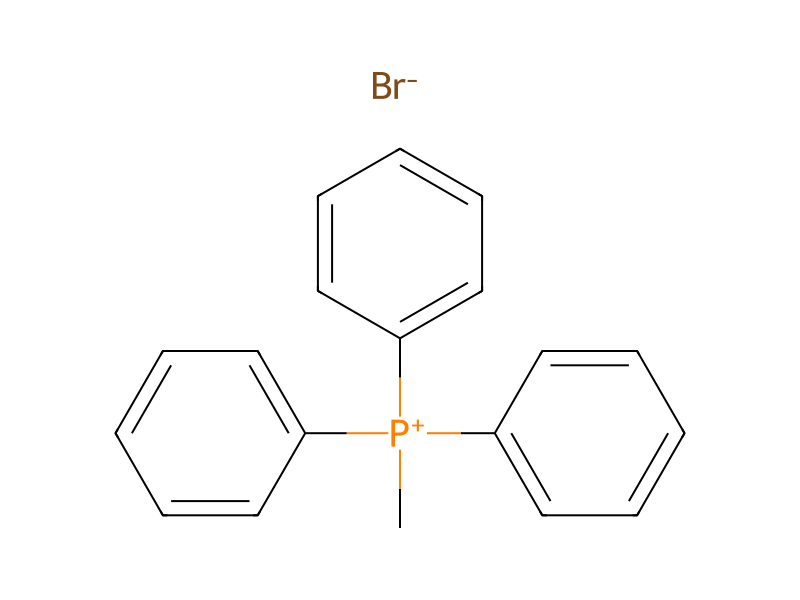
[CH2:1]([Li])CCC.[Cl:6][C:7]1[CH:12]=[CH:11][CH:10]=[C:9]([C:13]2[CH:18]=[CH:17][CH:16]=[CH:15][CH:14]=2)[C:8]=1[CH:19]=O>[Br-].C[P+](C1C=CC=CC=1)(C1C=CC=CC=1)C1C=CC=CC=1.O1CCCC1.C(OCC)C>[Cl:6][C:7]1[C:8]([CH:19]=[CH2:1])=[C:9]([C:13]2[CH:18]=[CH:17][CH:16]=[CH:15][CH:14]=2)[CH:10]=[CH:11][CH:12]=1Participants
Reactant 2


Product 1

Reagents, catalysts & solvents 3


Procedure
Under a dry argon atmosphere n-butyllithium (1.3 g, 0.020 mole) was added slowly to a stirred ice cold mixture of (methyl)triphenylphosphonium bromide (7.3 g, 0.0203 mole) in 30 ml of tetrahydrofuran. The mixture was warmed to room temperature, stirred for two hours, and 3-chloro-[1,1'-biphenyl]-2-carboxaldehyde (4.4 g, 0.0203 mole) in 30 ml of tetrahydrofuran added. The reaction mixture was stirred at room temperature for approximately 18 hours, heated at reflux for two hours, then cooled. The reaction mixture was diluted with 300 ml of diethyl ether and washed with 100 ml of water. The organic phase was dried over anhydrous magnesium sulfate, filtered, and evaporated to give a residue. Distillation of the residue at 88°/0.05 mm gave 3-chloro-2-ethenyl-[1,1'-biphenyl] (2.3 g).
Workup
- stirringThe reaction mixture was stirred at room temperature for approximately 18 hours
- temperatureheated
- temperatureat reflux for two hours
- temperaturecooled
- washwashed with 100 ml of water
- dry with materialThe organic phase was dried over anhydrous magnesium sulfate
- filtrationfiltered
- customevaporated
- customto give a residue
- distillationDistillation of the residue at 88°/0.05 mm
Sources & evidence
- ORD record
- ord-ef5e7d69196944b4b4ae5938d9ba7474
- Source dataset
- uspto-grants-1983_09
- Patent number
- US04402973
Reaction notes
Loading…