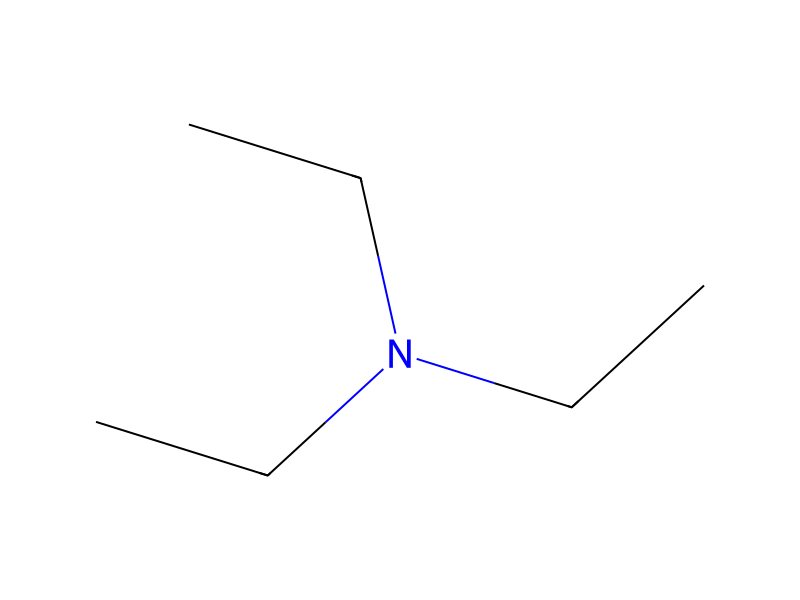
Triethylamine → N-tetrahydrofurfuryl-2-[2-nitro-5-(2-chloro-4-trifluoromethylphenoxy)phenoxy]propionamide
Reaction equation

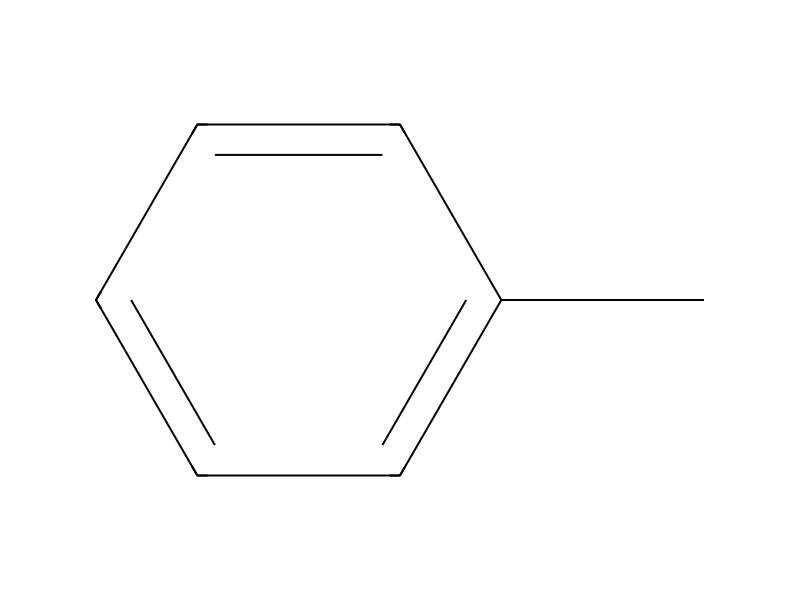
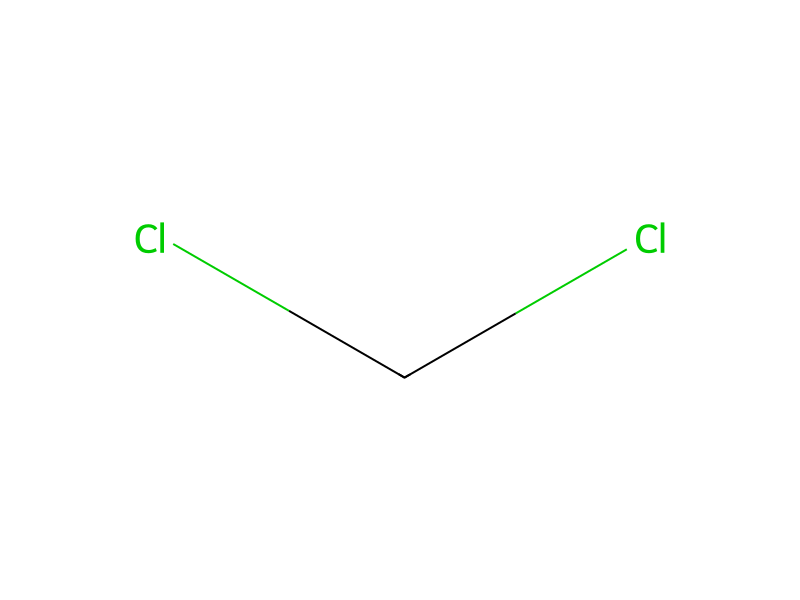
[CH2:1]([NH2:7])[CH:2]1[O:6][CH2:5][CH2:4][CH2:3]1.C(N(CC)CC)C.[N+:15]([C:18]1[CH:29]=[CH:28][C:27]([O:30][C:31]2[CH:36]=[CH:35][C:34]([C:37]([F:40])([F:39])[F:38])=[CH:33][C:32]=2[Cl:41])=[CH:26][C:19]=1[O:20][CH:21]([CH3:25])[C:22](Cl)=[O:23])([O-:17])=[O:16]>C(Cl)Cl.C1(C)C=CC=CC=1>[CH2:1]([NH:7][C:22](=[O:23])[CH:21]([O:20][C:19]1[CH:26]=[C:27]([O:30][C:31]2[CH:36]=[CH:35][C:34]([C:37]([F:40])([F:39])[F:38])=[CH:33][C:32]=2[Cl:41])[CH:28]=[CH:29][C:18]=1[N+:15]([O-:17])=[O:16])[CH3:25])[CH:2]1[O:6][CH2:5][CH2:4][CH2:3]1Participants
Reactant 3


Product 1

Reagents, catalysts & solvents 2
Conditions
- Temperature
- -10 °C
Procedure
Tetrahydrofurfurylamine (1.5 grams; 0.015 mole), methylene chloride (50 ml) and triethylamine (5 ml) were charged into a glass reaction vessel equipped with a stirrer, thermometer and addition funnel. The reaction mixture was cooled to -10° C. and 2-[2-nitro-5-(2-chloro-4-trifluoromethylphenoxy)phenoxy]propionyl chloride (4.3 grams) dissolved in methylene chloride (50 ml) was added dropwise with stirring. After the addition was completed stirring was continued for a period of about one hour. After this time the reaction mixture was transferred into a separatory funnel and was washed with water (300 ml) and with dilute aqueous sodium bicarbonate (100 ml). The washed solution was then dried by passing it through phase separation paper and was stripped of solvent in a rotary evaporator under aspirator pressure leaving a dark brown-orange oil as the residue. The residue was then dissolved in toluene (6 ml) and charged onto 150 cc of clay for chromatography. The product was then eluted using ethyl acetate-hexane mixtures with increasing concentrations of ethyl acetate. Twelve fractions were collected. Fractions 5 and 6 were combined and stripped of solvents to yield the desired product N-tetrahydrofurfuryl-2-[2-nitro-5-(2-chloro-4-trifluoromethylphenoxy)phenoxy]propionamide as an orange solid melting at 102° to 104° C.
Workup
- customequipped with a stirrer
- additionthermometer and addition funnel
- additionwas added dropwise
- additionAfter the addition
- stirringwas completed stirring
- customAfter this time the reaction mixture was transferred into a separatory funnel
- washwas washed with water (300 ml) and with dilute aqueous sodium bicarbonate (100 ml)
- customThe washed solution was then dried
- customthrough phase separation paper
- customwas stripped of solvent in a rotary evaporator under aspirator pressure
- customleaving a dark brown-orange oil as the residue
- additioncharged onto 150 cc of clay for chromatography
- washThe product was then eluted
- temperaturewith increasing concentrations of ethyl acetate
- customTwelve fractions were collected
Sources & evidence
- ORD record
- ord-c02b80f819b64e01b34a006a4bdc3a24
- Source dataset
- uspto-grants-1983_09
- Patent number
- US04404018
Reaction notes
Loading…