Glycine ethyl ester → HCID 61795720, compound
Reaction equation

[Br:1][C:2]1[CH:3]=[C:4]([S:8](Cl)(=[O:10])=[O:9])[CH:5]=[N:6][CH:7]=1.[CH2:12]([O:14][C:15](=[O:18])[CH2:16][NH2:17])[CH3:13].C(N(C(C)C)CC)(C)C>C1COCC1>[Br:1][C:2]1[CH:3]=[C:4]([S:8]([NH:17][CH2:16][C:15]([O:14][CH2:12][CH3:13])=[O:18])(=[O:10])=[O:9])[CH:5]=[N:6][CH:7]=1Participants
5
Reactant 3
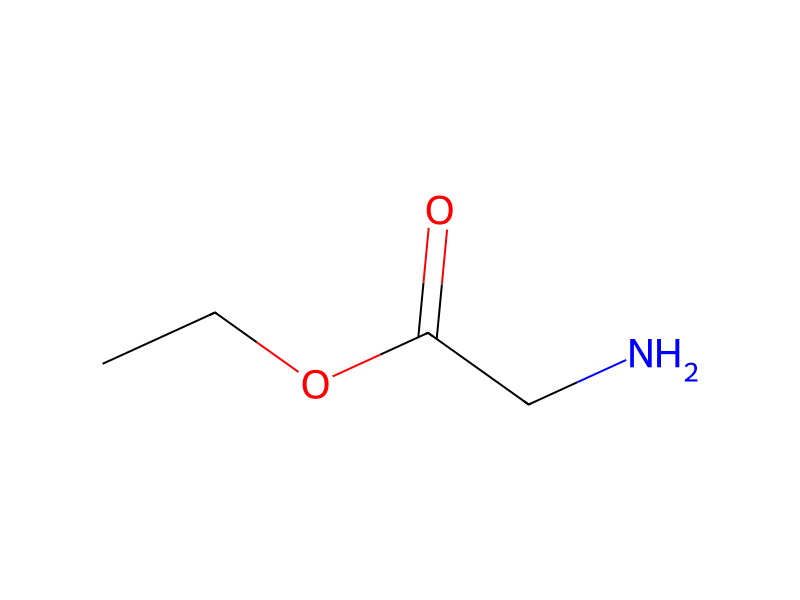


Product 1

Reagents, catalysts & solvents 1

Procedure
A solution of 5-bromopyridine-3-sulfonyl chloride (3.5 g, 14 mmol) (described in the synthesis of Example 170) and glycine ethylester (2.1 g, 20 mmol), diisopropyl ethyl amine (2.6 g, 20 mmol) in THF (70 mL) was stirred at room temperature for 16 h. The reaction mixture was partitioned between saturated aqueous sodium chloride and ethyl acetate. The organic solution was separated, dried and evaporated under reduced pressure. The residue was purified using flash column chromatography using ethyl acetate/hexanes as eluent to obtain ethyl 2-(5-bromopyridine-3-sulfonamido)acetate (600 mg, 14%). LCMS Method I: retention time 1.31 min; [M+1]=323, 325.
Workup
- customThe reaction mixture was partitioned between saturated aqueous sodium chloride and ethyl acetate
- customThe organic solution was separated
- customdried
- customevaporated under reduced pressure
- customThe residue was purified
Sources & evidence
- ORD record
- ord-dc4d0cc30379421e8a627a0edc169eb2
- Source dataset
- uspto-grants-2013_11
- Patent number
- US08575184B2
Reaction notes
Loading…