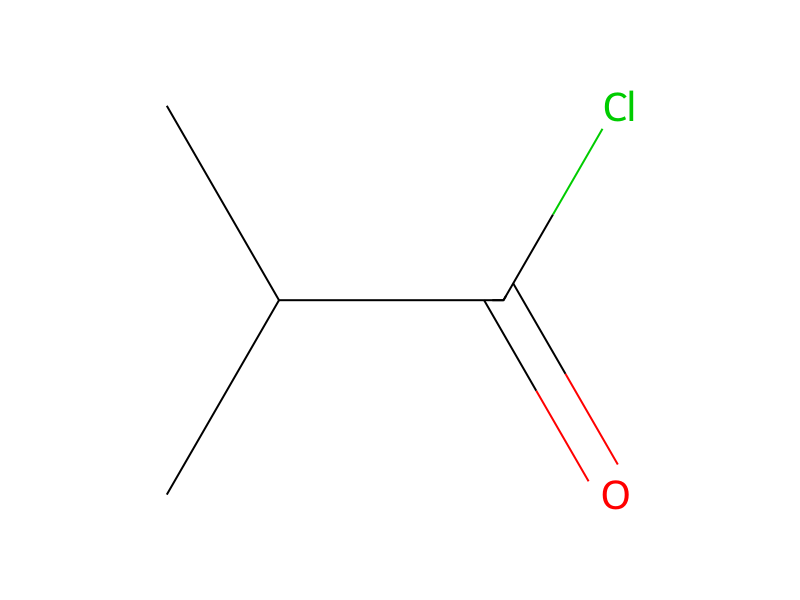
Isobutyryl chloride → HCID 67440443, compound
Reaction equation

[NH2:1][C:2]1[CH:7]=[CH:6][C:5]([CH:8]2[C:17]([CH3:19])([CH3:18])[CH2:16][C:15]3[C:10](=[CH:11][CH:12]=[C:13]([C:20]([O:22][CH3:23])=[O:21])[CH:14]=3)[NH:9]2)=[CH:4][CH:3]=1.C(N(CC)C(C)C)(C)C.[C:33](Cl)(=[O:37])[CH:34]([CH3:36])[CH3:35]>ClCCl>[C:33]([NH:1][C:2]1[CH:3]=[CH:4][C:5]([CH:8]2[C:17]([CH3:18])([CH3:19])[CH2:16][C:15]3[C:10](=[CH:11][CH:12]=[C:13]([C:20]([O:22][CH3:23])=[O:21])[CH:14]=3)[NH:9]2)=[CH:6][CH:7]=1)(=[O:37])[CH:34]([CH3:36])[CH3:35]Participants
5




Procedure
To a solution of methyl 2-(4-aminophenyl)-3,3-dimethyl-1,2,3,4-tetrahydroquinoline-6-carboxylate (70 mg, 0.23 mmol) and N,N-diisopropylethylamine (0.09 mL, 0.52 mmol,) in dichloromethane (5 mL) was added isobutyryl chloride (0.04 mL, 0.34 mmol). The resultant mixture was stirred at room temperature for 16 hrs under nitrogen. The solvent was removed and the residue was washed with dichloromethane/petroleum ether, the precipitate was collected to afford methyl 2-(4-isobutyramidophenyl)-3,3-dimethyl-1,2,3,4-tetrahydroquinoline-6-carboxylate as a yellow solid, 61 mg, yield: 68%.
Workup
- customThe solvent was removed
- washthe residue was washed with dichloromethane/petroleum ether
- customthe precipitate was collected
Sources & evidence
- ORD record
- ord-0dad14e10b0b4d7ea08cdf5780eb8b9c
- Source dataset
- uspto-grants-2013_11
- Patent number
- US08586747B2
Reaction notes
Loading…