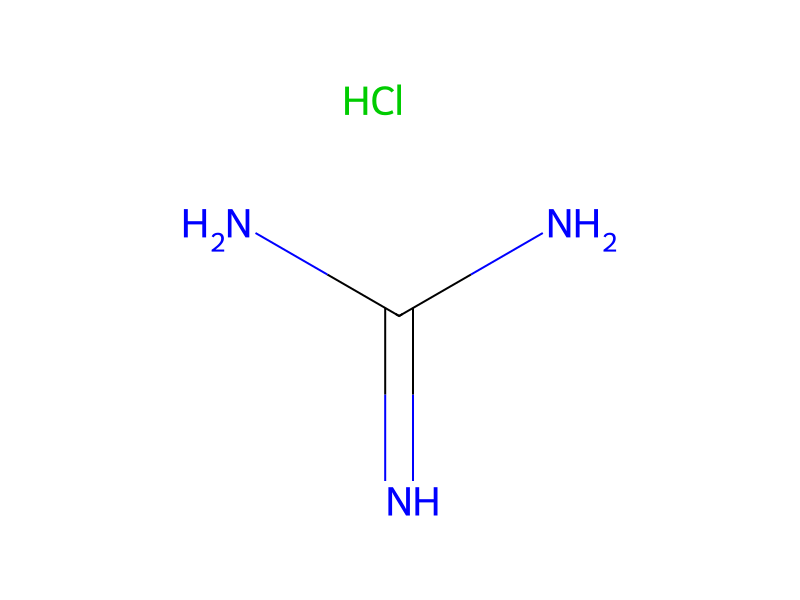
Guanidine Hydrochloride → 2-amino-7-(4-fluorophenyl)-7,8-dihydroquinazolin-5(6H)-one
Reaction equation

CN([CH:4]=[C:5]1[C:10](=O)[CH2:9][CH:8]([C:12]2[CH:17]=[CH:16][C:15]([F:18])=[CH:14][CH:13]=2)[CH2:7][C:6]1=[O:19])C.Cl.[NH2:21][C:22]([NH2:24])=[NH:23].C(=O)([O-])[O-].[Na+].[Na+].NC1N=CC2C(=O)CC(C3C=CC(Cl)=CC=3)CC=2N=1>>[NH2:23][C:22]1[N:24]=[CH:4][C:5]2[C:6](=[O:19])[CH2:7][CH:8]([C:12]3[CH:17]=[CH:16][C:15]([F:18])=[CH:14][CH:13]=3)[CH2:9][C:10]=2[N:21]=1Participants
5



Procedure
The title compound was prepared from 2-dimethylaminomethylene-5-(4-fluoro-phenyl)-cyclohexane-1,3-dione (600 mg, 2.29 mmol) prepared in stage 1, guanidine hydrochloride (438 mg, 4.59 mmol) and sodium carbonate (728 mg, 6.87 mmol), following the procedure described for 2-amino-7-(4-chloro-phenyl)-7,8-dihydro-6H-quinazolin-5-one (example 2/a stage 2).
Sources & evidence
- ORD record
- ord-85ece1ca3c8b40778bdb669872249567
- Source dataset
- uspto-grants-2013_11
- Patent number
- US08592430B2
Reaction notes
Loading…