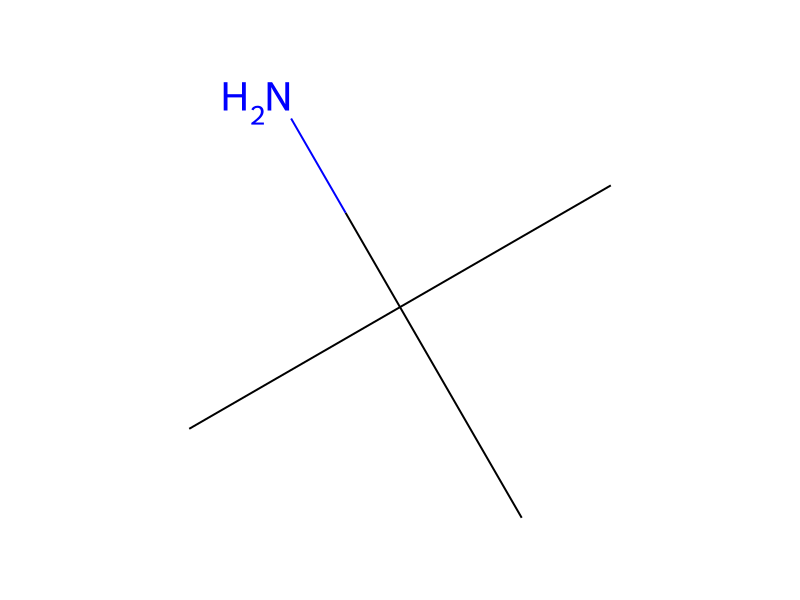
Tert-Butylamine → Methacrylic acid 1-tert-butylaminocarbonyl-1,1-difluoro-2-butyl ester
Reaction equation

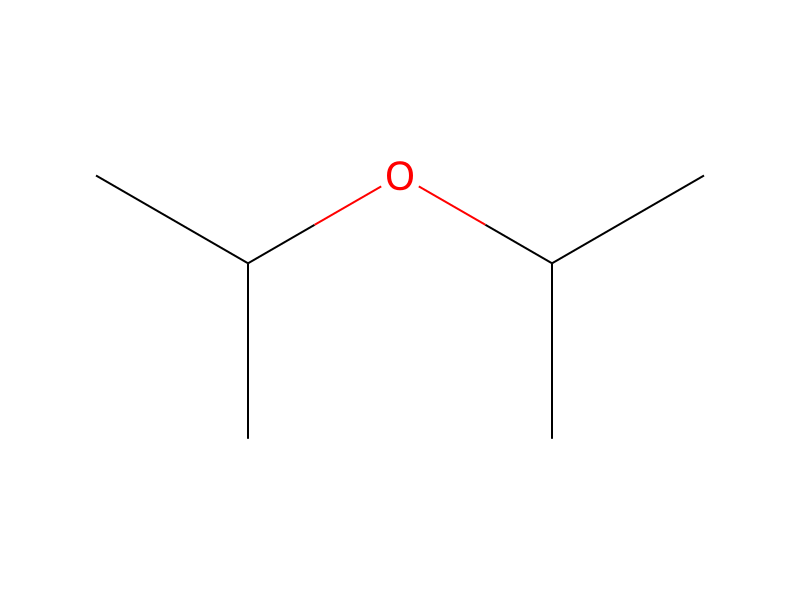
[C:1]([NH2:5])([CH3:4])([CH3:3])[CH3:2].C(OC(C)C)(C)C.Cl[C:14]([C:16]([F:27])([F:26])[CH:17]([O:20][C:21](=[O:25])[C:22]([CH3:24])=[CH2:23])[CH2:18][CH3:19])=[O:15]>>[C:1]([NH:5][C:14]([C:16]([F:26])([F:27])[CH:17]([O:20][C:21](=[O:25])[C:22]([CH3:24])=[CH2:23])[CH2:18][CH3:19])=[O:15])([CH3:4])([CH3:3])[CH3:2]Participants


Procedure
In a 50-mL glass flask with a dropping funnel, 3.0 g (41.6 mmol/2.0 eq) of tertiary butylamine and 5.0 g of diisopropyl ether were added and stirred. Subsequently, 5.0 g (20.8 mmol) of methacrylic acid 1-chlorocarbonyl-1,1-difluoro-2-butyl ester was dropped into the glass flask. The resulting solution was stirred for 10 minutes at room temperature. The completion of the reaction was confirmed by 19F NMR. After that, the solution was separated into an organic layer and an aqueous layer with the addition of 10 mL of water and 5 mL of diisopropyl ether. The thus-obtained organic layer was concentrated under a reduced pressure. With this, 6.5 g of methacrylic acid 1-tert-butylaminocarbonyl-1,1-difluoro-2-butyl ester was obtained as a white crystalline substance (yield: 99%, purity: 88%).
Workup
- stirringThe resulting solution was stirred for 10 minutes at room temperature
- customAfter that, the solution was separated into an organic layer
- additionan aqueous layer with the addition of 10 mL of water and 5 mL of diisopropyl ether
- concentrationThe thus-obtained organic layer was concentrated under a reduced pressure
Sources & evidence
- ORD record
- ord-ad4c07b3b0dd40bc8e81aa33e447812f
- Source dataset
- uspto-grants-2013_11
- Patent number
- US08592540B2
Reaction notes
Loading…