Dichloroacetyl chloride → HCID 69224559, compound
Reaction equation

[Cl:1][C:2]1[CH:7]=[CH:6][CH:5]=[C:4]([Cl:8])[C:3]=1[C:9]1[S:13][N:12]=[C:11]([C:14]2[CH:19]=[CH:18][C:17]([N+:20]([O-])=O)=[CH:16][CH:15]=2)[CH:10]=1.[Sn](Cl)Cl.[Cl-].[NH4+].[Cl:28][CH:29]([Cl:33])[C:30](Cl)=[O:31]>[Fe].C(N(CC)CC)C>[Cl:28][CH:29]([Cl:33])[C:30]([NH:20][C:17]1[CH:18]=[CH:19][C:14]([C:11]2[CH:10]=[C:9]([C:3]3[C:2]([Cl:1])=[CH:7][CH:6]=[CH:5][C:4]=3[Cl:8])[S:13][N:12]=2)=[CH:15][CH:16]=1)=[O:31]Participants
7





Procedure
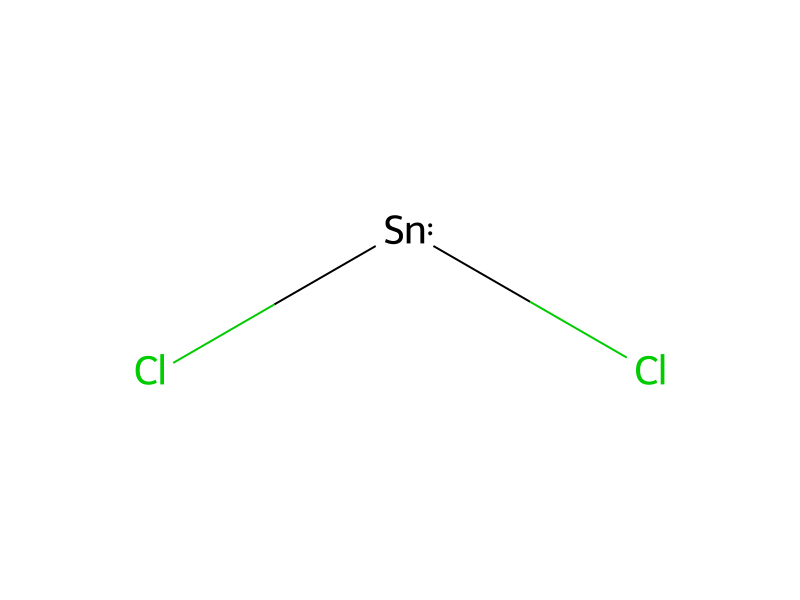
By the method of Tetrahedron, 1992, 48, 8127-8142 the substance 5-(2,6-dichlorophenyl)-3-(4-nitrophenyl)isoxazole can be treated with diphosphorus pentasulfide followed by aqueous or ethanolic ammonia quench to produce 5-(2,6-dichlorophenyl)-3-(4-nitrophenyl)isothiazole. The nitrophenyl group can be reduced to the corresponding aniline with tin (II) dichloride or iron powder and ammonium chloride. This aniline can then be treated with 2,2-dichloroacetyl chloride and triethylamine to yield 2,2-dichloro-N-[4-[5-(2,6-dichlorophenyl)-3-isothiazolyl]phenyl]acetamide.
Sources & evidence
- ORD record
- ord-efd877558f344cc6b242549ee3bf88bf
- Source dataset
- uspto-grants-2008_02
- Patent number
- US07326790B2
Reaction notes
Loading…