3-Bromopyridine → 3-(4-Methyl-1H-imidazol-5-yl)pyridine
Reaction equation

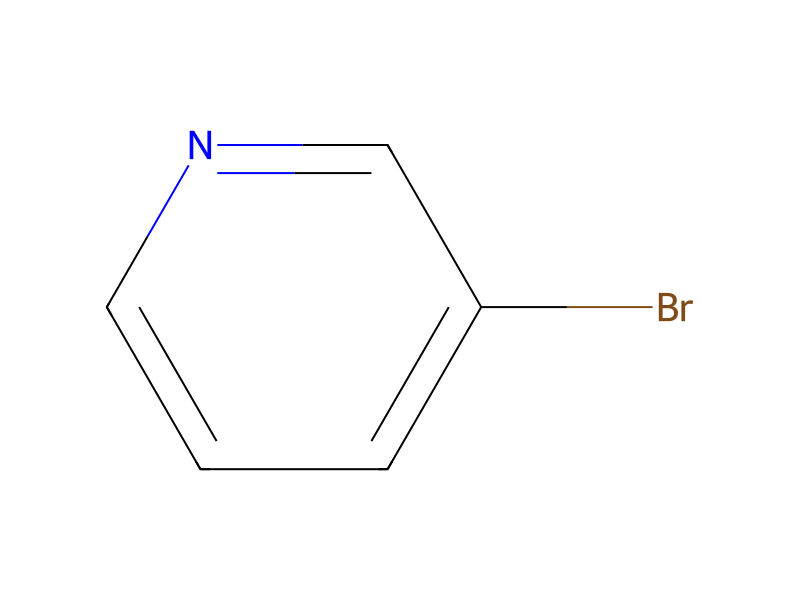
I[C:2]1[N:3]=[CH:4][N:5](C(C2C=CC=CC=2)(C2C=CC=CC=2)C2C=CC=CC=2)[C:6]=1[CH3:7].C([Mg]Br)C.Br[C:32]1[CH:33]=[N:34][CH:35]=[CH:36][CH:37]=1>C1COCC1.[Cl-].[Zn+2].[Cl-].C1C=CC([P]([Pd]([P](C2C=CC=CC=2)(C2C=CC=CC=2)C2C=CC=CC=2)([P](C2C=CC=CC=2)(C2C=CC=CC=2)C2C=CC=CC=2)[P](C2C=CC=CC=2)(C2C=CC=CC=2)C2C=CC=CC=2)(C2C=CC=CC=2)C2C=CC=CC=2)=CC=1>[CH3:7][C:6]1[NH:5][CH:4]=[N:3][C:2]=1[C:32]1[CH:33]=[N:34][CH:35]=[CH:36][CH:37]=1Participants
7
Reactant 3


Product 1

Reagents, catalysts & solvents 3



Procedure
To a solution of 4-iodo-5-methyl-1-trityl-1H-imidazole (1 eq) in THF at room temperature was added ethylmagnesium bromide (1.2 eq) under dry conditions. After stirring for 90 minutes, zinc chloride (1.2 eq) was added to the reaction mixture. After stirring for another 90 minutes, tetrakis(triphenylphosphine)palladium (10%) and 3-bromopyridine (1.2 eq) were added to the reaction mixture. Subsequent reaction conditions were performed as in Example 73 to give 3-(5-methyl-1H-imidazol-4-yl)-pyridine (92%). MH+(160)
Workup
- stirringAfter stirring for another 90 minutes
- customSubsequent reaction conditions
Sources & evidence
- ORD record
- ord-ab939d0b85bc47e0956fbd3be1e00367
- Source dataset
- uspto-grants-2008_02
- Patent number
- US07332476B2
Reaction notes
Loading…