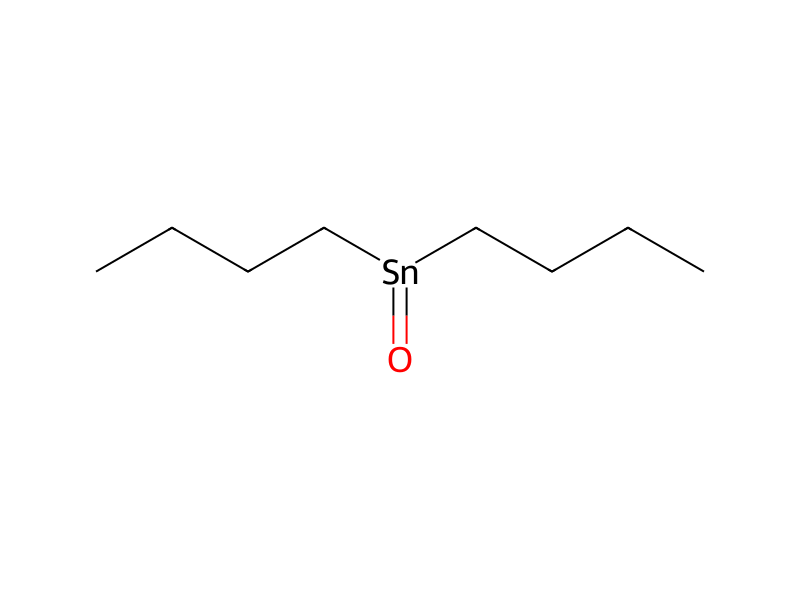
Dibutyltin oxide → HCID 10016619, compound
Reaction equation

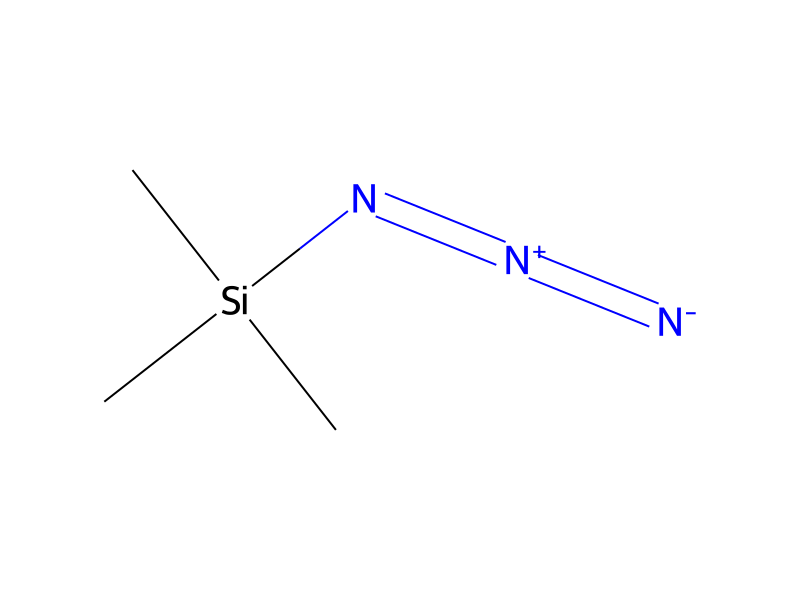
[F:1][C:2]1[CH:7]=[C:6]([C:8]([CH3:12])([CH3:11])[C:9]#[N:10])[CH:5]=[CH:4][C:3]=1[C:13]1[CH:18]=[CH:17][CH:16]=[CH:15][CH:14]=1.[N:19]([Si](C)(C)C)=[N+:20]=[N-:21].C([Sn](=O)CCCC)CCC>C1(C)C=CC=CC=1.CCOC(C)=O>[F:1][C:2]1[CH:7]=[C:6]([C:8]([C:9]2[N:19]=[N:20][NH:21][N:10]=2)([CH3:12])[CH3:11])[CH:5]=[CH:4][C:3]=1[C:13]1[CH:14]=[CH:15][CH:16]=[CH:17][CH:18]=1Participants
6
Reactant 3

Product 1

Reagents, catalysts & solvents 2


Conditions
- Temperature
- 150 °C
Procedure
A mixture of 2-(2-fluoro-biphenyl-4-yl)-2-methyl-propionitrile (100 mg, 0.418 mmol), azidotrimethylsilane (222 μL, 1.672 mmol) and dibutyltin oxide (20 mg) in dry toluene (2.5 mL) was heated under microwave irradiation in a sealed vessel at 150° C. for 1000 seconds. The solution was then diluted with EtOAc, washed with water, the organics separated, dried (MgSO4), filtered and evaporated to dryness. The residue was purified by column chromatography (EtOAc) to afford the title compound, 5-[1-(2-Fluoro-biphenyl-4-yl)-1-methyl-ethyl]-2H-tetrazole as a colorless powder. 1H NMR (500 MHz, CD3OD) δ 7.50 (2H, m), 7.40-7.46 (3H, m), 7.35 (1H, m), 7.05-7.12 (2H, m), 1.87 (6H, s). LCMS(EI) 283.1 (M+H)+, 324.2 (M+Na+H3O)+.
Workup
- washwashed with water
- dry with materialthe organics separated, dried (MgSO4)
- filtrationfiltered
- customevaporated to dryness
- customThe residue was purified by column chromatography (EtOAc)
Sources & evidence
- ORD record
- ord-78b7b9bc3a9a4932b6fbad4558c279cb
- Source dataset
- uspto-grants-2008_02
- Patent number
- US07332516B2
Reaction notes
Loading…