Potassium Chloride → Methyl-3,5-didecoxybenzoate
Reaction equation

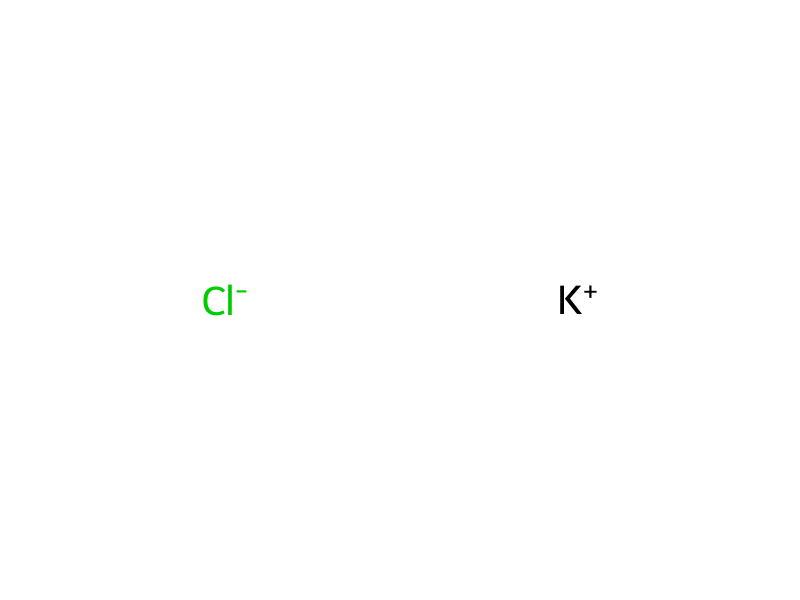
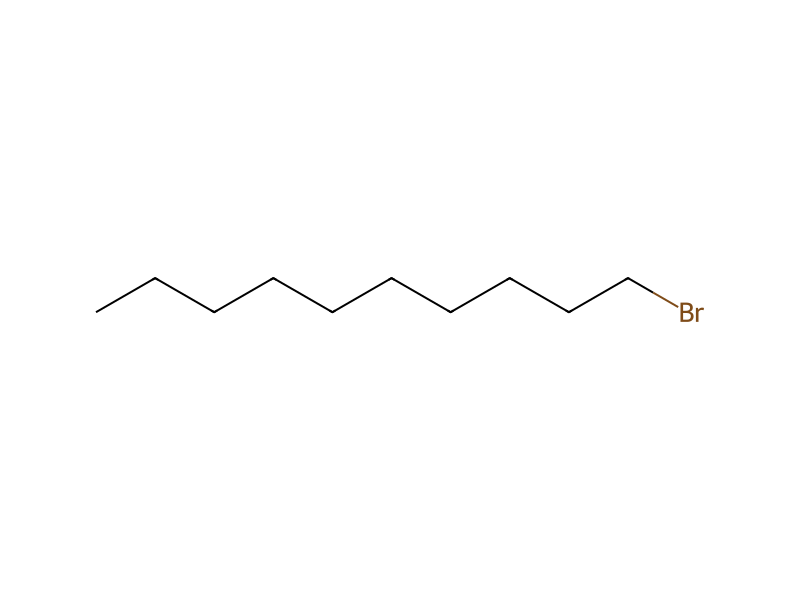
Br[CH2:2][CH2:3][CH2:4][CH2:5][CH2:6][CH2:7][CH2:8][CH2:9][CH2:10][CH3:11].[Cl-].[K+].[CH3:14][O:15][C:16](=[O:25])[C:17]1[CH:22]=[C:21]([OH:23])[CH:20]=[C:19]([OH:24])[CH:18]=1>CN(C)C=O>[CH3:14][O:15][C:16](=[O:25])[C:17]1[CH:18]=[C:19]([O:24][CH2:2][CH2:3][CH2:4][CH2:5][CH2:6][CH2:7][CH2:8][CH2:9][CH2:10][CH3:11])[CH:20]=[C:21]([O:23][CH2:2][CH2:3][CH2:4][CH2:5][CH2:6][CH2:7][CH2:8][CH2:9][CH2:10][CH3:11])[CH:22]=1Participants
Reactant 3

Product 1

Reagents, catalysts & solvents 1

Procedure
To a 1 L round bottom flask (RBF), while stirring with a magnetic stir bar, 1-bromodecane (54.3 mL, 0.262 mol), dimethylformamide (DMF) (200 mL), and potassium chloride (49.3 g, 0.357 mol) were added. Methyl-3,5-dihydroxybenzoate (20.0 g, 0.119 mol) was dissolved in DMF (100 mL) and the solution was added to the 1 L RBF. The solution gradually changed from an opaque pale yellow to an opaque light grey. The reaction vessel was sealed with a rubber septum and was stirred overnight. After stirring for approximately 20 hours, the contents of the RBF changed to a dark grey color and solidified. The RBF was gently heated with a heat gun until the contents liquefied. After cooling to just above room temperature, the contents of the RBF were transferred into a 2 L Erlenmeyer Flask that contained 1 L of 30/70 ice/distilled H2O mixture. A white precipitate formed on contact with H2O. Vacuum filtration was used to isolate the precipitate. The white precipitate was recrystallized from absolute ethanol (800 mL) and allowed to cool slowly overnight. The contents were then vacuum filtered yielding fine bright white fibrous crystals. The filtrate was concentrated under reduced pressure to approximately 300 mL. The concentrated filtrate was warmed and then left in refrigerator for approximately 18 hours. A second crop of fine bright white fibrous crystals was isolated from the solution upon vacuum filtration. The remaining pale yellow colored filtrate was discarded. This gave a total of 51.5 g yield or a 96.5% yield of the derivative. The NMR characterization data for this derivative is as follows. 1NMR (300 MHz, CDCl3): 0.88 (t, J=6.6, 6H, CH2CH3), 1.27-1.44 (m, 28H, CH2(CH2)7), 1.80 (p, J=6.9, 4H, OCH2CH2), 3.89 (s, 3H, OCH3), 3.93 (t, J=6.6, 4H, OCH2CH2), 6.63 (t, J=2.2, 1H, ArH), 7.15 (d, J=2.5, 2H, ArH). 13C NMR (75 MHz, CDCl3): 14.22, 22.78, 26.10, 29.26, 29.42, 29.45, 29.65, 31.99, 52.27, 68.37, 77.31, 106.61, 107.65, 131.86, 160.21, 167.08.
Workup
- additionthe solution was added to the 1 L RBF
- customThe reaction vessel was sealed with a rubber septum
- stirringwas stirred overnight
- stirringAfter stirring for approximately 20 hours
- temperatureThe RBF was gently heated with a heat gun until the contents
- temperatureAfter cooling to just above room temperature
- distillationdistilled H2O mixture
- customA white precipitate formed on contact with H2O
- filtrationVacuum filtration
- customto isolate the precipitate
- customThe white precipitate was recrystallized from absolute ethanol (800 mL)
- temperatureto cool slowly overnight
- filtrationvacuum filtered
- customyielding fine bright white fibrous crystals
- concentrationThe filtrate was concentrated under reduced pressure to approximately 300 mL
- temperatureThe concentrated filtrate was warmed
- customA second crop of fine bright white fibrous crystals was isolated from the solution upon vacuum filtration
- customThis gave a total of 51.5 g
- customyield
Sources & evidence
- ORD record
- ord-620d4cd98db14da39c50f8f59a4fa330
- Source dataset
- uspto-grants-2008_02
- Patent number
- US07332529B2
Reaction notes
Loading…