Sulfur Dioxide → Fuming sulfuric acid
Reaction equation

[S].S(=O)=[O:3].[S:5](=[O:8])(=[O:7])=[O:6]>>[OH:6][S:5]([OH:3])(=[O:8])=[O:7].[O:6]=[S:5](=[O:8])=[O:7]Participants
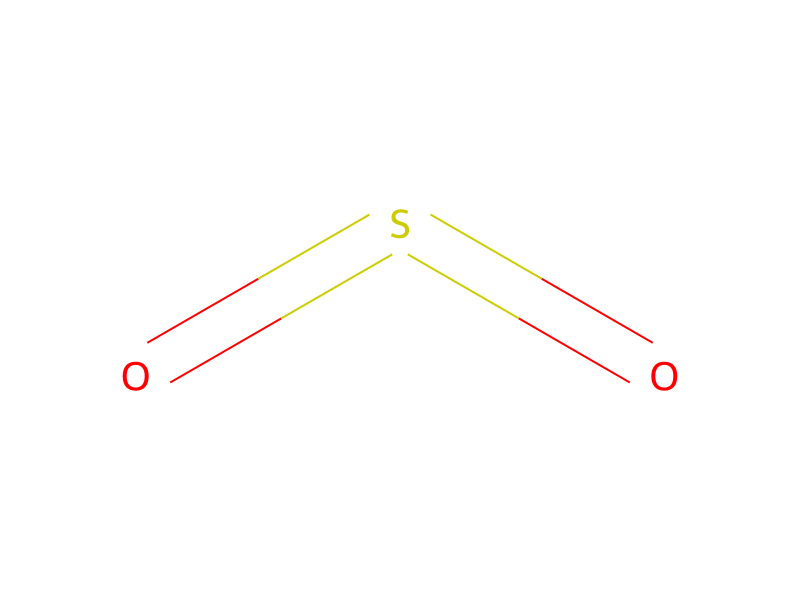
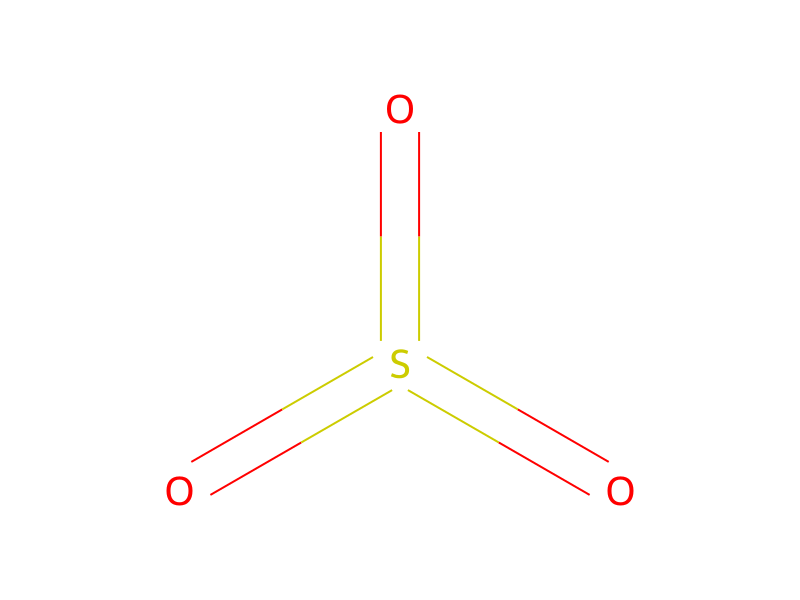

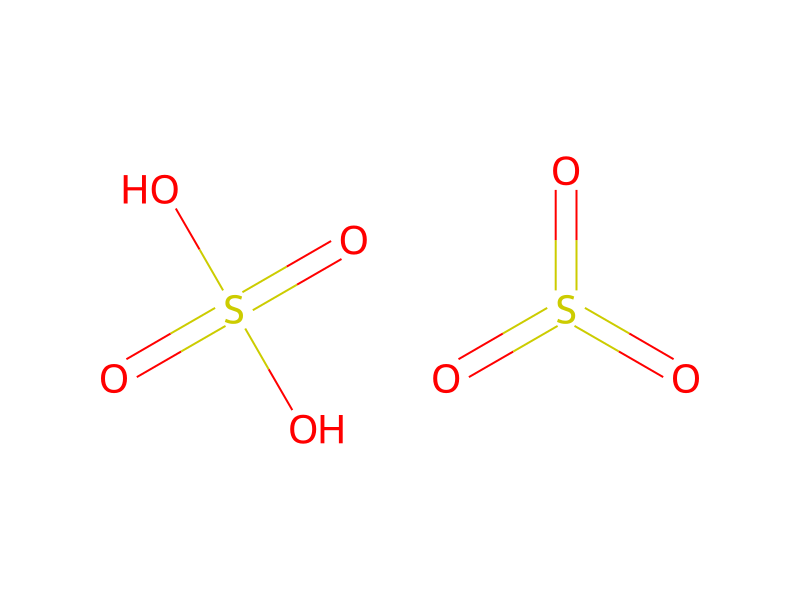
Conditions
- Temperature
- 400 °C
Procedure
On leaving drying unit 6, air stream 1 now containing the sulphur dioxide stripped from acid stream 9, is driven via line 13 and knock out drum 14 to a secondary compressor 15 where it is compressed to a pressure level of 28.1 atm. and fed to a sulphur burning furnace 16 via line 17. Stream and tail gas are circulated through lines 18 and 19 respectively in furnace 16 in order to control the temperature of the gas produced by the burning of sulphur in the presence of air stream 1 and to obtain a super-heated steam stream 20 and a hot tail gas stream 21 from which, as will appear hereinafter, energy is later recovered through expansion in suitable power recovery turbines 22 and 23. Sulphur is provided to furnace 16 in molten form through lines 24, 25 and 26, by pump 27 from melting unit 28 and sulphur feed main inlet 29. The gas stream 30 obtained at the exit of furnace 16 has a sulphur dioxide content of 9% and a temperature in the range of 350° C. to 450° C., and is suitable as a feed to converter 33 for the catalytic conversion of sulphur dioxide to sulphur trioxide. The hot feed gas 30 is then passed through a hot gas filter 31 to remove impurities prior to reaching the converter 33 and is fed via line 32 to said converter where the sulphur dioxide is essentially completely converted to sulphur trioxide. The heat generated in the converter is used to heat the tail gas in line 34 before the latter's entrance into the furnace via line 34a for final heating prior to expansion in power recovery turbine 22. At the secondary operating pressure of 28 atm. used in the process, it is normal to expect conversion efficiencies of 99.7% or better and effluent gases having a sulphur dioxide content of 300 ppm or lower. In order, however, to substantially increase the conversion efficiency and lower the sulphur dioxide content in effluent gases, the converted gas stream 35 from the converter 33 i.e. the gas containing the sulphur trioxide and a minor amount of unconverted sulphur dioxide, is subjected to the following treatments in accordance with the invention. Upon issuance from the converter 33 the converted gas stream 35 at about 400° C. is cooled in a feed water heater 36 to about 200° C. and successively passed into a condenser 37 where 80% of the sulphur trioxide at least 28% of the sulphur dioxide are co-condensed and thence through line 38 into the lower part of absorbing tower 39 where the remainder of the sulphur trioxide and most of the remaining sulphur dioxide are absorbed in stream of sulphuric acid fed to the top of said absorbing tower. The co-condensate of sulphur trioxide and sulphur dioxide is wholly or partly added via line 40 to the acid stream 41 coming from the bottom of absorbing tower 39 and recirculated to the drying tower 6 via lines 42, 9 and 10, chiller 12 and line 11 after passing through a pressure let down device 43. The part, if any, of the co-condensate which is not added to the acid stream 41 is recovered as a sulphur trioxide product through line 44. Where it is desired to obtain oleum or to remove more sulphur dioxide and sulphur trioxide from the converted gas prior to absorber 39, the sulphur trioxide condenser 37 is irrigated with cold sulphuric acid.
Workup
- customThe gas stream 30 obtained at the exit of furnace 16
- customin the range of 350° C. to 450° C.
- filtrationfilter 31
- customto remove impurities
- temperatureto heat the tail gas in line 34 before the latter's entrance into the furnace via line 34a
- temperaturefor final heating
- temperatureIn order, however, to substantially increase the conversion efficiency
- additionlower the sulphur dioxide content in effluent gases, the converted gas stream 35 from the converter 33 i.e. the gas containing the sulphur trioxide
- customsuccessively passed into a condenser
- customthence through line 38 into the lower part of absorbing tower 39 where the remainder of the sulphur trioxide
- custommost of the remaining sulphur dioxide are absorbed in stream of sulphuric acid
- customof said absorbing tower
- additionpartly added via line 40 to the acid stream 41 coming from the bottom
- customof absorbing tower 39
- additionThe part, if any, of the co-condensate which is not added to the acid stream 41
- customis recovered as a sulphur trioxide product through line 44
Sources & evidence
- ORD record
- ord-d8dbd24318f641e5a85d65da54d9ee6c
- Source dataset
- uspto-grants-1980_07
- Patent number
- US04213958
Reaction notes
Loading…