2-Bromo-1-(4-hydroxyphenyl)ethanone → Phenol, 4-imidazo[1,2-a]pyridin-2-yl-
Reaction equation

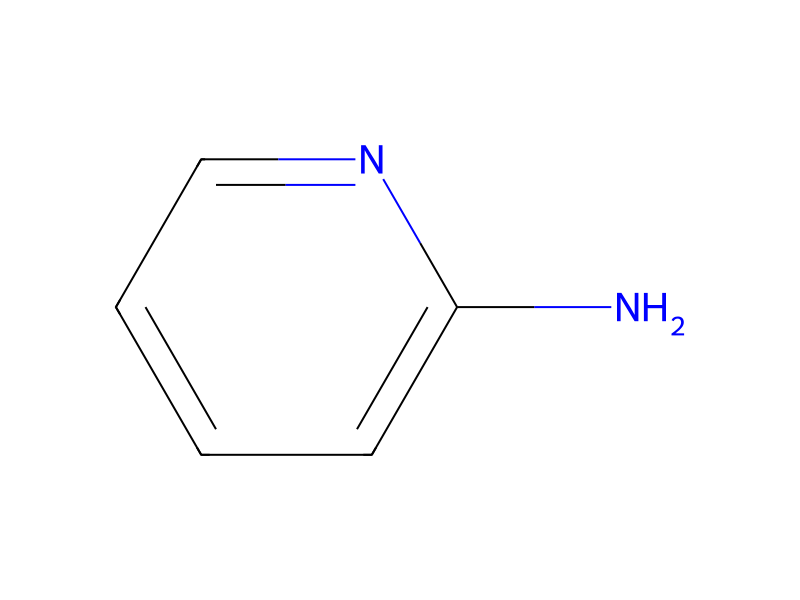
Br[CH2:2][C:3]([C:5]1[CH:10]=[CH:9][C:8]([OH:11])=[CH:7][CH:6]=1)=O.[NH2:12][C:13]1[CH:18]=[CH:17][CH:16]=[CH:15][N:14]=1.C(=O)([O-])O.[Na+]>C(#N)C>[OH:11][C:8]1[CH:9]=[CH:10][C:5]([C:3]2[N:12]=[C:13]3[CH:18]=[CH:17][CH:16]=[CH:15][N:14]3[CH:2]=2)=[CH:6][CH:7]=1Participants
Reactant 3


Product 1

Reagents, catalysts & solvents 1

Conditions
- Temperature
- 110 °C
Procedure
649 mg (corresponding to 3.0 mmol) of 2-bromo-4′-hydroxyacetophenone and 285 mg (corresponding to 3.0 mmol) of 2-aminopyridine were dissolved in 20 mL of acetonitrile. The resulting solution was refluxed in an oil bath at 110° C. for one hour. After the reaction solution was cooled down to room temperature, 254 mg (corresponding to 5.4 mmol) of sodium hydrogencarbonate was added thereto. The resulting mixture was refluxed in an oil bath at 100° C. for one hour. After the completion of the reaction, the reaction solution was cooled to room temperature, and precipitates were filtered and recovered therefrom. The precipitates were washed with acetonitrile and water, and then dried under reduced pressure to obtain 405 mg (corresponding to 1.9 mmol) of 2-(4′-hydroxyphenyl)imidazo[1,2-a]pyridine (FIG. 4, Step 2).
Workup
- temperatureAfter the reaction solution was cooled down to room temperature
- temperatureThe resulting mixture was refluxed in an oil bath at 100° C. for one hour
- customAfter the completion of the reaction
- temperaturethe reaction solution was cooled to room temperature
- customprecipitates
- filtrationwere filtered
- customrecovered
- washThe precipitates were washed with acetonitrile and water
- customdried under reduced pressure
Sources & evidence
- ORD record
- ord-5610be1c99b34922ad05dbfcc85590fa
- Source dataset
- uspto-grants-2012_10
- Patent number
- US08277777B2
Reaction notes
Loading…