Dimethylformamide → Methyl 3-chloro-2-cyano-pyridine-4-carboxylate
Reaction equation
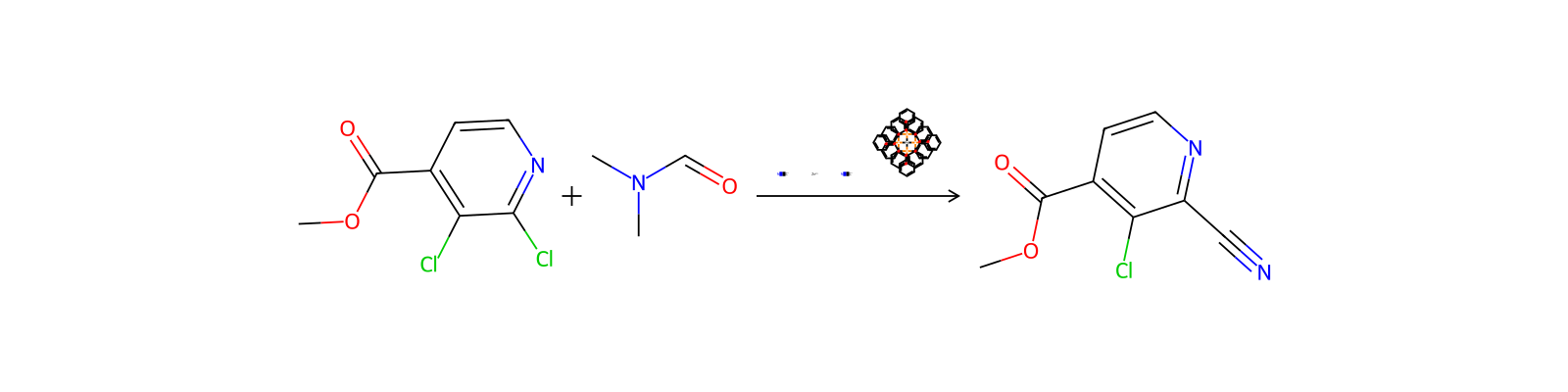
[CH3:1][O:2][C:3](=[O:12])[C:4]1[CH:9]=[CH:8][N:7]=[C:6](Cl)[C:5]=1[Cl:11].[CH3:13][N:14](C=O)C>[C-]#N.[Zn+2].[C-]#N.C1C=CC([P]([Pd]([P](C2C=CC=CC=2)(C2C=CC=CC=2)C2C=CC=CC=2)([P](C2C=CC=CC=2)(C2C=CC=CC=2)C2C=CC=CC=2)[P](C2C=CC=CC=2)(C2C=CC=CC=2)C2C=CC=CC=2)(C2C=CC=CC=2)C2C=CC=CC=2)=CC=1>[CH3:1][O:2][C:3](=[O:12])[C:4]1[CH:9]=[CH:8][N:7]=[C:6]([C:13]#[N:14])[C:5]=1[Cl:11]Participants




Conditions
- Temperature
- 190 °C
Procedure
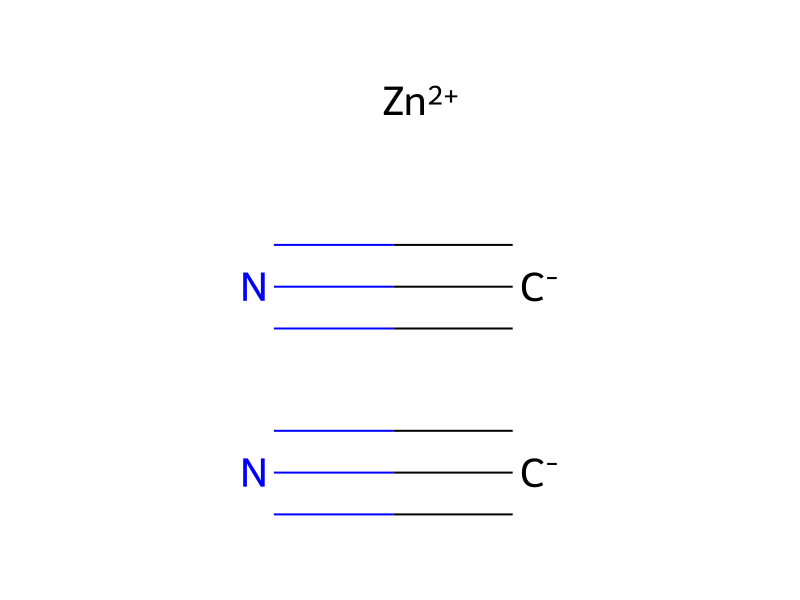
A microwave vial was charged with 2,3-dichloro-isonicotinic acid methyl ester (7.6 g, 36.9 mmol), zinc cyanide (4.75 g, 40.6 mmol), tetrakis(triphenylphosphine)palladium (1.0 g, 0.9 mmol) and DMF (37 mL), then capped, evacuated and backfilled with nitrogen. The reaction solution was subjected to microwave irradiation, heating at 190° C. for 20 minutes, then filtered through a pad of Celite® which was washed further with ethyl acetate. The resulting mixture was washed with water, followed by a saturated solution of sodium hydrogen carbonate, then brine, dried (Na2SO4), filtered and concentrated in vacuo. The resultant residue was subjected to column chromatography (Si-PPC, gradient 0% to 100%, ethyl acetate in cyclohexane) to give the title compound as a white solid (3.1 g, 43%). 1H NMR (CDCl3, 400 MHz) 8.70 (d, J=5.0 Hz, 1H), 7.87 (d, J=5.0 Hz, 1H), 4.01 (s, 3H).
Workup
- customcapped
- customevacuated
- customirradiation
- filtrationfiltered through a pad of Celite® which
- washwas washed further with ethyl acetate
- washThe resulting mixture was washed with water
- dry with materialbrine, dried (Na2SO4)
- filtrationfiltered
- concentrationconcentrated in vacuo
Sources & evidence
- ORD record
- ord-08cb7549550c42898d0b290ab6805edb
- Source dataset
- uspto-grants-2012_10
- Patent number
- US08293763B2
Reaction notes
Loading…