Potassium tert-butoxide → 2-Bromo-4-chloro-1-(2-methylenecyclopentyloxy)benzene
Reaction equation

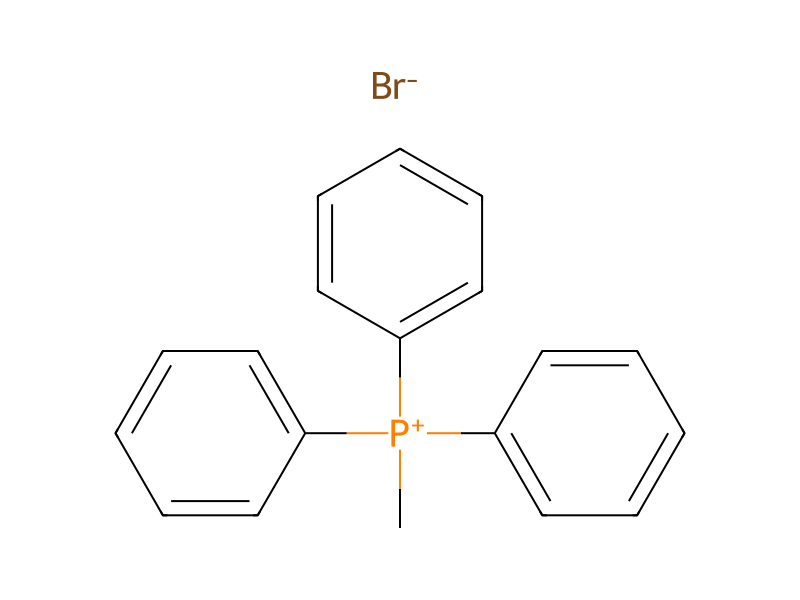
[CH3:1]C(C)([O-])C.[K+].[Br:7][C:8]1[CH:20]=[C:19]([Cl:21])[CH:18]=[CH:17][C:9]=1[O:10][CH:11]1[CH2:15][CH2:14][CH2:13][C:12]1=O>[Br-].C[P+](C1C=CC=CC=1)(C1C=CC=CC=1)C1C=CC=CC=1.O1CCCC1>[Br:7][C:8]1[CH:20]=[C:19]([Cl:21])[CH:18]=[CH:17][C:9]=1[O:10][CH:11]1[CH2:15][CH2:14][CH2:13][C:12]1=[CH2:1]Participants
Reactant 2


Product 1

Reagents, catalysts & solvents 2

Conditions
- Temperature
- 0 °C
Procedure
To the mixture of methyl triphenylphosphonium bromide (16.0 g, 44.8 mmol) in anhydrous tetrahydrofuran (125 mL) at 0° C. under nitrogen was added portion wise the potassium tert-butoxide (5.0 g, 44.8 mmol). After stirring at 0° C. for 30 minutes, the mixture of 2-(2-bromo-4-chlorophenoxy)cyclopentanone (516B) (10.8 g, 37.3 mmol) in tetrahydrofuran (40 mL) was added slowly. The resulting mixture was stirred at room temperature under nitrogen for 3 hours. The reaction mixture was quenched with water and extracted with ethyl acetate. The organic phase was washed with water, brine, dried with sodium sulfate and concentrated under reduced pressure. The residue was purified by flash chromatography on silica gel (5-10% EtOAc in hexanes) to provide 2-bromo-4-chloro-1-(2-methylenecyclopentyloxy)benzene (517) (6.2 g, 58.2%) as a colorless oil.
Workup
- additionwas added slowly
- stirringThe resulting mixture was stirred at room temperature under nitrogen for 3 hours
- customThe reaction mixture was quenched with water
- extractionextracted with ethyl acetate
- washThe organic phase was washed with water, brine
- dry with materialdried with sodium sulfate
- concentrationconcentrated under reduced pressure
- customThe residue was purified by flash chromatography on silica gel (5-10% EtOAc in hexanes)
Sources & evidence
- ORD record
- ord-ceb96e43aed940f495a079a0ebbd6992
- Source dataset
- uspto-grants-2012_10
- Patent number
- US08299117B2
Reaction notes
Loading…