Ethylene Glycol → Bis(2-hydroxyethyl) terephthalate
Reaction equation

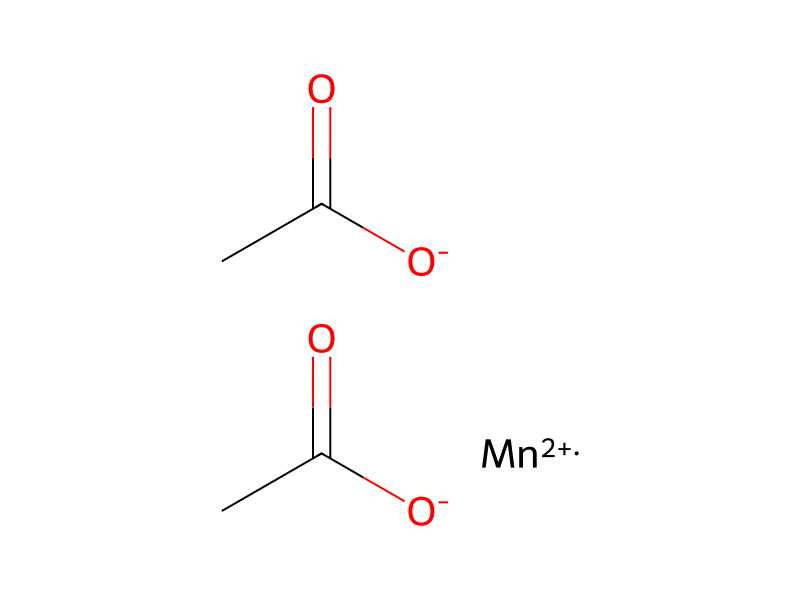
[CH3:1][O:2][C:3](=[O:14])[C:4]1[CH:13]=[CH:12][C:7]([C:8]([O:10][CH3:11])=[O:9])=[CH:6][CH:5]=1.C(O)[CH2:16][OH:17].[CH3:19][OH:20]>C([O-])(=O)C.[Mn+2].C([O-])(=O)C>[OH:17][CH2:16][CH2:11][O:10][C:8](=[O:9])[C:7]1[CH:12]=[CH:13][C:4]([C:3]([O:2][CH2:1][CH2:19][OH:20])=[O:14])=[CH:5][CH:6]=1Participants
Reactant 3



Product 1

Reagents, catalysts & solvents 1
Procedure
12 Parts by weight of dimethylterephthalate, 8 parts by weight of ethylene-glycol and 0.025 % of the brightener compound No. 201 (cf. Table shown above) were melted under a nitrogen atmosphere in a stainless stell vessel provided with a stirring device, at a temperature of from 140° to 150° C. After the melt had reached a temperature of 145° C, it was mixed with 0.02 parts of manganese acetate dissolved in one part of glycol. In a temperature range of from 160° to 220° C, the transesterification was carried out within 3 hours under atmospheric pressure, in which process methanol and, towards the end, part of the glycol were distilled off. The bis-(β-hydroxyethyl)-terephthalate obtained was brought to a temperature of 240° C in a condensation vessel made of stainless steel, after 1 part by weight of ethylene-glycol had been added, together with
Workup
- custom201 (cf. Table shown above) were melted under a nitrogen atmosphere in a stainless stell vessel
- customprovided with a stirring device, at a temperature of from 140° to 150° C
- customa temperature of 145° C, it
- distillationwere distilled off
Sources & evidence
- ORD record
- ord-d96b4c924ede4f4c82e286039a6dc2bc
- Source dataset
- uspto-grants-1977_09
- Patent number
- US04048185
Reaction notes
Loading…