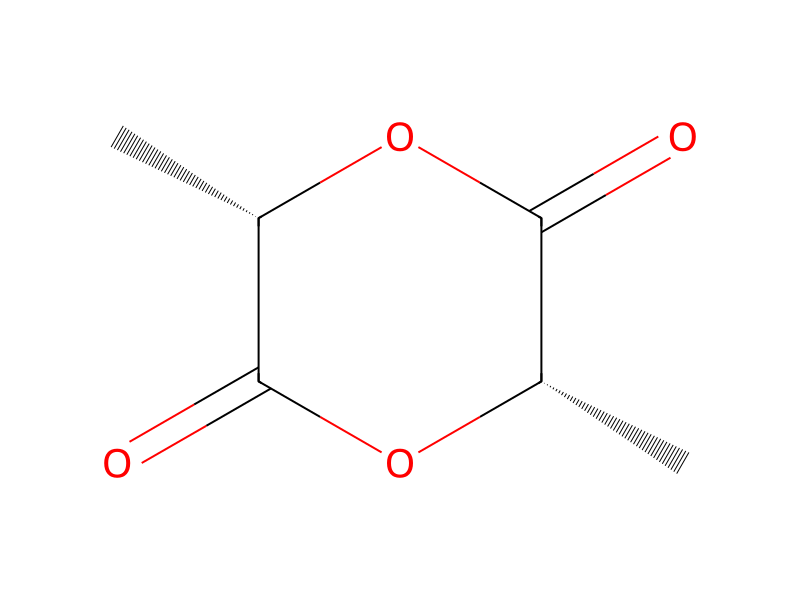
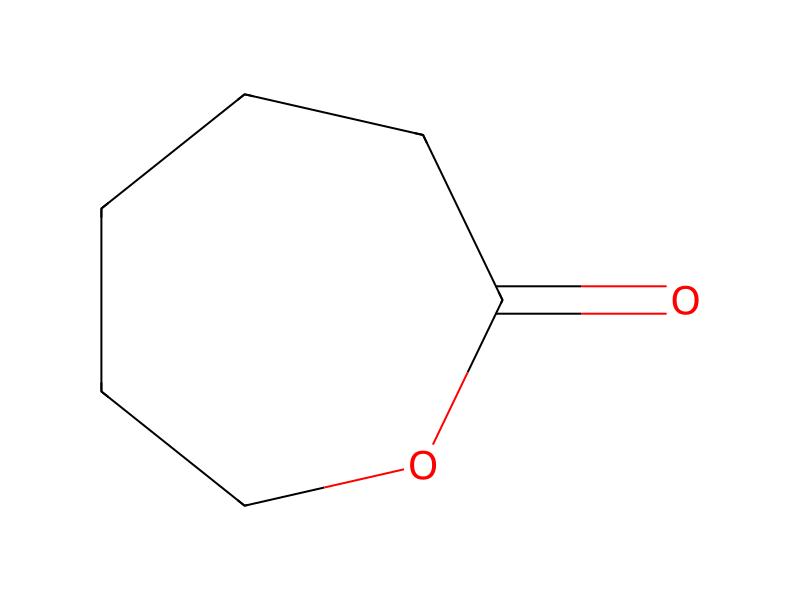
Glycolide → epsilon-CAPROLACTONE
Reaction equation

[CH3:1][C@@H:2]1[O:9][C:7](=[O:8])[C@H:6](C)[O:5][C:3]1=[O:4].[CH2:11]1[O:18][C:16](=[O:17])[CH2:15]O[C:12]1=O>>[CH2:2]1[O:9][C:7](=[O:8])[CH2:6][O:5][C:3]1=[O:4].[C:16]1(=[O:17])[O:18][CH2:11][CH2:12][CH2:2][CH2:1][CH2:15]1Participants
4

Procedure
In this embodiment, LPLG-b-P(GA-co-CL) copolymer is formed by mixing the L-lactide and glycolide monomers with a solvent and catalyst to form a polymerization solution. Once LPLG is formed in the solution, glycolide monomers and caprolactone monomers are added into the solution containing the formed LPLG copolymer to form LPLG-b-P(GA-co-CL) copolymer. In one embodiment, the glycolide monomers and caprolactone monomers are added to the same solution of LPLG-formed copolymer to allow glycolide and caprolactone monomers to react with LPLG in the solution to form LPLG-b-P(GA-co-CL) copolymer. Alternatively, the glycolide monomers and caprolactone monomers are added in a solution of LPLG which includes different solvent(s).
Workup
- customIn this embodiment, LPLG-b-P(GA-co-CL) copolymer is formed
- customto form a polymerization solution
Sources & evidence
- ORD record
- ord-eeada670356b4a1d85a3d71728a1daa7
- Source dataset
- uspto-grants-2011_04
- Patent number
- US07923022B2
Reaction notes
Loading…