Triethylamine → 2-Propenamide, N-(1-oxo-2-propenyl)-
Reaction equation

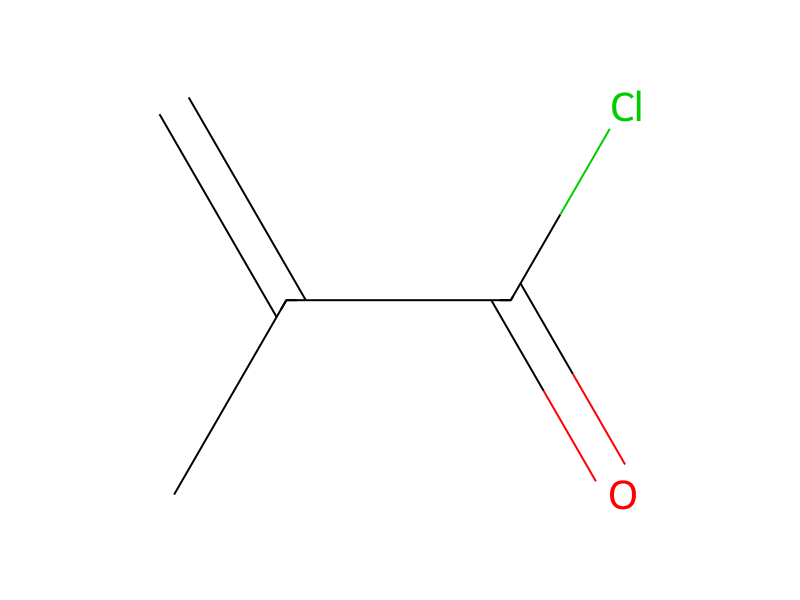
C([N:3](CC)CC)C.[C:8](Cl)(=[O:11])[CH:9]=[CH2:10].[C:13](Cl)(=[O:17])[C:14](C)=[CH2:15]>>[CH2:10]=[CH:9][C:8]([NH:3][C:13]([CH:14]=[CH2:15])=[O:17])=[O:11]Participants



Procedure
PEG-diacrylate (PEGDA), PEG-dimethacrylate (PEGDM), PEG-diacrylamide (PEGDAA) and PEG-dimethacrylamide (PEGDMA) were synthesized from PEG (Mw 3400 KDa, Aldrich) or PEG-diamine (Mw 3400, Shearwater Polymers) as described with minor modifications. Briefly: PEG (or PEG-diamine) molecular weight 3400 (10 g, 5.88 mmol of functional group) was azeotropically distilled with 400 ml of toluene under argon, removing ca. 100 ml of toluene. The anhydrous solution was cooled at room temperature under argon and then copied in an ice bath. Anhydrous dichloromethane (Aldrich) (ca. 50 ml) was added until the solution become clear. Triethylamine (1.23 ml, 8.82 mmol, Aldrich) was added dropwise with stirring, followed by the dropwise addition of 0.72 ml of acryloyl chloride (8.82 mmol, Aldrich) or 0.85 ml of methacryloyl chloride (8.82 mmol, Aldrich). The reaction was stirred in the dark, overnight under argon. The solutions were then filtered under vacuum until clear, and the product was precipitated in diethyl ether, collected by filtration and dried under vacuum. Next, 10 g of the product were dissolved in 10 ml of distilled water, adding 5 g of NaCl (the pH was adjusted to 6). The derivatives were then extracted 3 times with dichloromethane and precipitated in diethyl ether, and collected by filtration and dried under vacuum. PEG diacrylate: yield 75%. 1H-NMR (DCCl3): 3.6 ppm (303.5 H, PEG), 4.3 ppm (t, 4H, —CH2—CH2—O—CO—CH═CH2), 5.8 ppm (dd, 2H, CH2═CH—COO), 6.1 ppm, 6.4 ppm (dd, 4H, CH2═CH—COO—). Degree of substitution 95%. PEG dimethacrylate: yield 60%. 1H-NMR (DCCl3): 2.3 ppm (s, 6 H, CH2═C(CH3)═COO—), 3.6 ppm (303.5H, PEG). 4.3 ppm (t, 4H, —CH2—CH2—O—CO—C(CH3)═CH2), 5.8 ppm, 6.1 ppm (d, 4H, CH2═C(CH3)—COO—). Degree of substitution 91%. PEG diacrylamide: yield 75%. 1H-NMR (DCCl3): 3.6 ppm (304.4H, PEG), 5.6 ppm (dd, 2H, CH2═CH—CON—), 6.1 ppm and 6.3 ppm (dd, 4 H, CH2═CH—COO—). Degree of substitution 100%. PEG dimethacrylamide: yield 71%. 1H-NMR (DCCl3): 2 ppm (s. 6 H, CH2═C(CH3)—CON—), 3.6 ppm (304.4H, PEG), 5.3 ppm, 5.8 ppm (d, 4H, CH2═C(CH3)—CON—). Degree of substitution 100%.
Workup
- distillationBriefly: PEG (or PEG-diamine) molecular weight 3400 (10 g, 5.88 mmol of functional group) was azeotropically distilled with 400 ml of toluene under argon
- customremoving ca. 100 ml of toluene
- customcopied in an ice bath
- additionAnhydrous dichloromethane (Aldrich) (ca. 50 ml) was added until the solution
- stirringThe reaction was stirred in the dark, overnight under argon
- filtrationThe solutions were then filtered under vacuum until clear, and the product
- customwas precipitated in diethyl ether
- filtrationcollected by filtration
- customdried under vacuum
- dissolutionNext, 10 g of the product were dissolved in 10 ml of distilled water
- additionadding 5 g of NaCl (the pH
- extractionThe derivatives were then extracted 3 times with dichloromethane
- customprecipitated in diethyl ether
- filtrationcollected by filtration
- customdried under vacuum
Sources & evidence
- ORD record
- ord-bc5cf7a60b3d48938d36c769d251a42b
- Source dataset
- uspto-grants-2011_04
- Patent number
- US07928069B2
Reaction notes
Loading…