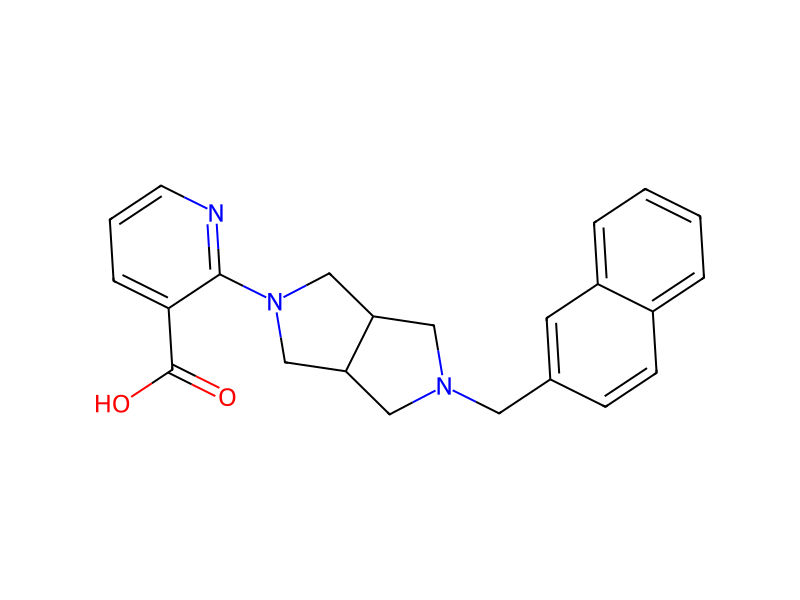
Hydrochloric Acid → 6-(5-Naphthalen-2-ylmethyl-hexahydro-pyrrolo[3,4-c]pyrrol-2-yl)pyridine-5-carboxylic acid
Reaction equation

C([C:3]1[CH:8]=[CH:7][C:6]([C:9](N)=[O:10])=[C:5]([N:12]2[CH2:19][CH:18]3[CH:14]([CH2:15][N:16]([CH2:20][C:21]4[CH:30]=[CH:29][C:28]5[C:23](=[CH:24][CH:25]=[CH:26][CH:27]=5)[CH:22]=4)[CH2:17]3)[CH2:13]2)[N:4]=1)C.[OH-:31].[Na+].Cl>CCO>[CH:22]1[C:23]2[C:28](=[CH:27][CH:26]=[CH:25][CH:24]=2)[CH:29]=[CH:30][C:21]=1[CH2:20][N:16]1[CH2:17][CH:18]2[CH2:19][N:12]([C:5]3[N:4]=[CH:3][CH:8]=[CH:7][C:6]=3[C:9]([OH:10])=[O:31])[CH2:13][CH:14]2[CH2:15]1Participants
5




Conditions
- Temperature
- 80 °C
Procedure
To a suspension of ethyl 6-(5-naphthalen-2-ylmethyl-hexahydro-pyrrolo[3,4-c]pyrrol-2-yl)pyridine-5-carboxamide (0.255 g, 0.63 mmol) in EtOH (2 ml) was added 6M NaOH (2 ml, 12 mmol). The mixture was heated at 80° C. for 90 min and then cooled to r.t. Concentrated HCl was then added until a precipitate formed, and the solid was collected by filtration (240 mg, quant.). The compound was carried onto the next step without characterization.
Workup
- temperaturecooled to r.t
- customformed
- filtrationthe solid was collected by filtration (240 mg, quant.)
Sources & evidence
- ORD record
- ord-3670172f5bdd413a9d34fdd5a32ce39a
- Source dataset
- uspto-grants-2011_04
- Patent number
- US07932246B2
Reaction notes
Loading…