Hydrochloric Acid → 3-Chlorobenzanthrone
Reaction equation

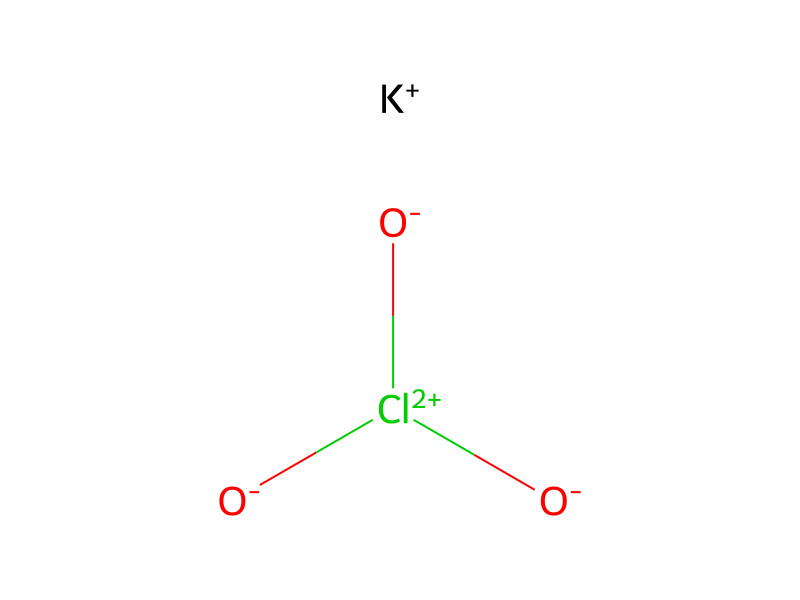
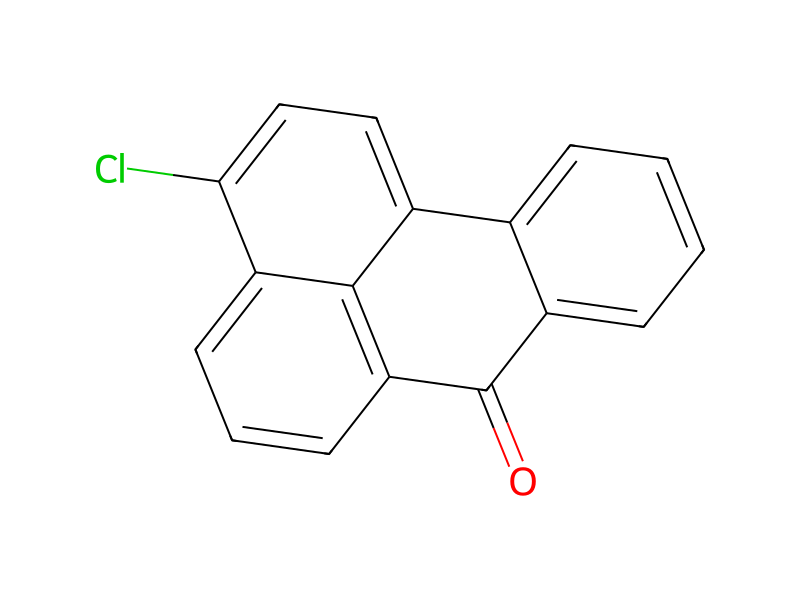
[CH:1]1[C:17]2=[C:18]3[C:8]([C:9]([C:11]4[C:16]2=[CH:15][CH:14]=[CH:13][CH:12]=4)=[O:10])=[CH:7][CH:6]=[CH:5][C:4]3=[CH:3][CH:2]=1.O.[Cl:20]([O-])(=O)=O.[K+].Cl>C(O)(=O)C>[Cl:20][C:3]1[CH:2]=[CH:1][C:17]2[C:16]3[C:11]([C:9](=[O:10])[C:8]4[C:18]=2[C:4]=1[CH:5]=[CH:6][CH:7]=4)=[CH:12][CH:13]=[CH:14][CH:15]=3Participants
6
Reactant 4



Product 1
Reagents, catalysts & solvents 1

Procedure
A 10g amount of benzanthrone was dissolved in a solvent mixture of 100g acetic acid and 100 g of water. 6 g of potassium chlorate was added to the solution and the mixture was heated and stirred at 90°-95° C for 2 hours. 12 g of conc. hydrochloric acid was added dropwise to the mixture during 1 hour and 20 minutes. After the addition, the mixture was stirred for 1 hour to complete the reaction. The reaction mixture was cooled, filtered, washed with water and dried. The product was recrystallized from chlorobenzene to obtain 3-chlorobenzanthrone having a melting point of 179°-190° C (orange needle crystals).
Workup
- temperaturethe mixture was heated
- additionAfter the addition
- stirringthe mixture was stirred for 1 hour
- customthe reaction
- temperatureThe reaction mixture was cooled
- filtrationfiltered
- washwashed with water
- customdried
- customThe product was recrystallized from chlorobenzene
Sources & evidence
- ORD record
- ord-6535ec19ad3443c196510476a94c4633
- Source dataset
- uspto-grants-1978_04
- Patent number
- US04083725
Reaction notes
Loading…