Triethylamine → 8-(Pyridin-4-yl)-1,4-dioxa-8-azaspiro[4.5]decane
Reaction equation

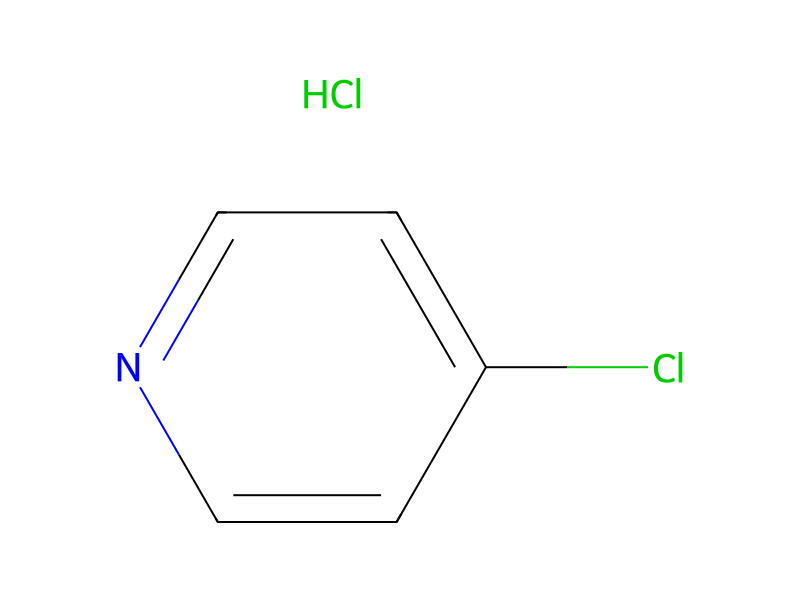
[O:1]1[C:5]2([CH2:10][CH2:9][NH:8][CH2:7][CH2:6]2)[O:4][CH2:3][CH2:2]1.Cl.Cl[C:13]1[CH:18]=[CH:17][N:16]=[CH:15][CH:14]=1.C(N(CC)CC)C.[OH-].[Na+]>C(O)C>[N:16]1[CH:17]=[CH:18][C:13]([N:8]2[CH2:9][CH2:10][C:5]3([O:4][CH2:3][CH2:2][O:1]3)[CH2:6][CH2:7]2)=[CH:14][CH:15]=1Participants
6





Procedure
A mixture of 1,4-dioxa-8-azaspiro[4.5]decane (150 g), 4-chloropyridine hydrochloride (190 g) and triethylamine (320 g) in ethanol (800 ml) was reacted in a sealed tube at 150° C. for 15 hours. The reaction mixture was concentrated to obtain a residue, which was made alkaline by an addition of a 6N aqueous solution of sodium hydroxide, and then extracted with dichloromethane. After drying and concentrating, the resultant residue was triturated from hexane, collected by filtration and then dried to obtain 8-(4-pyridyl)-1,4-dioxa-8-azaspiro[4.5]decane (172 g) as a pale yellow solid.
Workup
- customwas reacted in a sealed tube at 150° C. for 15 hours
- concentrationThe reaction mixture was concentrated
- customto obtain a residue, which
- extractionextracted with dichloromethane
- customAfter drying
- concentrationconcentrating
- customthe resultant residue was triturated from hexane
- filtrationcollected by filtration
- customdried
Sources & evidence
- ORD record
- ord-62e6bc5d2bc541da900e343408d9e8f6
- Source dataset
- uspto-grants-2004_04
- Patent number
- US06723722B1
Reaction notes
Loading…