Azobisisobutyronitrile → 11-(acryloylamino)undecanoic acid
Reaction equation

[C:1]([O-:6])(=[O:5])[C:2](C)=[CH2:3].C[CH:8]([NH:20][CH3:21])[CH2:9][C:10]1[CH:15]=[CH:14][C:13]2OCCO[C:12]=2[CH:11]=1.C(O)CCC[OH:26].CC(N=N[C:35]([C:38]#N)(C)C)(C#N)C>O.C(O)CC>[C:21]([NH:20][CH2:8][CH2:9][CH2:10][CH2:15][CH2:14][CH2:13][CH2:12][CH2:11][CH2:3][CH2:2][C:1]([OH:6])=[O:5])(=[O:26])[CH:35]=[CH2:38]Participants





Procedure
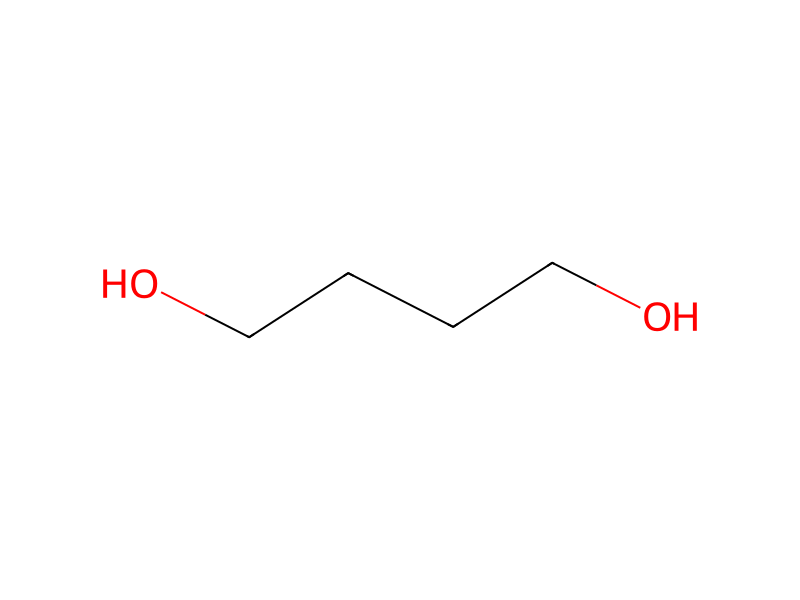
For the preparation of stationary phases, the inner walls of capillaries were vinylized with 3-(trimethoxylsilyppropyl methacrylate. Subsequently, AAUA, EDMA, 1-propanol, 1,4-butanediol, water, and AIBN were mixed ultrasonically into a homogenous solution and purged with nitrogen for 10 min. A 45 cm long silanized capillary was tilled with the polymerization mixture up to a length of 35 cm, sealed with rubber septum, and then placed in a gas chromatography (GC) oven to polymerize for 20 hours at 60° C. The reaction scheme for the polymerization is shown in Scheme 1. Each column of the experimental design was made in duplicate. After the polymerization of the mixture, the monolithic column was washed with methanol for 12 hours using a HPLC pump to remove unreacted monomers and porogens. An on-column detection window was made next to the polymer bed using a thermal wire stripper. Finally, the column was cut to 45 cm with an effective length of 30 cm.
Workup
- customFor the preparation of stationary phases
- custompurged with nitrogen for 10 min
- customsealed with rubber septum
- customto polymerize for 20 hours at 60° C
- customThe reaction scheme for the polymerization
- customAfter the polymerization of the mixture
- washthe monolithic column was washed with methanol for 12 hours
- customto remove unreacted monomers and porogens
Sources & evidence
- ORD record
- ord-30bcf309d103495b8e0eac70c448f4d9
- Source dataset
- uspto-grants-2013_05
- Patent number
- US08435410B2
Reaction notes
Loading…