Sodium hydride → HCID 67078557, compound
Reaction equation

[Br:1][C:2]1[CH:3]=[C:4]2[CH:10]=[N:9][NH:8][C:5]2=[N:6][CH:7]=1.[H-].[Na+].Cl[CH2:14][O:15][CH2:16][CH2:17][Si:18]([CH3:21])([CH3:20])[CH3:19].[Cl-].[NH4+]>CN(C)C=O>[Br:1][C:2]1[CH:3]=[C:4]2[CH:10]=[N:9][N:8]([CH2:14][O:15][CH2:16][CH2:17][Si:18]([CH3:21])([CH3:20])[CH3:19])[C:5]2=[N:6][CH:7]=1Participants
6


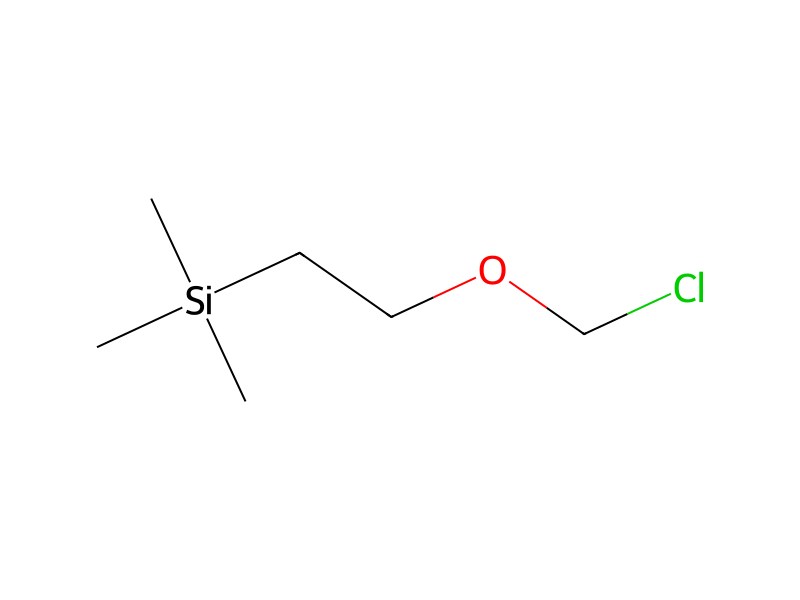



Procedure
5-Bromo-1H-pyrazolo[3,4-b]pyridine (200 mg) was dissolved in N,N-dimethylformamide (5 ml). 55% Sodium hydride (53 mg) was added at 0° C., and the mixture was stirred at the same temperature for five minutes and then stirred at room temperature for 20 minutes. 2-(Chloromethoxy)ethyltrimethylsilane (0.213 ml) was added and the mixture was stirred at 0° C. for 2 hours. A saturated aqueous ammonium chloride solution was added under ice-cooling, followed by extraction with ethyl acetate. The organic layer was dried over anhydrous sodium sulfate and the solvent was evaporated. The residue was purified by silica gel column chromatography (developed with ethyl acetate-hexane) to give the title compound (0.224 g).
Workup
- stirringstirred at room temperature for 20 minutes
- stirringthe mixture was stirred at 0° C. for 2 hours
- temperaturecooling
- extractionfollowed by extraction with ethyl acetate
- dry with materialThe organic layer was dried over anhydrous sodium sulfate
- customthe solvent was evaporated
- customThe residue was purified by silica gel column chromatography (developed with ethyl acetate-hexane)
Sources & evidence
- ORD record
- ord-35db94e100ba4e51a5385cdaa764ed6f
- Source dataset
- uspto-grants-2013_05
- Patent number
- US08436012B2
Reaction notes
Loading…