Potassium Carbonate → HCID 102326582, compound
Reaction equation

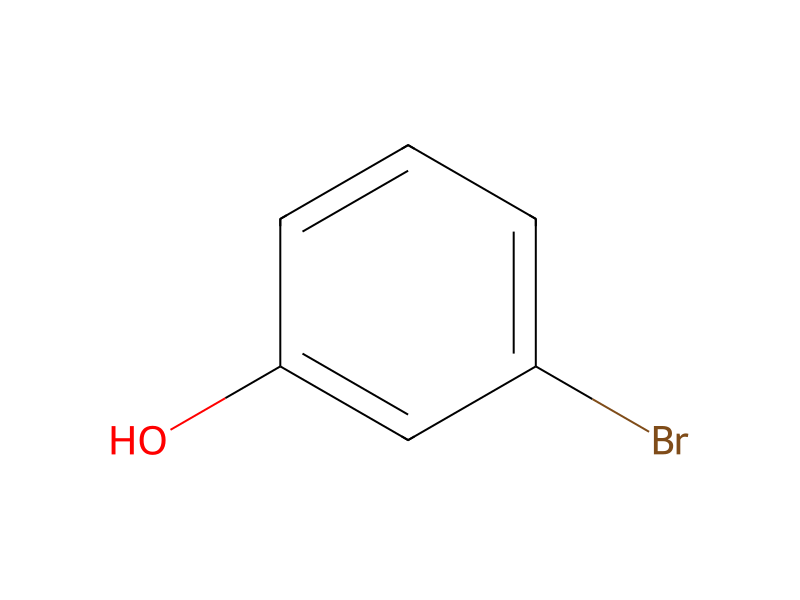
C1(C)C=CC(S(O[CH2:11][CH2:12][O:13][CH2:14][CH2:15][O:16][CH2:17][CH2:18][O:19][CH2:20][CH2:21][O:22][CH2:23][CH2:24][O:25][CH2:26][CH2:27]OS(C2C=CC(C)=CC=2)(=O)=O)(=O)=O)=CC=1.[Br:40][C:41]1[CH:42]=[C:43]([OH:47])[CH:44]=[CH:45][CH:46]=1.[C:48]([O-:51])([O-])=O.[K+].[K+]>CN(C=O)C>[Br:40][C:41]1[CH:42]=[C:43]([O:47][CH2:27][CH2:26][O:25][CH2:24][CH2:23][O:22][CH2:21][CH2:20][O:19][CH2:18][CH2:17][O:16][CH2:15][CH2:14][O:13][CH2:12][CH2:11][O:51][C:48]2[CH:44]=[CH:45][CH:46]=[C:41]([Br:40])[CH:42]=2)[CH:44]=[CH:45][CH:46]=1Participants
Reactant 3


Product 1

Reagents, catalysts & solvents 1

Conditions
- Temperature
- 60 °C
Procedure
A synthesis of was published in Hargadon, M. T.; Davey, E. A.; McIntyre, T. B.; Gnanamgari, D.; Wynne, C. M.; Swift, R. C.; Zimbalist, J. R.; Fredericks, B. L.; Nicastro, A. J.; Goodson, F. E. Macromolecules 2008, 41, 741-750. A 250 mL round-bottomed flask was charged with 5.41 g (9.14 mmol) of hexaethylene glycol di(p-toluenesulfonate), 4.67 g (27.0 mmol) of 3-bromophenol, 12.8 g of K2CO3 (92.6 mmol), and 50 mL of DMF. The reaction was then left to stir overnight in a 60° C. oil bath, after which the solvent was removed via vacuum distillation. Dichloromethane was then added to the residue, and the resulting suspension was filtered to remove excess carbonate and salt byproducts. Afterwards, the solvent was removed with a rotary evaporator, and the residue was heated in a kugelrohr oven under a dynamic 5 mtorr vacuum to remove excess 3-bromophenol. The crude product was then chromatographed on silica with an eluent of hexanes/EtOAc adjusted to give an Rf for the product of 0.2-0.3. Hexaethylene glycol di(3-bromophenyl)ether (3.70 g, 6.26 mmol, 69% yield), was then isolated as a pale yellow oil after distillation at 200° C. (<1 mtorr): 1H NMR (300 MHz, CDCl3) δ 7.05-7.15 (multiple resonances, 6H); 6.84 (dm, Jd=8.1 Hz, 2H); 4.09 (t, J=4.5 Hz, 4H); 3.83 (t, J=4.8 Hz, 4H); 3.64-3.74 (multiple resonances, 8H); 3.65 (s, 8H); 13C NMR (75 MHz, CDCl3) δ 159.7, 130.4, 124.0, 122.7, 118.3, 113.8, 70.9, 70.7, 70.6, 69.6, 67.9, (one signal not resolved). Anal. Calcd. for C24H32Br2O7: C, 48.67; H, 5.44; Found: C, 48.83; H, 5.59.
Workup
- customA synthesis
- waitThe reaction was then left
- customafter which the solvent was removed via vacuum distillation
- additionDichloromethane was then added to the residue
- filtrationthe resulting suspension was filtered
- customto remove excess carbonate and salt byproducts
- customAfterwards, the solvent was removed with a rotary evaporator
- temperaturethe residue was heated in a kugelrohr oven under a dynamic 5 mtorr vacuum
- customto remove excess 3-bromophenol
- customThe crude product was then chromatographed on silica with an eluent of hexanes/EtOAc
- customto give an Rf for the product of 0.2-0.3
Sources & evidence
- ORD record
- ord-c02a78e536dd45c188458147be8dfdd5
- Source dataset
- uspto-grants-2013_05
- Patent number
- US08436197B2
Reaction notes
Loading…