NADP nicotinamide-adenine-dinucleotide phosphate → 3-(1H-Indol-3-yl)-2-oxopropanoate
Reaction equation

C(O)C(N)(CO)CO.Cl.C1C=[N+]([C@@H]2O[C@H](COP(OP(OC[C@H]3O[C@@H](N4C5N=CN=C(N)C=5N=C4)[C@H](O)[C@@H]3O)(O)=O)(O)=O)[C@@H](O)[C@H]2O)C=C(C(N)=O)C=1.C1C=[N+]([C@@H]2O[C@H](COP(OP(OC[C@H]3O[C@@H](N4C5N=CN=C(N)C=5N=C4)[C@H](OP(O)(O)=O)[C@@H]3O)(O)=O)(O)=O)[C@@H](O)[C@H]2O)C=C(C(N)=O)C=1.N[C@H](C([O-])=O)CCC([O-])=O.[CH:112]1[CH:117]=[C:116]2[C:118]([CH2:121][C@@:122]([OH:132])([C:129]([OH:131])=[O:130])[CH2:123][C@H:124]([NH2:128])[C:125]([OH:127])=[O:126])=[CH:119][NH:120][C:115]2=[CH:114][CH:113]=1.O=C(CCC([O-])=O)C([O-])=O>>[CH:112]1[CH:117]=[C:116]2[C:118]([CH2:121][C@@:122]([OH:132])([C:129]([OH:131])=[O:130])[CH2:123][C@H:124]([NH2:128])[C:125]([OH:127])=[O:126])=[CH:119][NH:120][C:115]2=[CH:114][CH:113]=1.[NH:120]1[C:115]2[C:116](=[CH:117][CH:112]=[CH:113][CH:114]=2)[C:118]([CH2:121][C:122](=[O:132])[C:129]([O-:131])=[O:130])=[CH:119]1Participants


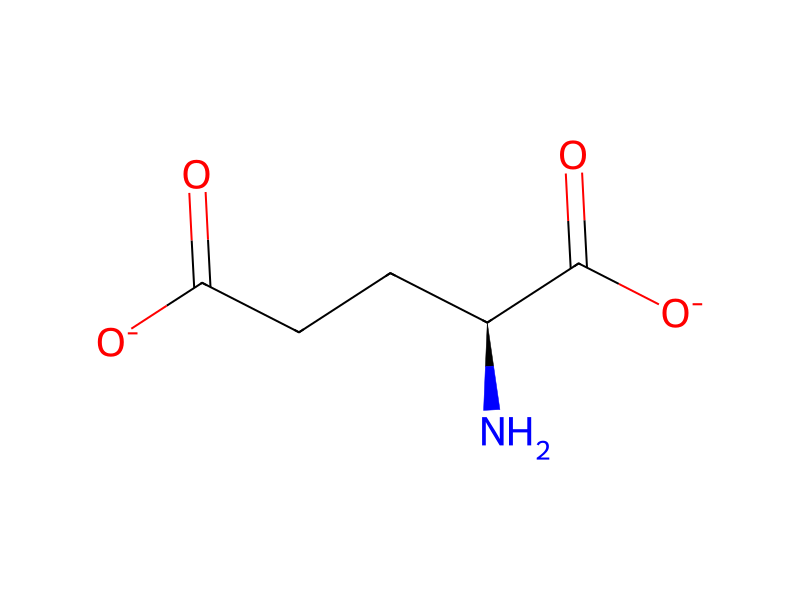


Procedure
A typical assay mixture contained 50 mM Tris-HCl, pH 8.0 to 8.9, 0.33 mM NAD+ or NADP+, 2 to 22 units of glutamate dehydrogenase (Sigma), and 10-15 mM substrate in 0.2 mL. The assay was performed in duplicate in a UV-transparent microtiter plate, on a Molecular Devices SpectraMax Plus platereader. A mix of the enzyme, buffer, and NAD(P)+ were pipetted into wells containing the substrate and the increase in absorbance at 340 nm was monitored at 10 second intervals after brief mixing. The reaction was incubated at 25° C. for 10 minutes. Negative controls were carried out without the addition of substrate, and glutamate was utilized as a positive control. The type III glutamate dehydrogenase from bovine liver (Sigma # G-7882) catalyzed the conversion of the monatin to MP at a rate of conversion approximately one-hundredth the rate of the conversion of glutamate to alpha-ketoglutarate. Attempts to produce monatin from indole-3-pyruvate utilizing glutamate dehydrogenases resulted in production of detectable amounts of tryptophan, indicating that glutamate dehydrogenases, or mutants thereof, could potentially be utilized for deamination of tryptophan rather than using an oxidase or an aminotransferase for this step in the pathway.
Workup
- additionA mix of the enzyme
- additioncontaining the substrate
- temperaturethe increase in absorbance at 340 nm
- waitThe reaction was incubated at 25° C. for 10 minutes
Sources & evidence
- ORD record
- ord-61160ccf40f648de9c4f89e8d11045ae
- Source dataset
- uspto-grants-2013_05
- Patent number
- US08440434B2
Reaction notes
Loading…