Phosphorus oxybromide → 4-bromo-N-(4-morpholin-4-ylphenyl)-7H-pyrrolo[2,3-d]pyrimidin-2-amine
Reaction equation
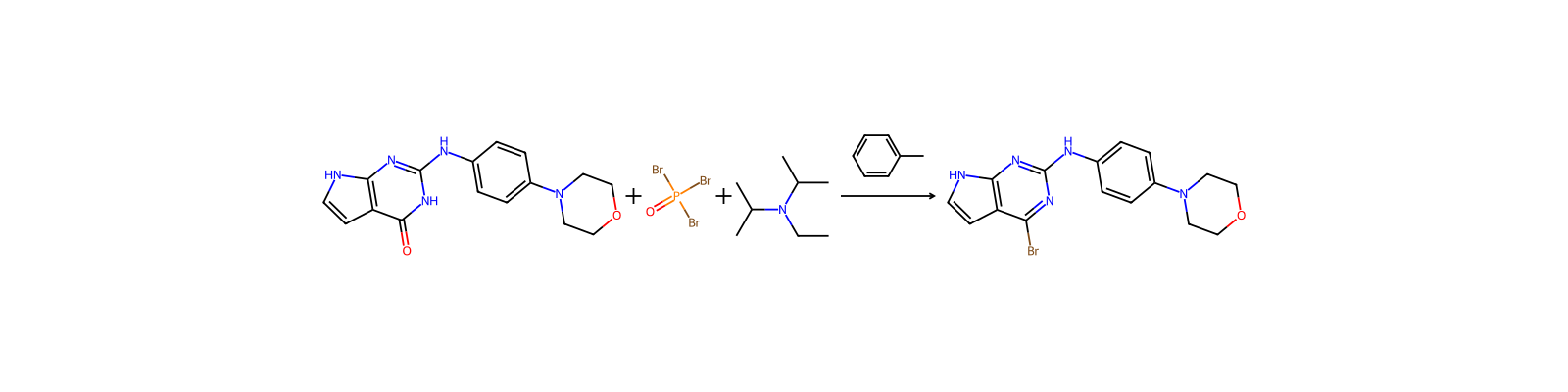
[N:1]1([C:7]2[CH:12]=[CH:11][C:10]([NH:13][C:14]3[NH:15][C:16](=O)[C:17]4[CH:22]=[CH:21][NH:20][C:18]=4[N:19]=3)=[CH:9][CH:8]=2)[CH2:6][CH2:5][O:4][CH2:3][CH2:2]1.P(Br)(Br)([Br:26])=O.C(N(C(C)C)CC)(C)C>C1(C)C=CC=CC=1>[Br:26][C:16]1[C:17]2[CH:22]=[CH:21][NH:20][C:18]=2[N:19]=[C:14]([NH:13][C:10]2[CH:11]=[CH:12][C:7]([N:1]3[CH2:6][CH2:5][O:4][CH2:3][CH2:2]3)=[CH:8][CH:9]=2)[N:15]=1Participants
5




Procedure
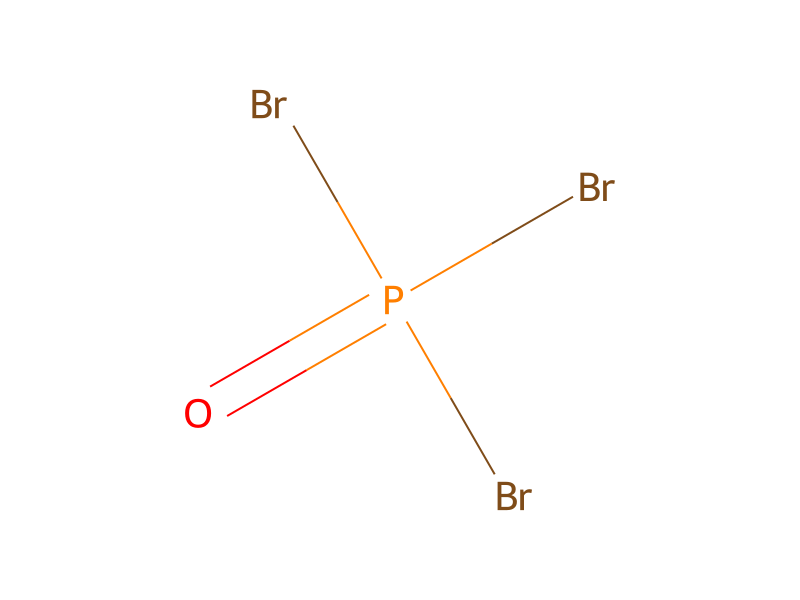
A mixture of 2-[(4-morpholin-4-ylphenyl)amino]-3,7-dihydro-4H-pyrrolo[2,3-d]pyrimidin-4-one A (312 mg, 1 mmol), phosphorous oxybromide (717 mg, 2.5 mmol), and diisopropylethylamine (130 mg, 1 mmol) in anhydrous toluene (15 ml) was heated at reflux under N2 overnight. The mixture was cooled down to room temperature, and the solid was filtered, washed with sat. NaHCO3, water, and dried over MgSO4. The solvent was removed in vacuo to give the product 4-bromo-N-(4-morpholin-4-ylphenyl)-7H-pyrrolo[2,3-d]pyrimidin-2-amine B (284 mg, 76%) as a black solid. This was clean and used as such without further purification.
Workup
- temperaturewas heated
- temperatureat reflux under N2 overnight
- filtrationthe solid was filtered
- washwashed with sat. NaHCO3, water
- dry with materialdried over MgSO4
- customThe solvent was removed in vacuo
Sources & evidence
- ORD record
- ord-175650e8330c414f8891055bdc0758b2
- Source dataset
- uspto-grants-2013_05
- Patent number
- US08440663B2
Reaction notes
Loading…