Stannous Chloride → Benzamide
Reaction equation

F[C:2]1[CH:3]=[C:4]([CH:8]=[CH:9][C:10]=1[N+]([O-])=O)[C:5](O)=[O:6].CC[N:16]=C=NCCCN(C)C.Cl.C1C=CC2N(O)N=NC=2C=1.Cl[Sn]Cl>CCO.CN(C=O)C>[C:5]([NH2:16])(=[O:6])[C:4]1[CH:8]=[CH:9][CH:10]=[CH:2][CH:3]=1Participants
7
Reactant 4




Product 1
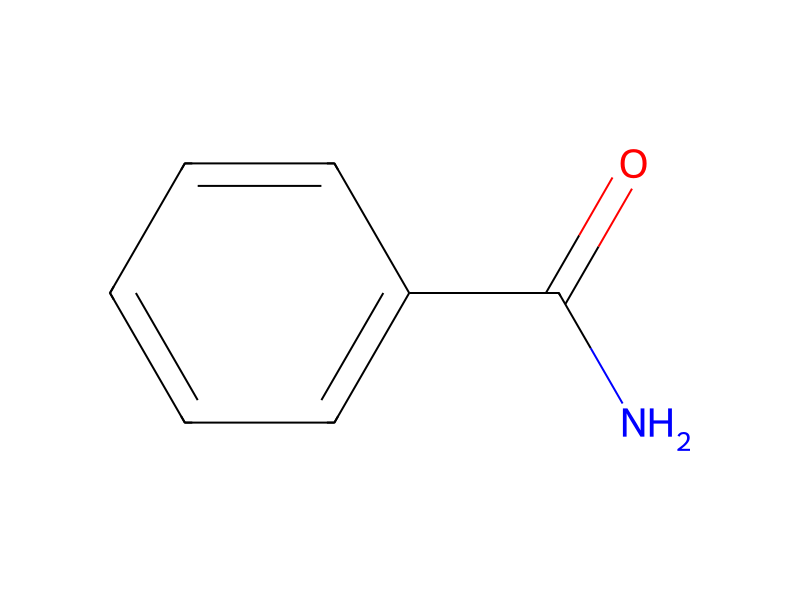
Reagents, catalysts & solvents 2


Procedure
In one embodiment, intermediate [1C] is prepared according to Scheme 5A. In this route, 3-fluoro-4-nitro benzoic acid [Q1] is converted to corresponding amide [R1] using R7R8NH, EDCI.HCl, HOBt, TEA, and DMF at about rt for about 10 h. Amide [R1] is then reduced using SnCl2 in EtOH at reflux for about 3-4 h to provide benzamide [S1]. Benzamide [S1] is then converted to urea [T1] using 4-bromophenylisocyanate in the presence of TEA and DCM at about rt. Conversion of urea [T1] to intermediate [1C] is accomplished using Pd(dppf)Cl2.DCM, bis(pinacolato)diboron, KOAc, and 1,4-dioxane, at about 110° C. for about 10 h.
Workup
- customat about rt
- customfor about 10 h
- temperatureat reflux for about 3-4 h
Sources & evidence
- ORD record
- ord-bcd9e151ef144edebbb2bd10a53e5f8e
- Source dataset
- uspto-grants-2013_05
- Patent number
- US08440662B2
Reaction notes
Loading…