Cyclohexanone → HCID 66618577, compound
Reaction equation

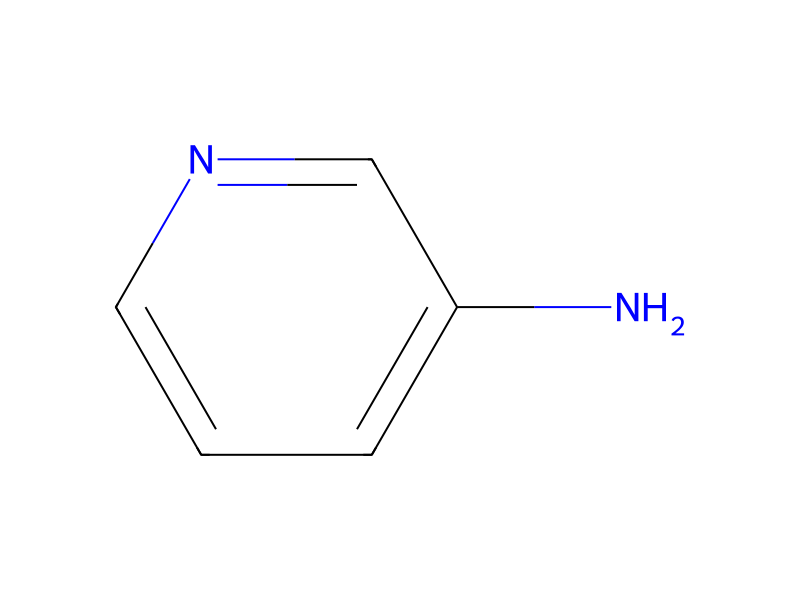
[NH2:1][C:2]1[CH:3]=[N:4][CH:5]=[CH:6][CH:7]=1.[C:8]1(=O)[CH2:13][CH2:12][CH2:11][CH2:10][CH2:9]1.C[Si]([C:19]#[N:20])(C)C>C(O)(=O)C>[N:4]1[CH:5]=[CH:6][CH:7]=[C:2]([NH:1][C:8]2([C:19]#[N:20])[CH2:13][CH2:12][CH2:11][CH2:10][CH2:9]2)[CH:3]=1Participants
Reactant 3


Product 1

Reagents, catalysts & solvents 1

Procedure
1 g (10.6 mmol, 1.1 eq.) of 3-aminopyridine (starting material 1) is added to a solution of 1 ml (9.65 mmol, 1 eq.) of cyclohexanone (starting material 2) in 30 ml of acetic acid at 0° C. The solution is stirred for 15 minutes and 1.3 ml (9.75 mmol, 1 eq.) of trimethylsilyl cyanide are added. The reaction medium is stirred for 24 hours at room temperature. It is then poured gently into ice-cold ammonium hydroxide solution until the pH is basic, and is extracted with dichloromethane. The organic phases are combined and washed with water. They are dried over sodium sulfate. The residue is chromatographed on silica gel (50/50 heptane/ethyl acetate and then ethyl acetate). 1-(Pyridin-3-ylamino)cyclohexanecarbonitrile is obtained in the form of white crystals.
Workup
- stirringThe reaction medium is stirred for 24 hours at room temperature
- additionIt is then poured gently into ice-cold ammonium hydroxide solution until the pH
- extractionis extracted with dichloromethane
- washwashed with water
- dry with materialThey are dried over sodium sulfate
- customThe residue is chromatographed on silica gel (50/50 heptane/ethyl acetate
Sources & evidence
- ORD record
- ord-1e89080bc9eb4737bfbdfdb41a707f62
- Source dataset
- uspto-grants-2013_05
- Patent number
- US08445523B2
Reaction notes
Loading…