Pyrrolidine → HCID 58424815, compound
Reaction equation

[CH3:1][C:2]([C:4]1[CH:9]=[C:8]([Br:10])[CH:7]=[CH:6][C:5]=1[OH:11])=[O:3].[C:12]1([CH:18]2[CH2:23][CH2:22][C:21](=O)[CH2:20][CH2:19]2)[CH:17]=[CH:16][CH:15]=[CH:14][CH:13]=1.N1CCCC1>CO>[Br:10][C:8]1[CH:9]=[C:4]2[C:5](=[CH:6][CH:7]=1)[O:11][C:21]1([CH2:20][CH2:19][CH:18]([C:12]3[CH:17]=[CH:16][CH:15]=[CH:14][CH:13]=3)[CH2:23][CH2:22]1)[CH2:1][C:2]2=[O:3]Participants
5
Reactant 3

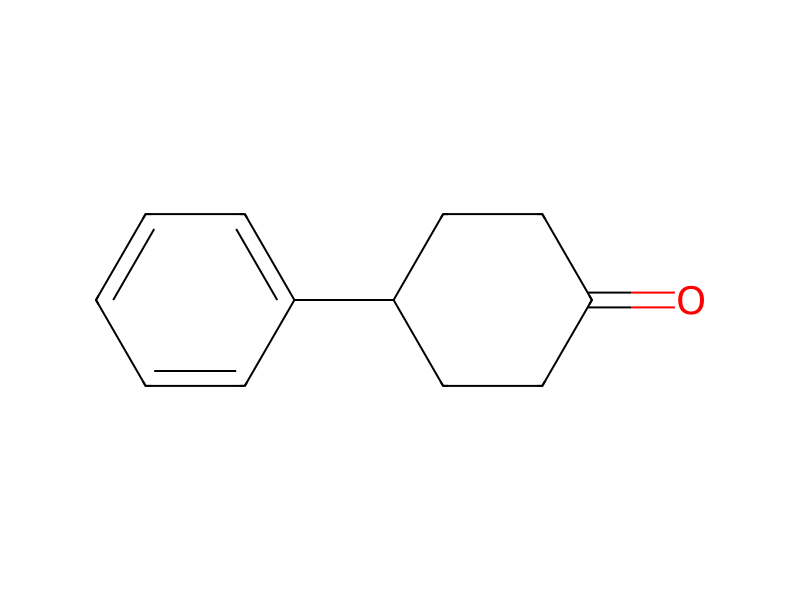

Product 1

Reagents, catalysts & solvents 1

Procedure
In a 50 mL round bottom flask was placed 5-bromo-2-hydroxyacetophenone (1 g, 4.65 mmol) and 4-phenylcyclo-hexanone (810 mg, 4.65 mmol). They were dissolved in MeOH (9.3 mL). To this solution was added pyrrolidine (764 μL, 9.30 mmol) dropwise. To the flask was attached a condenser and the reaction mixture was heated at reflux overnight (˜14 hours). The next morning the volatiles were remove under reduced pressure and the crude material was purified by flash chromatography (ISCO, 40 g SiO2 cartridge, Ethyl Acetate/Hexanes as the eluents). The corresponding fractions were combined and concentrated yielding 6-bromo-4′-phenylspiro[chroman-2,1′-cyclohexan]-4-one (1.12 g, 3.03 mmol, 65%).
Workup
- customIn a 50 mL round bottom flask was placed
- temperaturethe reaction mixture was heated
- temperatureat reflux overnight (˜14 hours)
- customThe next morning the volatiles were remove under reduced pressure
- customthe crude material was purified by flash chromatography (ISCO, 40 g SiO2 cartridge, Ethyl Acetate/Hexanes as the eluents)
- concentrationconcentrated
Sources & evidence
- ORD record
- ord-2bcf9ac9b9db4fe892a0415e33451f01
- Source dataset
- uspto-grants-2013_05
- Patent number
- US08450308B2
Reaction notes
Loading…