Fluoride Ion → 4-(2,6-difluorophenyl)-1H-1,2,3-triazole-5-carbonitrile
Reaction equation

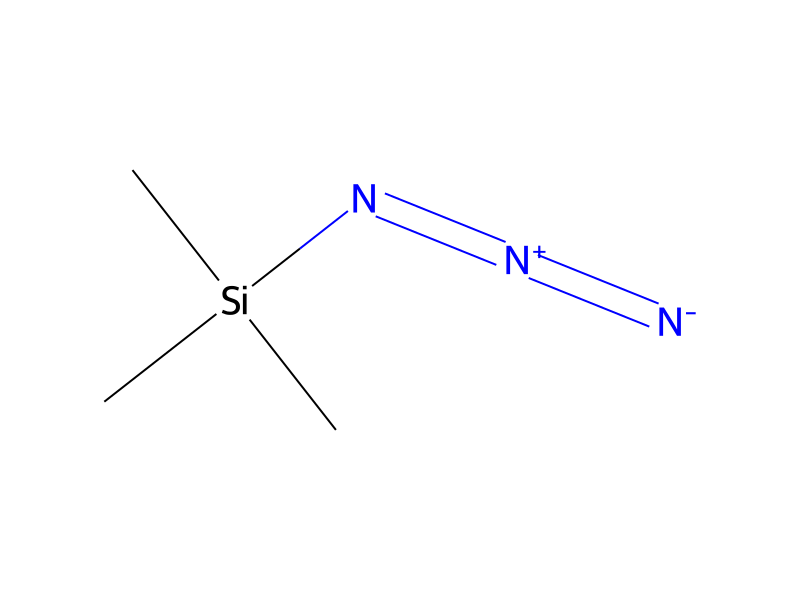
[F:1][C:2]1[CH:9]=[CH:8][CH:7]=[C:6]([F:10])[C:3]=1[CH:4]=O.[N+:11]([CH2:14][C:15]#[N:16])([O-])=O.[Si]([N:21]=[N+:22]=[N-])(C)(C)C.[F-]>C1COCC1>[F:1][C:2]1[CH:9]=[CH:8][CH:7]=[C:6]([F:10])[C:3]=1[C:4]1[N:21]=[N:22][NH:11][C:14]=1[C:15]#[N:16]Participants
6




Procedure
4-(2,6-difluorophenyl)-1H-1,2,3-triazole-5-carbonitrile (2) was prepared in one step from 2,6-difluorobenzaldehyde (1) and nitroacetonitrile using a modified literature procedure (see Fringuelli et al. Eur. J. Org. Chem. (2008) 3928-3932). A solution of 2,6-difluorobenzaldehyde (1.0 equiv), nitroacetonitrile (1.5 equiv) and TMS-azide (3.0 equiv) in dry THF (0.4 M) under inert atmosphere and at 0° C. was treated with fluoride-bound resin (Aldrich #387789, 1:1 w/w with respect to aldehyde). The resulting mixture was heated to reflux for 2 h (reaction completed according to TLC), cooled to room temperature and concentrated in vacuo to provide (2) as an orange solid which was used directly in the next reaction.
Workup
- temperatureThe resulting mixture was heated
- temperatureto reflux for 2 h
- custom(reaction completed according to TLC)
- concentrationconcentrated in vacuo
Sources & evidence
- ORD record
- ord-b1a2f294234d4ad387cd4a44add1035e
- Source dataset
- uspto-grants-2013_05
- Patent number
- US08450350B2
Reaction notes
Loading…