Hydrochloric Acid → 3-(2-(Naphthalen-1-yl)acetamido)thiophene-2-carboxylic acid
Reaction equation

[C:1]1([CH2:11][C:12]([NH:14][C:15]2[CH:19]=[CH:18][S:17][C:16]=2[C:20]([O:22]C)=[O:21])=[O:13])[C:10]2[C:5](=[CH:6][CH:7]=[CH:8][CH:9]=2)[CH:4]=[CH:3][CH:2]=1.[OH-].[Na+].Cl>C1COCC1.O>[C:1]1([CH2:11][C:12]([NH:14][C:15]2[CH:19]=[CH:18][S:17][C:16]=2[C:20]([OH:22])=[O:21])=[O:13])[C:10]2[C:5](=[CH:6][CH:7]=[CH:8][CH:9]=2)[CH:4]=[CH:3][CH:2]=1Participants
5




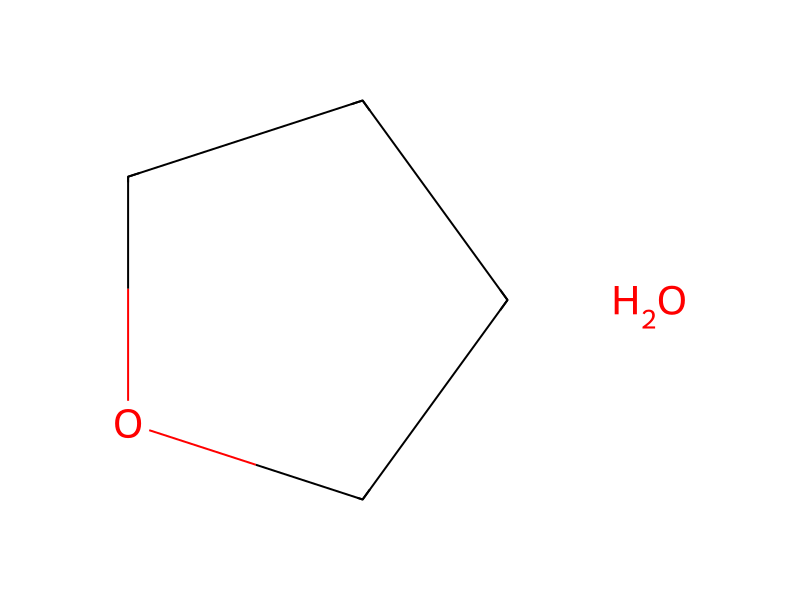
Conditions
- Temperature
- 50 °C
Procedure
Methyl 3-(2-(naphthalen-1-yl)acetamido)thiophene-2-carboxylate (210 mg, 0.645 mmol) was dissolved in THF/H2O (2.5 mL, 4/1, v/v). Sodium hydroxide (129 mg, 3.22 mmol) was added and the reaction mixture was stirred at 50° C. for 20 h. The resulting solution was acidified with 10% aqueous HCl and extracted with ethyl acetate. The organic phase was separated, dried (Na2SO4), filtered and concentrated under vacuum to give 3-(2-(naphthalen-1-yl)acetamido)thiophene-2-carboxylic acid. Retention time=1.962 min, method [1], MS (ESI) 312.1 (M+H).
Workup
- extractionextracted with ethyl acetate
- customThe organic phase was separated
- dry with materialdried (Na2SO4)
- filtrationfiltered
- concentrationconcentrated under vacuum
Sources & evidence
- ORD record
- ord-0a0c47eba8524ae6b01ecee2941abd0f
- Source dataset
- uspto-grants-2013_05
- Patent number
- US08450363B2
Reaction notes
Loading…