Hydrochloric Acid → 2-(Piperidin-1-yl)aniline
Reaction equation

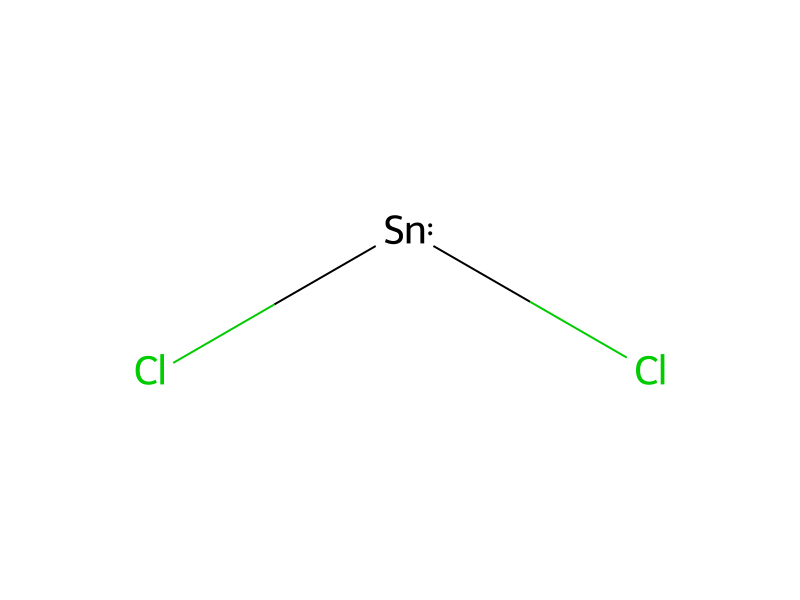
Cl.[Sn](Cl)Cl.[N+:5]([C:8]1[CH:13]=[CH:12][CH:11]=[CH:10][C:9]=1[N:14]1[CH2:19][CH2:18][CH2:17][CH2:16][CH2:15]1)([O-])=O.C(=O)(O)[O-].[Na+]>CO>[N:14]1([C:9]2[CH:10]=[CH:11][CH:12]=[CH:13][C:8]=2[NH2:5])[CH2:19][CH2:18][CH2:17][CH2:16][CH2:15]1Participants
Reactant 4



Product 1

Reagents, catalysts & solvents 1

Procedure
Concentrated hydrochloric acid (1.50 ml, 18.0 mmol) and anhydrous tin dichloride (1.45 g, 7.64 mmol) were sequentially added at 0° C. to a methanol (10 ml) solution of 1-(2-nitrophenyl)piperidine (315 mg, 1.52 mmol) obtained as described in Referential Example 18-1. The resulting mixture was warmed to room temperature and stirred for 17 hours. A saturated aqueous solution of sodium bicarbonate was added to the mixture. The resulting mixture was extracted three times with ethyl acetate. The obtained organic layer was washed with a saturated sodium chloride solution, dried over anhydrous sodium sulfate, filtered, and concentrated under reduced pressure. The residue was purified by silica gel column chromatography (20 g, hexane/ethyl acetate=15/1). Thus, 2-(1-piperidinyl)aniline (238 mg, 88.8%) was yielded as a pale yellow oily material.
Workup
- customobtained
- extractionThe resulting mixture was extracted three times with ethyl acetate
- washThe obtained organic layer was washed with a saturated sodium chloride solution
- dry with materialdried over anhydrous sodium sulfate
- filtrationfiltered
- concentrationconcentrated under reduced pressure
- customThe residue was purified by silica gel column chromatography (20 g, hexane/ethyl acetate=15/1)
Sources & evidence
- ORD record
- ord-7ec9a45884c74a8fa5d330f3172474a1
- Source dataset
- uspto-grants-2009_08
- Patent number
- US07569536B2
Reaction notes
Loading…