1-Bromo-4-iodobenzene → HCID 57471568, compound
Reaction equation

I[C:2]1[CH:7]=[CH:6][C:5]([Br:8])=[CH:4][CH:3]=1.[CH:9]#[C:10][CH2:11][CH2:12][CH2:13][CH2:14][CH2:15][CH2:16][CH2:17][CH3:18].C(OP([O-])OCC)C>[Pd](Cl)Cl.[Cu]I.C1(P(C2C=CC=CC=2)C2C=CC=CC=2)C=CC=CC=1>[C:9]([C:2]1[CH:7]=[CH:6][C:5]([Br:8])=[CH:4][CH:3]=1)#[C:10][CH2:11][CH2:12][CH2:13][CH2:14][CH2:15][CH2:16][CH2:17][CH3:18]Participants
Reactant 3


Product 1

Reagents, catalysts & solvents 3


Conditions
- Temperature
- 55 °C
Procedure
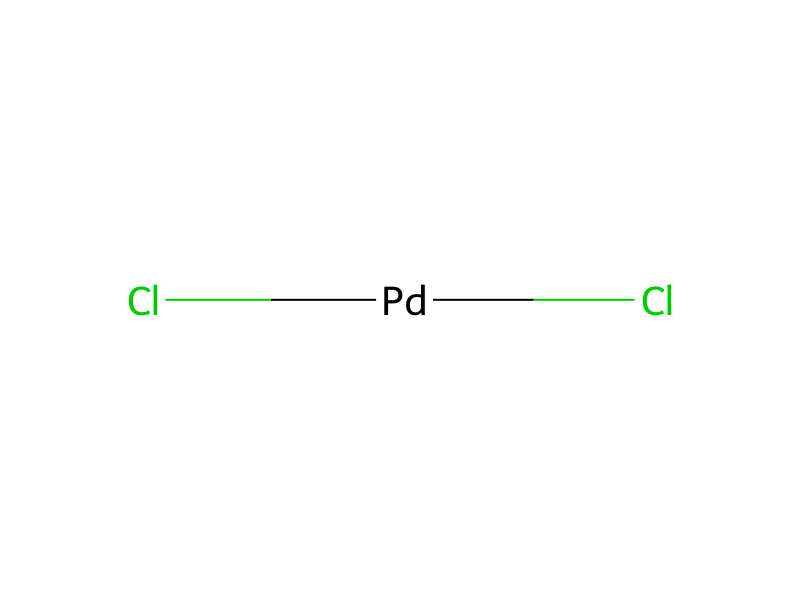
A synthesis protocol was designed to test the modular approach to synthesis of the conductive compositions of the present invention (FIG. 3). The model conductive composition 5b was prepared using 1-iodo-4-bromobenzene as a precursor to the body structure, 1-decyne as the tail group moiety, and diethylphosphite as the head group moiety. To a 500 mL schlenk flask with egg-shaped stirbar under argon, palladium dichloride (1.0 mmol, 0.177 g), copper(I) iodide (2.36 mmol, 0.450 g), and triphenylphosphine (2.0 mmol, 0.525 g) were added in a glovebox under argon. On a schlenk line, 1-iodo-4-bromo-benzene (50 mmol, 14.15 g, compound 1) was added, the vessel was stoppered, and the flask was placed under vacuum and backfilled with argon (3×). The flask was fitted with a septum under positive argon pressure and degassed diisopropyl amine (100 mL) was added via cannula under positive argon pressure with stirring. Next, degassed 1-decyne (50 mmol, 6.91 g, compound 2) was added via syringe under argon. Finally, dry, degassed tetrahydrofuran was added via cannula transfer under argon, the vessel sealed with a glass stopper and allowed to stir at ambient for 16 h followed by heating to 55° C. for one hour. After cooling to ambient temperature, the solvent was removed by roto-evaporation, the residue dissolved in diethyl ether (200 mL) and washed with ammonium chloride (sat. aqueous, 3×100 mL). The organic layer was separated and dried over magnesium sulfate, filtered and the solvent removed by roto-evaporation. The resulting oil was dissolved in hexanes and plugged through silica gel. Removal of the solvent resulted in a yellow oil of 4-decynyl-bromo-benzene 3 (14.34 g, 98% yield).
Workup
- customto synthesis of the conductive compositions of the present invention (FIG. 3)
- customThe flask was fitted with a septum under positive argon pressure
- customdegassed diisopropyl amine (100 mL)
- additionwas added via cannula under positive argon pressure
- additionwas added via syringe under argon
- customFinally, dry
- customdegassed tetrahydrofuran
- additionwas added via cannula transfer under argon
- customthe vessel sealed with a glass stopper
- stirringto stir at ambient for 16 h
- temperatureAfter cooling to ambient temperature
- customthe solvent was removed by roto-evaporation
- dissolutionthe residue dissolved in diethyl ether (200 mL)
- washwashed with ammonium chloride (sat. aqueous, 3×100 mL)
- customThe organic layer was separated
- dry with materialdried over magnesium sulfate
- filtrationfiltered
- customthe solvent removed by roto-evaporation
- dissolutionThe resulting oil was dissolved in hexanes
- customRemoval of the solvent
Sources & evidence
- ORD record
- ord-a9a05e1554894aa688bdfbfd99222b91
- Source dataset
- uspto-grants-2009_08
- Patent number
- US07572393B2
Reaction notes
Loading…