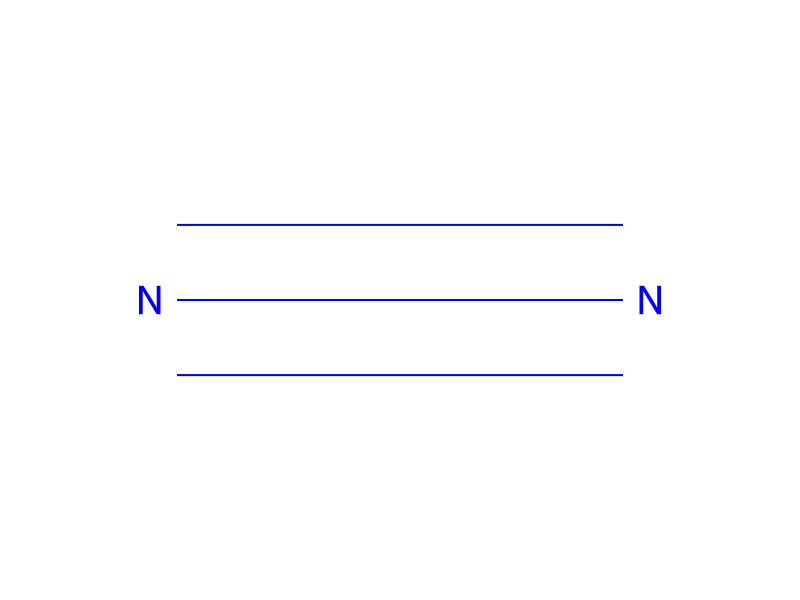
Nitrogen → HCID 58869204, compound
Reaction equation

C[O-].[Na+].N#N.[C:6]([O:9][CH3:10])(=[O:8])[CH3:7].[CH:11]([C:13]1[CH:21]=[CH:20][CH:19]=[C:18]2[C:14]=1[CH:15]=[CH:16][NH:17]2)=O>O1CCCC1>[NH:17]1[C:18]2[C:14](=[C:13]([CH:11]=[CH:7][C:6]([O:9][CH3:10])=[O:8])[CH:21]=[CH:20][CH:19]=2)[CH:15]=[CH:16]1Participants
Reactant 4


Product 1

Reagents, catalysts & solvents 1

Conditions
- Temperature
- 0 °C
Procedure
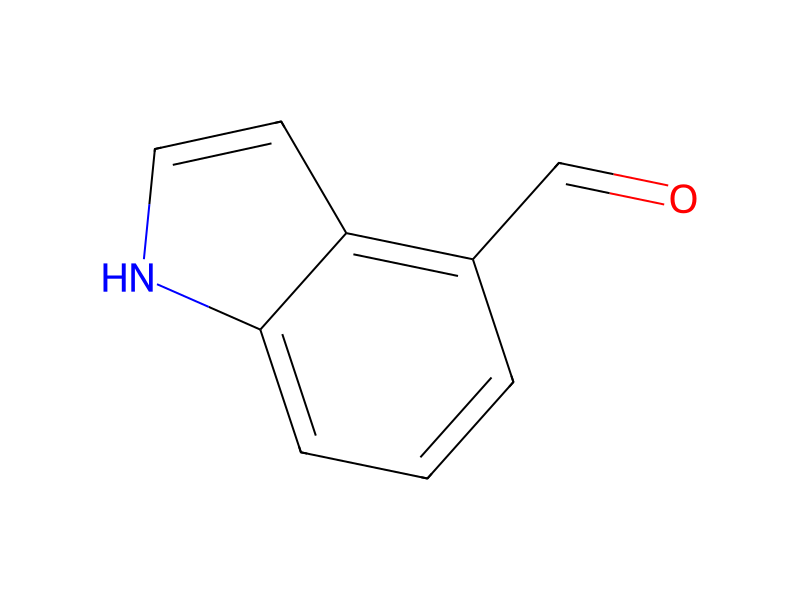
48 g of sodium methoxide are added to 300 ml of tetrahydrofuran with stirring at 5° C. under a protective gas (N2), the suspension is cooled to 0° C., 70 ml of methyl acetate are added dropwise at from 0 to 3° C., and the mixture is stirred at this temperature for a further 45 minutes. A solution of 43 g of 4-formylindole (3) in 300 ml of tetrahydrofuran is subsequently added with stirring, during which the temperature does not exceed 3° C. The mixture is subsequently stirred at room temperature for a further two hours. For work-up, the reaction mixture is evaporated, and the residue is dissolved in methyl acetate and extracted with water. The organic phase obtained is dried, the solvent is removed under reduced pressure, and the residue is purified by chromatography on silica gel, giving 35 g (59% of theory) of a pale-beige crystalline residue of methyl 3-(1H-indol-4-yl)acrylate (4).
Workup
- stirringwith stirring, during which the temperature
- customdoes not exceed 3° C
- stirringThe mixture is subsequently stirred at room temperature for a further two hours
- customFor work-up, the reaction mixture is evaporated
- dissolutionthe residue is dissolved in methyl acetate
- extractionextracted with water
- customThe organic phase obtained
- customis dried
- customthe solvent is removed under reduced pressure
- customthe residue is purified by chromatography on silica gel
Sources & evidence
- ORD record
- ord-cf3ba060a5d94b57af448c0db969366b
- Source dataset
- uspto-grants-2009_08
- Patent number
- US07572796B2
Reaction notes
Loading…