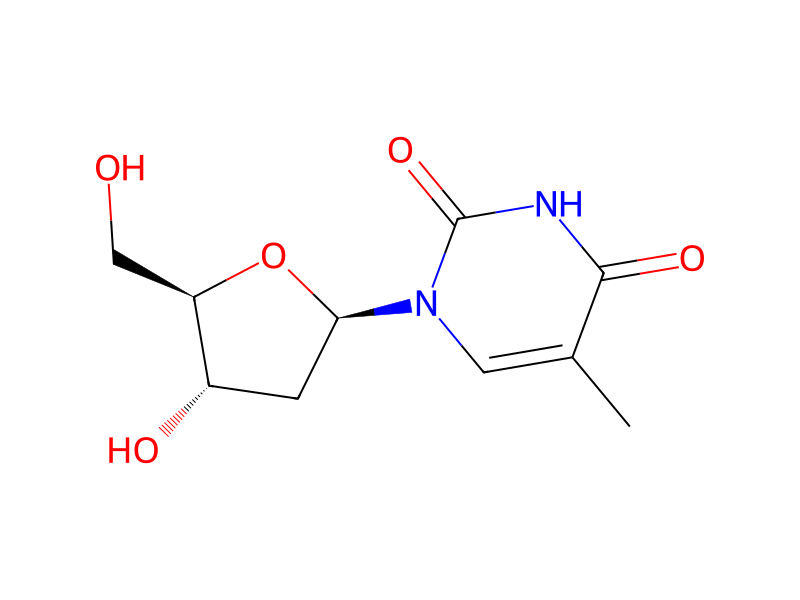
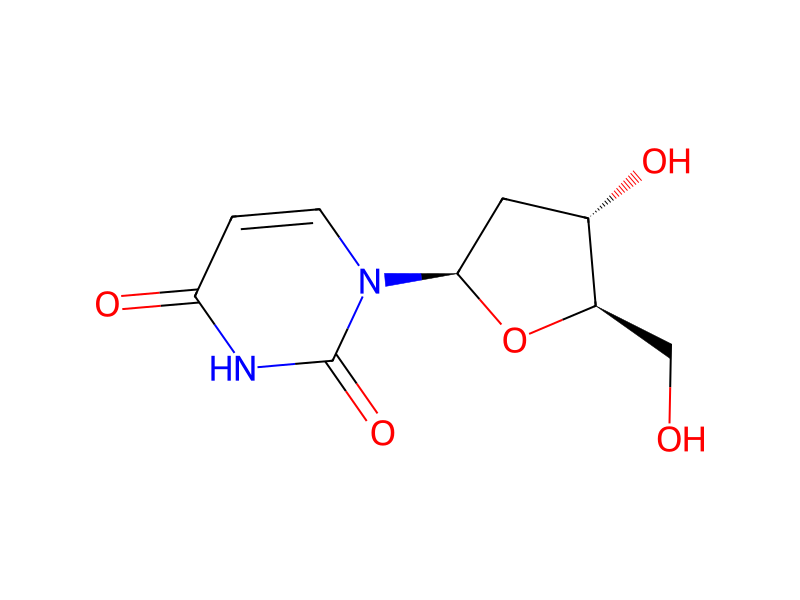
Thymidine → Cladribine
Reaction equation

[Na].[C@@H:2]1(N2C=C(C)C(=O)NC2=O)[O:9][C@H:6]([CH2:7][OH:8])[C@@H:4]([OH:5])[CH2:3]1.[Cl:19][C:20]1[N:28]=[C:27]2[C:23]([NH:24][CH:25]=[N:26]2)=[C:22]([NH2:29])[N:21]=1.[C@@H]1(N2C=CC(=O)NC2=O)O[C@H](CO)[C@@H](O)C1.ClC1N=C2C(NC=N2)=C(N=CN(C)C)N=1>>[CH2:3]1[C@H:2]([N:26]2[C:27]3[N:28]=[C:20]([Cl:19])[N:21]=[C:22]([NH2:29])[C:23]=3[N:24]=[CH:25]2)[O:9][C@H:6]([CH2:7][OH:8])[C@H:4]1[OH:5]Participants




Procedure
Stereoselective glycosylation of sodium salts of halopurines and analogues with 2-deoxy-3,5-di-O-p-toluoyl-α-D-erythro-pentofuranosyl chloride gave β-nucleoside anomers via predominant Walden inversion,17,18 and ammonolysis/deprotection gave CldAdo.19 Although the sodium salt glycosylation usually gave good anomeric stereoselectivity, minor quantities of α anomers and >10% of N7 regioisomers were usually formed.20,21 This requires separations and results in diminished yields of the desired N9 product. Carson et al.1 had reported an enzymatic transfer of the 2-deoxy sugar from thymidine to 2-chloroadenine (ClAde). Holy and coworkers noted that cells of a strain of Escherichia coli performed glycosyl transfer from 2′-deoxyuridine to 2-chloro-6-[(dimethylaminomethylene)amino]purine to give a derivative of CldAdo.22 Very recently Barai, Mikhailopulo, and coworkers23 described an E. coli-mediated glycosyl transfer synthesis of 2,6-diamino-9-(3-deoxy-β-D-erythro-pentofuranosyl)purine,24 and its enzymatic deamination to 3′-deoxyguanosine.24 They reported glycosyl transfer from 2′-deoxyguanosine to ClAde, and claimed a yield of 81% of CldAdo (based on ClAde).23 However, a 3:1 ratio of dGuo/ClAde was employed, so the yield of CldAdo was <27% based on dGuo.
Workup
- customresults
- customin diminished yields of the desired N9 product
Sources & evidence
- ORD record
- ord-cab21cb7376d4100b40953d5c86f40a6
- Source dataset
- uspto-grants-2009_08
- Patent number
- US07572909B2
Reaction notes
Loading…