Sodium Carbonate → Methyl 2-chloro-4-formylbenzoate
Reaction equation

Br[C:2]1[CH:11]=[CH:10][C:5]([C:6]([O:8][CH3:9])=[O:7])=[C:4]([Cl:12])[CH:3]=1.[CH:13]([O-])=[O:14].[Na+].C([O-])([O-])=O.[Na+].[Na+]>Cl[Pd](Cl)([P](C1C=CC=CC=1)(C1C=CC=CC=1)C1C=CC=CC=1)[P](C1C=CC=CC=1)(C1C=CC=CC=1)C1C=CC=CC=1.CN(C=O)C>[Cl:12][C:4]1[CH:3]=[C:2]([CH:13]=[O:14])[CH:11]=[CH:10][C:5]=1[C:6]([O:8][CH3:9])=[O:7]Participants
6





Conditions
- Temperature
- 110 °C
Procedure
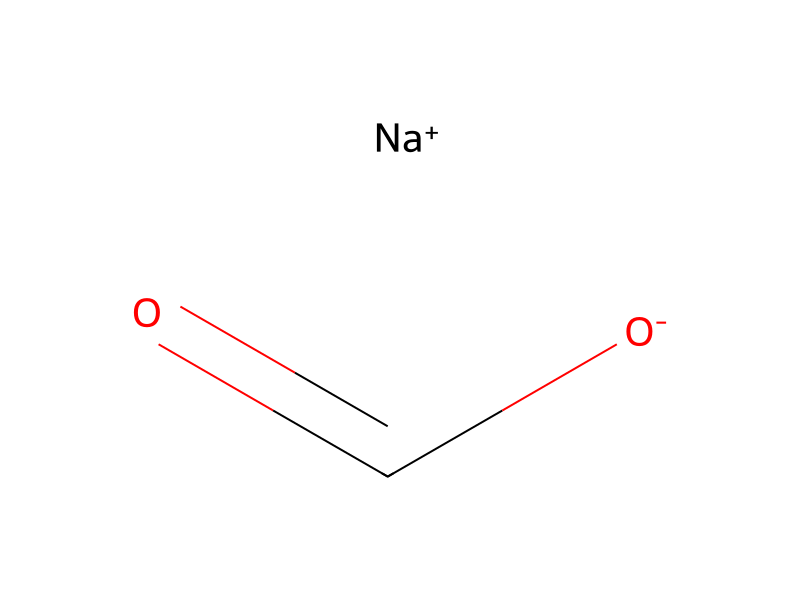
A slow stream of CO was passed into a suspension of methyl 4-bromo-2-chlorobenzoate (1.50 g, 0.00601 mol), bis(triphenylphosphine)palladium(II) chloride (80 mg, 0.0001 mol), sodium formate (613 mg, 0.00902 mol), and dry DMF (10 mL). The mixture was vigorously stirred at 110° C. for 2 h. After cooling, the mixture was treated with aqueous Na2CO3 solution and extracted with EtOAc. The extract was washed with brine, dried (Na2SO4), and concentrated. The residue was chromatographed on silica gel with AcOEt-hexane to give the product as a colorless oil (becomes a white solid when stored in a refrigerator).
Workup
- temperatureAfter cooling
- extractionextracted with EtOAc
- washThe extract was washed with brine
- dry with materialdried (Na2SO4)
- concentrationconcentrated
- customThe residue was chromatographed on silica gel with AcOEt-hexane
Sources & evidence
- ORD record
- ord-4f8cfcd247a04ce0bbb7a632fb7f9690
- Source dataset
- uspto-grants-2009_08
- Patent number
- US07576099B2
Reaction notes
Loading…