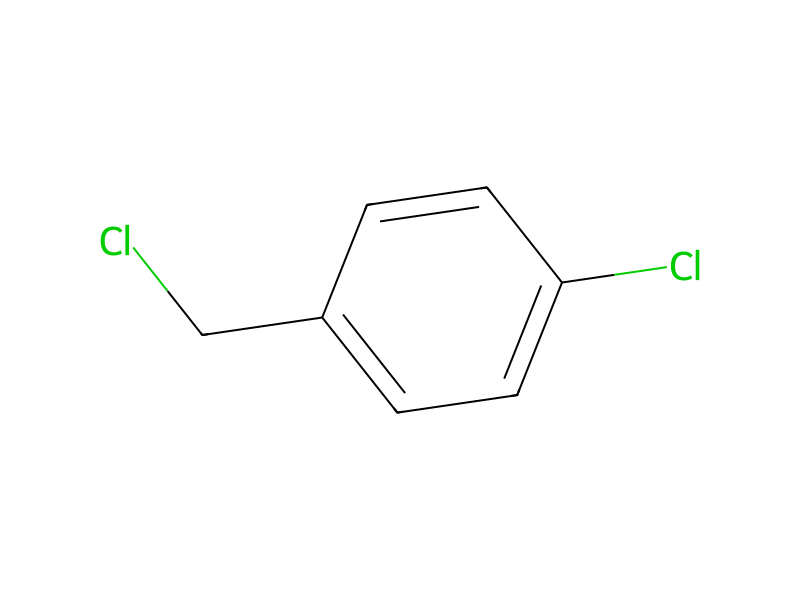
1-Chloro-4-(chloromethyl)benzene → (R)-tert-Butyl (1-(4-chlorobenzyl)pyrrolidin-3-yl)carbamate
Reaction equation

[Cl:1][C:2]1[CH:9]=[CH:8][C:5]([CH2:6]Cl)=[CH:4][CH:3]=1.CCN(C(C)C)C(C)C.[C:19]([O:23][C:24]([NH:26][CH:27]1[CH2:31][CH2:30][NH:29][CH2:28]1)=[O:25])([CH3:22])([CH3:21])[CH3:20]>CN(C=O)C>[C:19]([O:23][C:24]([NH:26][CH:27]1[CH2:31][CH2:30][N:29]([CH2:6][C:5]2[CH:8]=[CH:9][C:2]([Cl:1])=[CH:3][CH:4]=2)[CH2:28]1)=[O:25])([CH3:22])([CH3:20])[CH3:21]Participants
5




Conditions
- Temperature
- 70 °C
Procedure
4-Chlorobenzyl chloride (4.15 g, 25.8 mmol) and i-Pr2NEt (6.67 g, 51.6 mmol) were added to the DMF solution (50 mL of 3-{(tert-butoxycarbonyl)amino}pyrrolidine (4.81 g, 25.8 mmol) in DMF (50 ml). The reaction mixture was stirred at 70° C. for 15 hours, and the solvent was then removed under reduced pressure. The residue was recrystallized (CH3CN, 50 mL) to obtain the objective 3-{(tert-butoxycarbonyl)amino}-1-(4-chlorobenzyl)pyrrolidine (6.43 g, 80%) as the yellowish white solid.
Workup
- customthe solvent was then removed under reduced pressure
- customThe residue was recrystallized (CH3CN, 50 mL)
Sources & evidence
- ORD record
- ord-e10c81c34f484a269d6829263d0452e6
- Source dataset
- uspto-grants-2009_08
- Patent number
- US07576117B1
Reaction notes
Loading…