Diisopropylamine → HCID 59648645, compound
Reaction equation

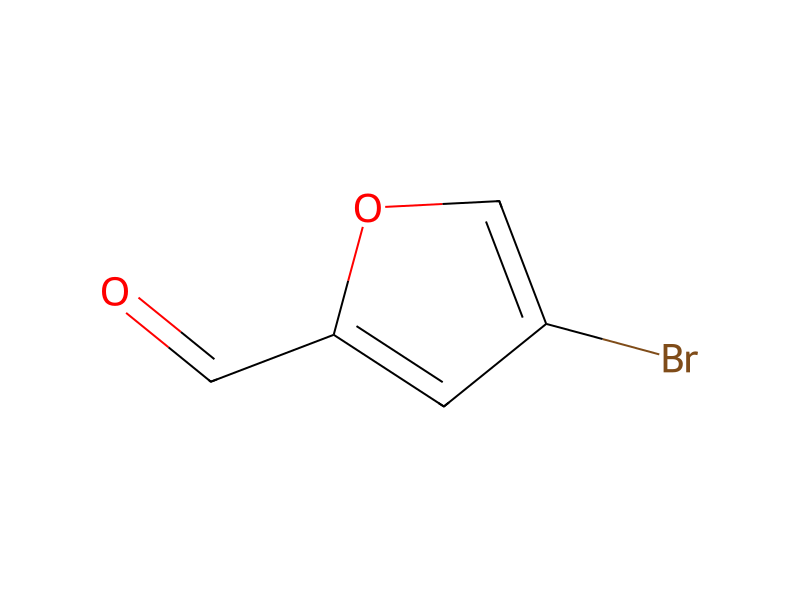
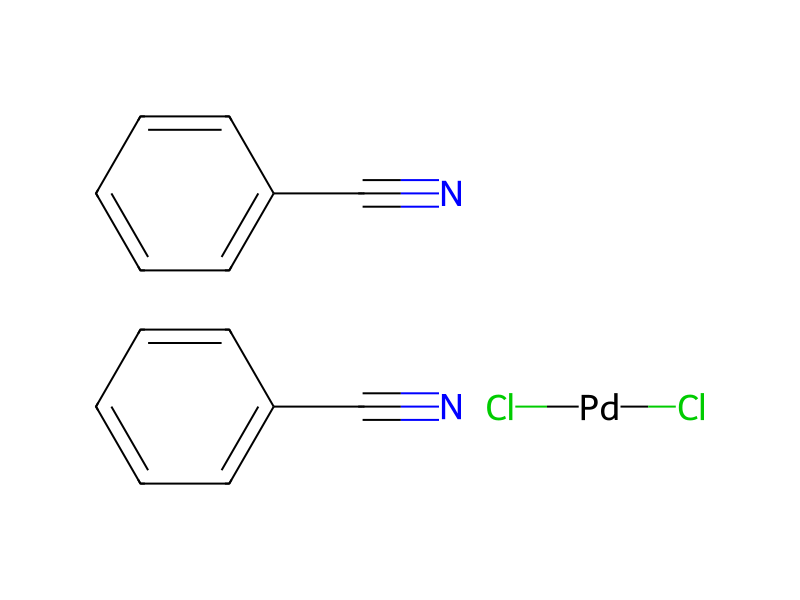
Br[C:2]1[CH:3]=[C:4]([CH:7]=[O:8])[O:5][CH:6]=1.C(NC(C)C)(C)C.[C:16]1([C:22]#[CH:23])[CH:21]=[CH:20][CH:19]=[CH:18][CH:17]=1>O1CCOCC1.C1C=CC(C#N)=CC=1.C1C=CC(C#N)=CC=1.Cl[Pd]Cl.[Cu]I>[C:16]1([C:22]#[C:23][C:2]2[CH:3]=[C:4]([CH:7]=[O:8])[O:5][CH:6]=2)[CH:21]=[CH:20][CH:19]=[CH:18][CH:17]=1Participants
Reactant 3


Product 1

Reagents, catalysts & solvents 3


Procedure
A solid mixture of 4-bromo-2-furaldehyde (1.50 g, 8.57 mmol), PdCl2(PhCN)2 (197 mg, 0.514 mmol) and CuI (65.0 mg, 0.343 mmol) was flushed under an argon stream for 1 minute (min). A solution of HP(t-butyl)3BF4 (298 mg, 1.03 mmol) and diisopropylamine (1.80 mL, 12.9 mmol) in dioxane (9 mL) was added to the solid mixture followed by phenylacetylene (1.13 mL, 10.3 mmol). The reaction was allowed to stir at room temperature (rt) under an atmosphere of argon for 15 hours (h) before being filtered through a plug of silica gel with ethyl acetate (EtOAc). The solution was then concentrated in vacuo and chromatographed over silica gel to give 4-phenylethynyl-furan-2-carbaldehyde as a colorless oil (1.54 g, 92%). Rf=0.35 (1:9 heptane/EtOAc); 1H NMR (400 MHz, CDCl3) δ ppm 9.68 (d, J=0.5 Hz, 1 H) 7.90 (s, 1 H) 7.48-7.55 (m, 2 H) 7.35-7.40 (m, 3 H) 7.33 (d, J=0.7 Hz, 1 H).
Workup
- customwas flushed under an argon stream for 1 minute (min)
- filtrationbefore being filtered through a plug of silica gel with ethyl acetate (EtOAc)
- concentrationThe solution was then concentrated in vacuo
- customchromatographed over silica gel
Sources & evidence
- ORD record
- ord-e519863231454a579b697cae8b78d429
- Source dataset
- uspto-grants-2009_08
- Patent number
- US07579370B2
Reaction notes
Loading…