Ethanol → Cyclohexane, 1,1-diethoxy-
Reaction equation

[C:1]1(=O)[CH2:6][CH2:5]C[CH2:3][CH2:2]1.[CH:8]([O:15][CH2:16][CH3:17])([O:12][CH2:13][CH3:14])OCC.C1(C)C=CC(S(O)(=O)=O)=CC=1.C(O)C>C(OCC)(=O)C>[CH2:16]([O:15][C:8]1([O:12][CH2:13][CH3:14])[CH2:5][CH2:6][CH2:1][CH2:2][CH2:3]1)[CH3:17]Participants
Reactant 4



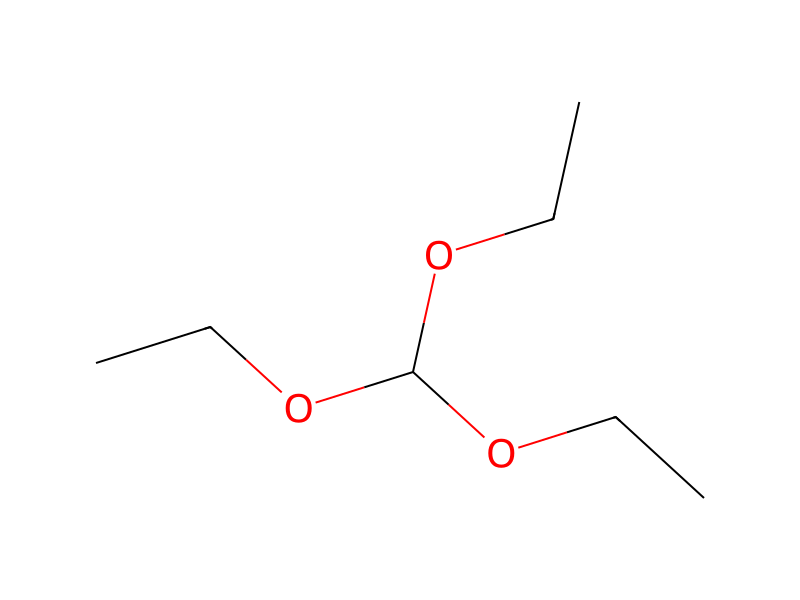
Product 1

Reagents, catalysts & solvents 1

Procedure
In a 200-ml three-neck flask, 4.45 g (45.2 mmol) of cyclohexanone, 7.05 g (47.5 mmol) of triethyl orthoformate, 0.04 g of p-toluenesulfonic acid (monohydrate), 4.15 g (90 mmol) ethanol and 95 ml of ethyl acetate were heated to 100° C. and kept at this temperature for 1 hour (reflux). Thus, 1,1-diethoxycyclohexane was formed. Then 4.0 g (22.7 mmol) of D-isoascorbic acid was added and the first heterogeneous mixture was refluxed for 5 hours, and a clear solution was formed. Then 2 g of aluminum oxide was added, the suspension was stirred for 1 more hour at room temperature and filtered over Celite®, which was rewashed three times with ethyl acetate. The filtrate was concentrated by evaporation at 35° C./30 mbars to 20.5 g, and a viscous pulp was formed. The product was completely precipitated by addition of 20 ml of hexane, filtered off and dried. The yield was 5.05 g (86.8 percent). The product had a melting point: 177° to 178.5° C. The product had the following properties:
Workup
- temperature(reflux)
Sources & evidence
- ORD record
- ord-ff5b42ed66064343b7fb9a54ac4cea17
- Source dataset
- uspto-grants-1990_06
- Patent number
- US04936958
Reaction notes
Loading…