Formic Acid → HCID 57634214, compound
Reaction equation

[Br:1][C:2]1[N:3]=[C:4]([NH:24][C:25](=[O:31])OC(C)(C)C)[S:5][C:6]=1[C:7](=O)[NH:8][C:9]1[CH:14]=[CH:13][N:12]=[CH:11][C:10]=1[S:15]C(=S)N(CC)CC.C(O)(C(F)(F)F)=O.C(Cl)Cl.C(N(CC)C(SC1C=NC=CC=1NC(C1SC(N)=NC=1Br)=O)=S)C.C(O)=O>C([SiH](CC)CC)C>[Br:1][C:2]1[N:3]=[C:4]([NH:24][CH:25]=[O:31])[S:5][C:6]=1[C:7]1[S:15][C:10]2[CH:11]=[N:12][CH:13]=[CH:14][C:9]=2[N:8]=1Participants




Procedure
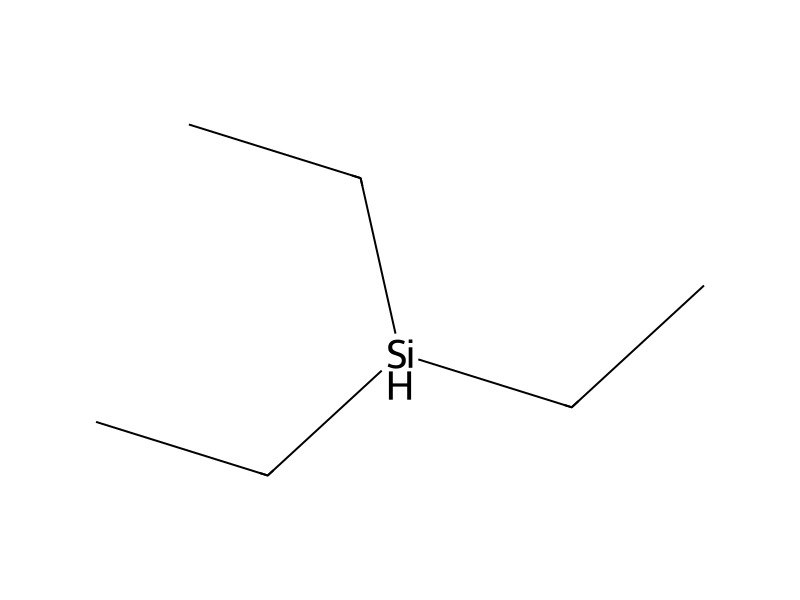
To a 100 mL round-bottomed flask was added tert-butyl 4-bromo-5-((3-(diethylcarbamothioylthio)pyridin-4-yl)carbamoyl)thiazol-2-ylcarbamate (1.0 g, 1.8 mmol) and a 1:1 mixture of TFA (0.14 mL, 1.8 mmol) and DCM (0.12 mL, 1.8 mmol) with a few drops of triethylsilane. The solution was then stirred at room temperature. LCMS indicated that the reaction was complete after about 1 hour. The solvents were removed, and the resulting oil was used without further manipulation. To a 100 mL round-bottomed flask was added 4-(2-amino-4-bromothiazole-5-carboxamido)pyridin-3-yl diethylcarbamodithioate (0.82 g, 1.8 mmol) and formic acid (0.070 mL, 1.8 mmol), and the mixture was heated at 100° C. for about 2 hours. LCMS indicated no remaining starting material, so the solvent was removed and 2 N ammonia in MeOH was added. An orange precipitate formed which was filtered and determined to be the product N-(4-bromo-5-(thiazolo[5,4-c]pyridin-2-yl)thiazol-2-yl)formamide.
Workup
- customThe solvents were removed
- temperaturethe mixture was heated at 100° C. for about 2 hours
- customso the solvent was removed
- addition2 N ammonia in MeOH was added
- customAn orange precipitate formed which
- filtrationwas filtered
Sources & evidence
- ORD record
- ord-fee5b8f760374b7db39540700c69b5ae
- Source dataset
- uspto-grants-2009_04
- Patent number
- US07514566B2
Reaction notes
Loading…