Neopentyl glycol → 2-(4-Bromophenyl)-5,5-dimethyl-1,3-dioxane
Reaction equation

[Br:1][C:2]1[CH:9]=[CH:8][C:5]([CH:6]=[O:7])=[CH:4][CH:3]=1.[CH3:10][C:11]([CH2:15]O)([CH2:13][OH:14])[CH3:12]>C1(C)C=CC=CC=1.C1(C)C=CC(S(O)(=O)=O)=CC=1>[Br:1][C:2]1[CH:9]=[CH:8][C:5]([CH:6]2[O:14][CH2:13][C:11]([CH3:15])([CH3:12])[CH2:10][O:7]2)=[CH:4][CH:3]=1Participants
5
Reactant 2

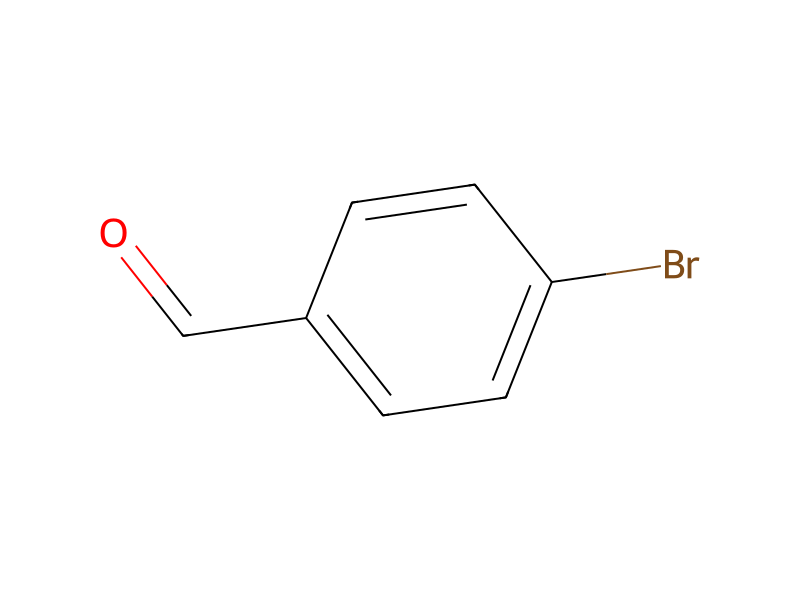
Product 1

Reagents, catalysts & solvents 2


Procedure
The following describes an improved procedure at three times larger scale in much shorter time compared with the literature (Hewlins et al. (1986) J. Chem. Res. (M), 8: 2645-2696). 4-Bromobenzaldehyde (3.00 g, 16.2 mmol), neopentylglycol (1.86 g, 17.9 mmol) and p-toluenesulfonic acid (50 mg, 0.3 mmol) were dissolved in toluene (30 mL) and the solution was refluxed for 3 h. Then the solution was cooled to rt, washed twice with aq NaHCO3 (10%), twice with water and dried (Na2SO4). The solvent was evaporated and the oily residue was crystallized from hexanes, affording colorless needles (2.81 g, 64%). 13C NMR (APT) δ 21.7 (−), 22.9 (−), 30.1 (+), 77.5 (+), 100.8 (−), 122.7 (+), 127.8 (−), 131.3 (−), 137.5 (+).
Workup
- temperaturethe solution was refluxed for 3 h
- washwashed twice with aq NaHCO3 (10%), twice with water
- dry with materialdried (Na2SO4)
- customThe solvent was evaporated
- customthe oily residue was crystallized from hexanes
Sources & evidence
- ORD record
- ord-a31b49f43dae4b6785eec479c10da7dc
- Source dataset
- uspto-grants-2009_04
- Patent number
- US07518905B2
Reaction notes
Loading…