Ammonia → 5-iodo-2-pyrrolidin-1-yl-1H-benzimidazole
Reaction equation

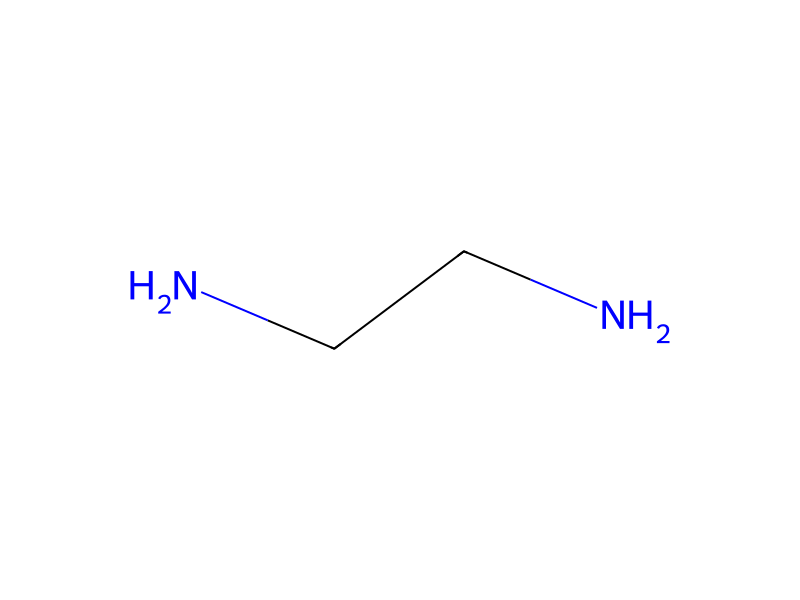
Br[C:2]1[CH:15]=[CH:14][C:5]2[NH:6][C:7]([N:9]3[CH2:13][CH2:12][CH2:11][CH2:10]3)=[N:8][C:4]=2[CH:3]=1.[Na+].[I-:17].NCCN.N>O.[Cu]I.O1CCOCC1>[I:17][C:2]1[CH:15]=[CH:14][C:5]2[NH:6][C:7]([N:9]3[CH2:13][CH2:12][CH2:11][CH2:10]3)=[N:8][C:4]=2[CH:3]=1Participants
8
Reactant 4



Product 1

Reagents, catalysts & solvents 3



Conditions
- Temperature
- 110 °C
Procedure
0.48 g (1.8 mmol) of 5-bromo-2-pyrrolidin-1-yl-1H-benzimidazole and 34 mg (0.18 mmol) of CuI are placed in a round flask. The reaction vessel is flushed with argon. Then 0.54 g (3.6 mmol) of NaI, 32 mg (0.36 mmol) of dimethylenediamine, and 3 mL of 1,4-dioxane are added under argon. The reaction mixture is stirred for 14 hours at 110° C. Subsequently, the cooled reaction mixture is combined with concentrated ammonia solution, diluted with water, and the precipitate formed is filtered off. The solid is stirred with methanol and again filtered. Yield: 0.3 g (53% of theoretical); C11H12IN3 (M=313.13); calc.: molpeak (M+H)+: 314; found: molpeak (M)+: 314.
Workup
- customThe reaction vessel is flushed with argon
- customSubsequently, the cooled reaction mixture
- customthe precipitate formed
- filtrationis filtered off
- stirringThe solid is stirred with methanol
- filtrationagain filtered
Sources & evidence
- ORD record
- ord-03671c1e21084e4ab6761c9ecacc257f
- Source dataset
- uspto-grants-2009_04
- Patent number
- US07524862B2
Reaction notes
Loading…