Water → 1-Bromo-4-decyloxybenzene
Reaction equation

[Br:1][C:2]1[CH:7]=[CH:6][C:5]([OH:8])=[CH:4][CH:3]=1.[OH-].[Na+].[CH2:11](Br)[CH2:12][CH2:13][CH2:14][CH2:15][CH2:16][CH2:17][CH2:18][CH2:19][CH3:20].O>C(O)C>[CH2:11]([O:8][C:5]1[CH:6]=[CH:7][C:2]([Br:1])=[CH:3][CH:4]=1)[CH2:12][CH2:13][CH2:14][CH2:15][CH2:16][CH2:17][CH2:18][CH2:19][CH3:20]Participants
6
Reactant 4


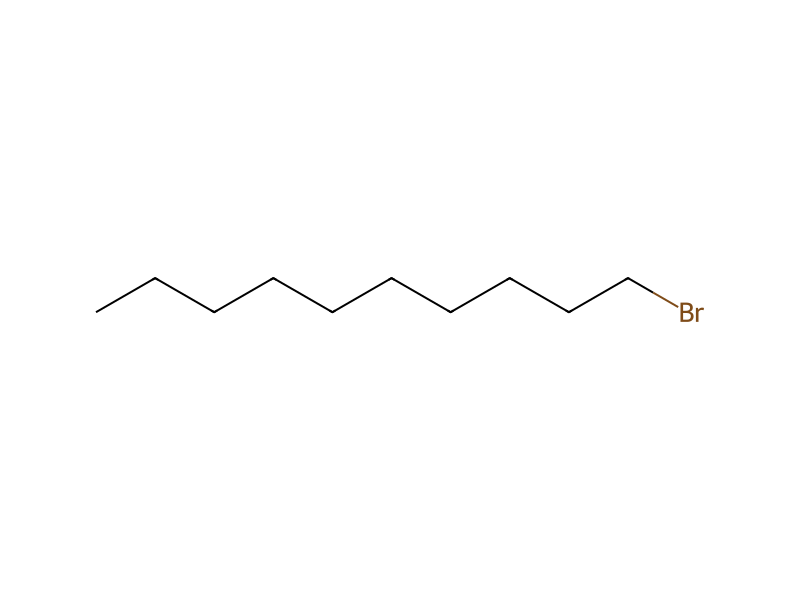

Product 1

Reagents, catalysts & solvents 1

Procedure
In 200 g of ethanol were dissolved 86.5 g (0.5 mol) of 4-bromophenol and 22 g (0.55 mol) of sodium hydroxide. To the solution at 70° C., 121.8 g (0.55 mol) of n-decyl bromide was added dropwise. The solution was allowed to ripen for 4 hours and cooled to room temperature, after which 120 g of water was added. The oily matter was separated therefrom and concentrated by a rotary evaporator, followed by vacuum distillation (boiling point 143-145° C./0.5 Torr), yielding 90 g of 4-n-decyloxyphenyl bromide.
Workup
- customThe oily matter was separated
- concentrationconcentrated by a rotary evaporator
- distillationfollowed by vacuum distillation (boiling point 143-145° C./0.5 Torr)
Sources & evidence
- ORD record
- ord-edad5ce153874f0294952e2898c07e69
- Source dataset
- uspto-grants-2004_02
- Patent number
- US06689530B2
Reaction notes
Loading…