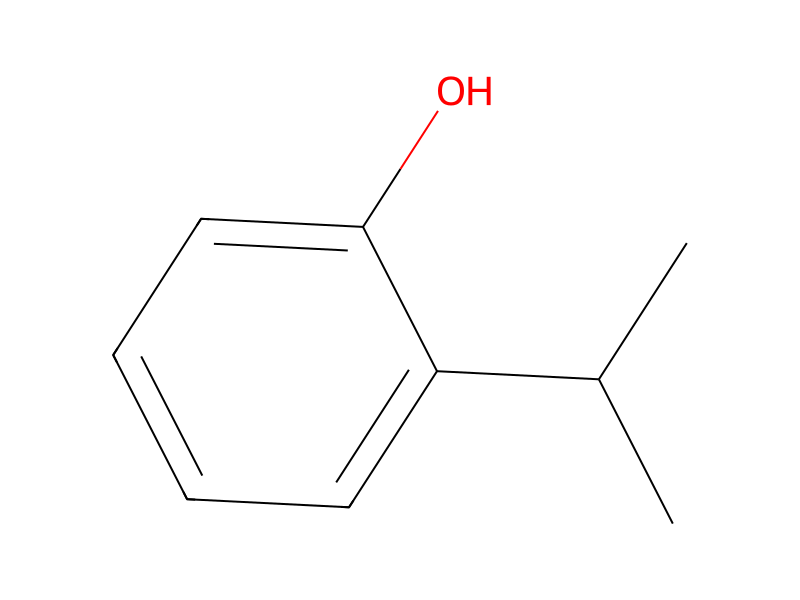
2-Isopropylphenol → HCID 9796184, compound
Reaction equation

N(C(OCC)=O)=NC(OCC)=O.C1(P(C2C=CC=CC=2)C2C=CC=CC=2)C=CC=CC=1.[OH:32][CH2:33][CH2:34][C:35]1[CH:43]=[CH:42][CH:41]=[C:40]2[C:36]=1[CH2:37][C:38](=[O:44])[NH:39]2.[CH:45]([C:48]1[CH:53]=[CH:52][CH:51]=[CH:50][C:49]=1O)([CH3:47])[CH3:46]>O1CCCC1>[CH:45]([C:48]1[CH:53]=[CH:52][CH:51]=[CH:50][C:49]=1[O:32][CH2:33][CH2:34][C:35]1[CH:43]=[CH:42][CH:41]=[C:40]2[C:36]=1[CH2:37][C:38](=[O:44])[NH:39]2)([CH3:47])[CH3:46]Participants
6





Procedure
Diethyl azodicarboxylate (1.58 mL, 10 mmol) was added to a solution of triphenylphosphine (2.62 g, 10 mmol) in tetrahydrofuran (20 mL) under nitrogen atmosphere. The mixture was stirred for 15 minutes. To it was then added 4-(2-hydroxy-ethyl)-1,3-dihydro-indol-2-one (1.77 g, 10 mmol) followed by 2-isopropylphenol (1.36 mL, 10 mmol). The mixture was stirred at room temperature for 18 hours and the solvent was evaporated. The residue was chromatographed on silica gel eluting with ethyl acetate: hexane 2:8 to give 0.26 g (9%) of 4-[2-(2-isopropyl-phenoxy)-ethyl]-1,3-dihydro-indol-2-one as a light yellow solid.
Workup
- stirringThe mixture was stirred at room temperature for 18 hours
- customthe solvent was evaporated
- customThe residue was chromatographed on silica gel eluting with ethyl acetate: hexane 2:8
Sources & evidence
- ORD record
- ord-3aaef9711ee14d14983f7334ea54ea16
- Source dataset
- uspto-grants-2004_02
- Patent number
- US06689806B1
Reaction notes
Loading…