Piperidine → HCID 10777660, compound
Reaction equation

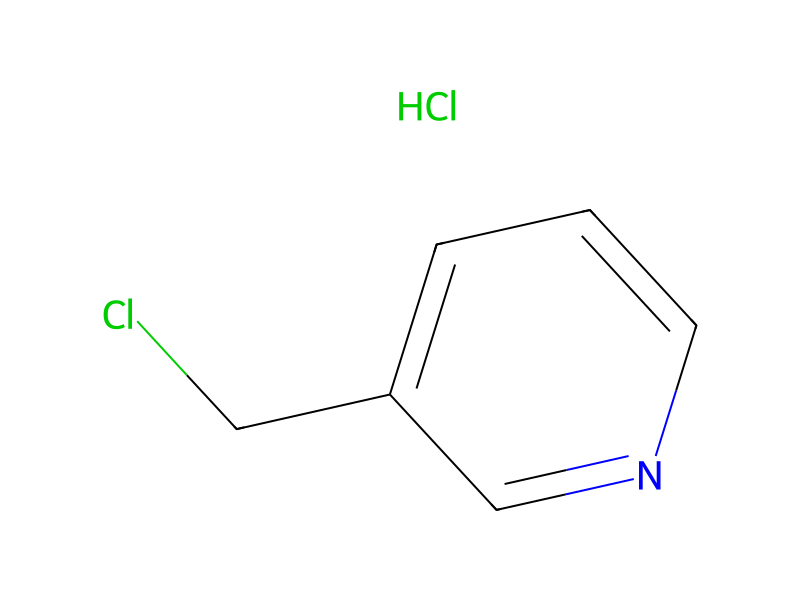
[CH3:1][O:2][C:3](=[O:12])[C:4]1[CH:9]=[CH:8][C:7]([OH:10])=[CH:6][C:5]=1[OH:11].Cl.Cl[CH2:15][C:16]1[CH:17]=[N:18][CH:19]=[CH:20][CH:21]=1.C(=O)([O-])[O-].[K+].[K+].N1CCCCC1>CC(C)=O.O>[CH3:1][O:2][C:3](=[O:12])[C:4]1[CH:9]=[CH:8][C:7]([O:10][CH2:15][C:16]2[CH:17]=[N:18][CH:19]=[CH:20][CH:21]=2)=[CH:6][C:5]=1[OH:11]Participants
7






Procedure
A mixture in acetone (40 mL) and water (10 mL) of 2,4-dihydroxybenzoic acid methyl ester (1.19 g, 7.08 mmol), prepared as in Example 240A, 3-chloromethylpyridine hydrochloride (2.32 g, 14.2 mmol) and potassium carbonate (2.44 g, 21.2 mmol) was stirred at reflux for 24 hours, then acetone (10 mL) and piperidine (1 g) were added and reflux was continued for 12 hours. The reaction mixture was cooled to ambient temperature, poured into water, and extracted with ethyl acetate (3×). The combined organic extracts were washed with aqueous sodium hydroxide and water, dried, filtered and concentrated in vacuo. The residue was recrystallized from aqueous ethanol to give 4-(3-pyridylmethyloxy)-2-hydroxybenzoic acid methyl ester (0.57 g, 31%).
Workup
- temperatureat reflux for 24 hours
- temperaturereflux
- extractionextracted with ethyl acetate (3×)
- washThe combined organic extracts were washed with aqueous sodium hydroxide and water
- customdried
- filtrationfiltered
- concentrationconcentrated in vacuo
- customThe residue was recrystallized from aqueous ethanol
Sources & evidence
- ORD record
- ord-3f330f72250e496a8cdf37f1eb304e23
- Source dataset
- uspto-grants-2004_02
- Patent number
- US06693123B2
Reaction notes
Loading…