Homoveratrylamine → HCID 11407338, compound
Reaction equation

[Cl:1][C:2]([Cl:14])=[C:3]([C:7]1[CH:12]=[CH:11][C:10]([Cl:13])=[CH:9][CH:8]=1)[C:4](Cl)=[O:5].[CH2:15]([NH2:27])[CH2:16][C:17]1[CH:26]=[CH:25][C:22]([O:23][CH3:24])=[C:19]([O:20][CH3:21])[CH:18]=1.C(N(CC)CC)C>C(Cl)Cl>[Cl:1][C:2]([Cl:14])=[C:3]([C:7]1[CH:12]=[CH:11][C:10]([Cl:13])=[CH:9][CH:8]=1)[C:4]([NH:27][CH2:15][CH2:16][C:17]1[CH:26]=[CH:25][C:22]([O:23][CH3:24])=[C:19]([O:20][CH3:21])[CH:18]=1)=[O:5]Participants
5
Reactant 3
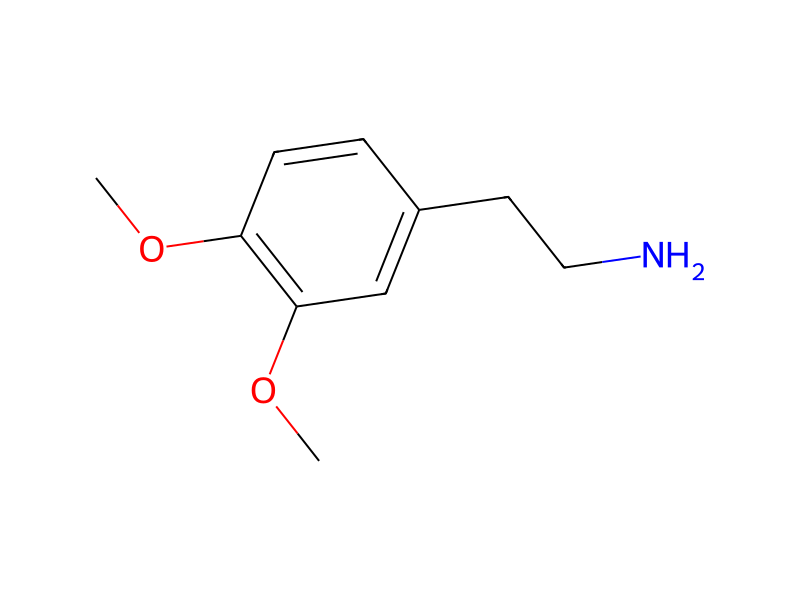


Product 1

Reagents, catalysts & solvents 1

Conditions
- Temperature
- 22.5 °C
Procedure
A solution of 10.8 g (0.04 mol) of the acyl chloride prepared in Example 5 in 20 ml of methylene chloride was added dropwise to a solution of 7.24 g (0.04 mol) of homoveratrylamine and 4.04 g 25 (0.04 mol) of triethylamine in 80 ml of methylene chloride. The solution was stirred for 3 hours at 20 to 25° C., and washed with 3 N sodium hydroxide solution and then with 10% by weight strength hydrochloric acid. The organic phase was freed from solvent, and 13.85 g of the title compound were obtained from the residue following chromatography on silica gel with cyclohehane [sic]/MtBE (3:1).
Workup
- washwashed with 3 N sodium hydroxide solution
Sources & evidence
- ORD record
- ord-2f8076c5fe6941bf9712c5357f0ade06
- Source dataset
- uspto-grants-2004_02
- Patent number
- US06696607B2
Reaction notes
Loading…