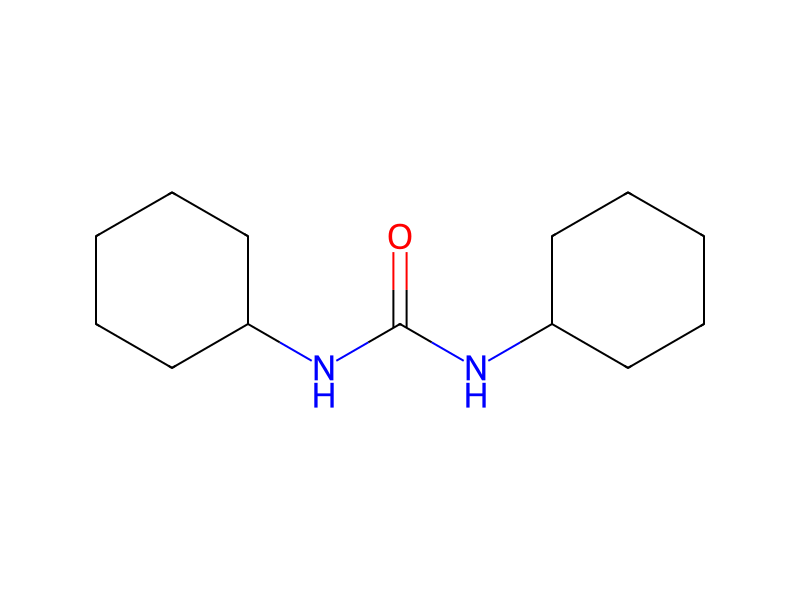
Tetrahydrofuran → N,N'-Dicyclohexylurea
Reaction equation

[CH2:1]1[CH2:6][CH2:5][CH:4]([N:7]=[C:8]=[N:9][CH:10]2[CH2:15][CH2:14][CH2:13][CH2:12][CH2:11]2)[CH2:3][CH2:2]1.[O:16]1CCCC1>N1C=CC=CC=1.CN(C1C=CN=CC=1)C>[C:8]([NH:7][CH:4]1[CH2:3][CH2:2][CH2:1][CH2:6][CH2:5]1)([NH:9][CH:10]1[CH2:15][CH2:14][CH2:13][CH2:12][CH2:11]1)=[O:16]Participants
5
Reactant 2


Product 1
Reagents, catalysts & solvents 2


Procedure
Poly(ethoxylated fluoroalkyl acrylate)-block-polystyrene (IV). One gram of poly(acrylic acid)-block-polystyrene (2.19 mmol acrylic acid) was dissolved in 5 mL of anhydrous pyridine. DCC (6.57 mmol), DMAP (0.823 mmol), and Zonyl FSO-100 (6 g) were dissolved in tetrahydrofuran and added drop-wise to the polymer solution. The reaction mixture was stirred at room temperature for about 2.5 days. Dicyclohexylurea formed during the reaction was removed by filtration. After concentration under reduced pressure, the polymer solution was poured into excess methanol. Further purification was achieved by precipitating the polymer from tetrahydrofuran into methanol.
Workup
- additionadded drop-wise to the polymer solution
Sources & evidence
- ORD record
- ord-53b19790b21b4045a0c2210477472ec9
- Source dataset
- uspto-grants-2012_06
- Patent number
- US08192843B2
Reaction notes
Loading…