1-Bromo-2-Chloroethane → 1-Benzyl 4-methyl 4-(2-chloroethyl)piperidine-1,4-dicarboxylate
Reaction equation

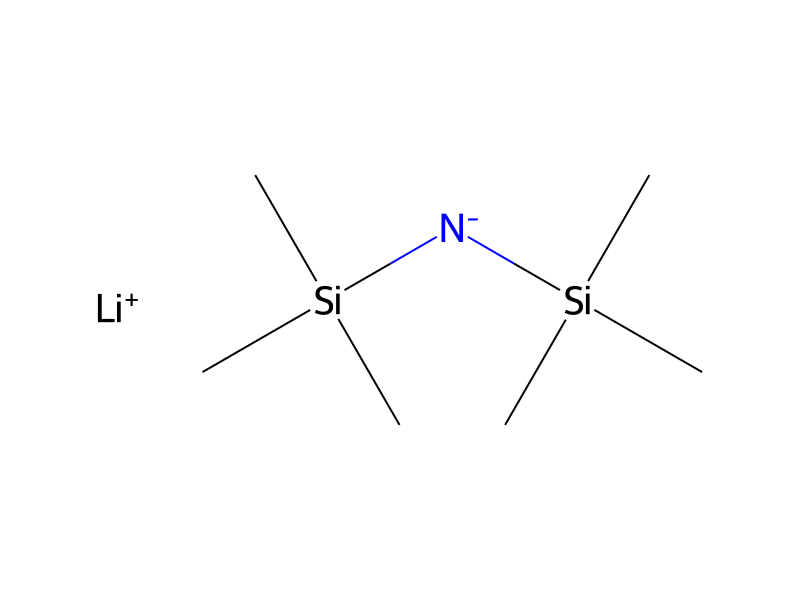
C[Si]([N-][Si](C)(C)C)(C)C.[Li+].[N:11]1([C:21]([O:23][CH2:24][C:25]2[CH:30]=[CH:29][CH:28]=[CH:27][CH:26]=2)=[O:22])[CH2:16][CH2:15][CH:14]([C:17]([O:19][CH3:20])=[O:18])[CH2:13][CH2:12]1.Br[CH2:32][CH2:33][Cl:34]>O1CCCC1>[Cl:34][CH2:33][CH2:32][C:14]1([C:17]([O:19][CH3:20])=[O:18])[CH2:13][CH2:12][N:11]([C:21]([O:23][CH2:24][C:25]2[CH:26]=[CH:27][CH:28]=[CH:29][CH:30]=2)=[O:22])[CH2:16][CH2:15]1Participants
5




Conditions
- Temperature
- -78 °C
Procedure
Lithium bis(trimethylsilyl)amide (LiHMDS) in THF (1.0 M, 7.2 mL, 0.0072 mol) was added to a solution of 1-benzyl 4-methyl piperidine-1,4-dicarboxylate (1.00 g, 0.00360 mol) in tetrahydrofuran (10.0 mL) at −78° C. The reaction mixture had been stirred at −78° C. for 1 hr, then 1-bromo-2-chloroethane (0.45 mL, 0.0054 mol) was slowly added to the mixture. The reaction mixture was allowed to warm to room temperature and stirred for 2 hrs. The reaction was quenched with saturated NH4Cl, extracted with ethyl acetate. The combined organic layers were dried over Na2SO4, filtered, concentrated. The residue was flash chromatographed (ethyl acetate in hexane: 20%) to afford 1-benzyl 4-methyl 4-(2-chloroethyl)piperidine-1,4-dicarboxylate.
Workup
- temperatureto warm to room temperature
- stirringstirred for 2 hrs
- customThe reaction was quenched with saturated NH4Cl
- extractionextracted with ethyl acetate
- dry with materialThe combined organic layers were dried over Na2SO4
- filtrationfiltered
- concentrationconcentrated
- customchromatographed (ethyl acetate in hexane: 20%)
Sources & evidence
- ORD record
- ord-a415cabdb7e14f55bef4e499903a0012
- Source dataset
- uspto-grants-2012_06
- Patent number
- US08193207B2
Reaction notes
Loading…