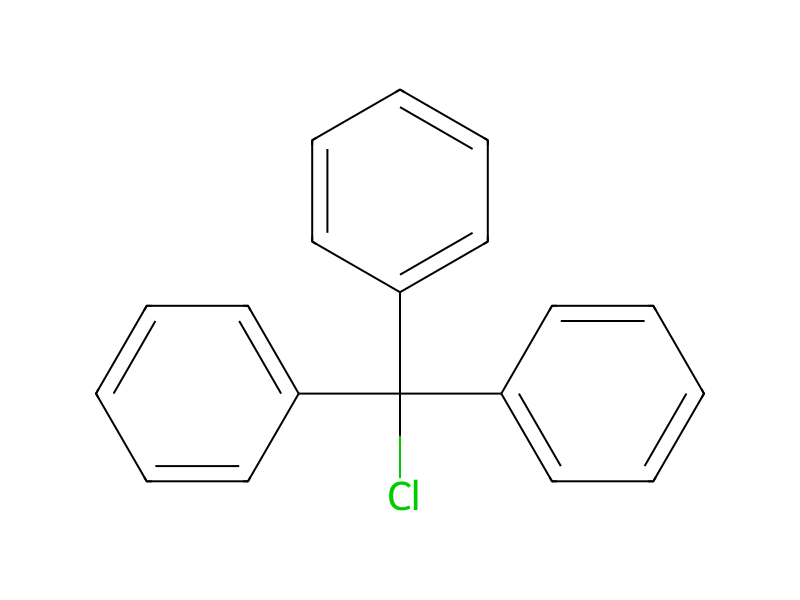
Trityl chloride → 2-methyl-1-trityl-1H-imidazole-4-carbaldehyde
Reaction equation

C(N(CC)CC)C.[C:8](Cl)([C:21]1[CH:26]=[CH:25][CH:24]=[CH:23][CH:22]=1)([C:15]1[CH:20]=[CH:19][CH:18]=[CH:17][CH:16]=1)[C:9]1[CH:14]=[CH:13][CH:12]=[CH:11][CH:10]=1.[CH3:28][C:29]1[NH:30][CH:31]=[C:32]([CH:34]=[O:35])[N:33]=1>C(Cl)Cl>[CH3:28][C:29]1[N:30]([C:8]([C:21]2[CH:26]=[CH:25][CH:24]=[CH:23][CH:22]=2)([C:15]2[CH:20]=[CH:19][CH:18]=[CH:17][CH:16]=2)[C:9]2[CH:14]=[CH:13][CH:12]=[CH:11][CH:10]=2)[CH:31]=[C:32]([CH:34]=[O:35])[N:33]=1Participants
5
Reactant 3


Product 1

Reagents, catalysts & solvents 1

Procedure
Triethylamine (5.1 mL, 36.3 mmol) followed by trityl chloride (7.6 g, 27.2 mmol) were added to an ambient temperature solution of 2-methyl-1H-imidazole-4-carboxaldehyde (2 g, 18.2 mmol) in methylene chloride (20 mL). After stirring at ambient temperature overnight, the reaction was diluted with methylene chloride and washed with water and brine, dried (sodium sulfate) and concentrated in vacuo. Chromatography over silica eluting with 30-70% ethyl acetate/hexane afforded 2-methyl-1-trityl-1H-imidazole-4-carboxaldehyde.
Workup
- washwashed with water and brine
- dry with materialdried (sodium sulfate)
- concentrationconcentrated in vacuo
Sources & evidence
- ORD record
- ord-77d7b4c5aa4f48f5b43d49e545abc6b9
- Source dataset
- uspto-grants-2012_06
- Patent number
- US08193228B2
Reaction notes
Loading…