Water → HCID 13476999, compound
Reaction equation

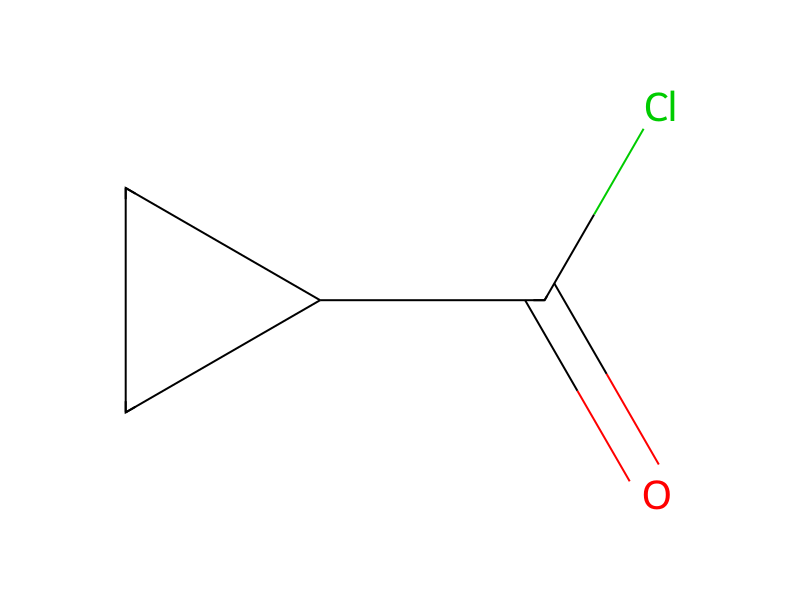
[NH2:1][C:2]1[CH:6]=[C:5]([C:7]([CH3:10])([CH3:9])[CH3:8])[NH:4][N:3]=1.C(N(CC)CC)C.[CH:18]1([C:21](Cl)=[O:22])[CH2:20][CH2:19]1.O>C(Cl)Cl.C(Cl)(Cl)(Cl)Cl>[C:7]([C:5]1[NH:4][N:3]=[C:2]([NH:1][C:21]([CH:18]2[CH2:20][CH2:19]2)=[O:22])[CH:6]=1)([CH3:10])([CH3:9])[CH3:8]Participants
7






Procedure
7 g (0.05 mole) of 3-amino-5-t-butylpyrazole as prepared in Example 1 and 6 g of triethylamine were dissolved in 50 ml of methylene chloride. To this solution was added dropwise 5.7 g of cyclopropanecarboxylic acid chloride dissolved in 50 ml of carbon tetrachloride. The resulting mixture was allowed to stand over night. Thereafter, water was added thereto whereby crystals were precipitated. The crystals were collected by filtration and washed with water and carbon tetrachloride to obtain 5.3 g of 5-t-butyl-3-cyclopropanecarbonylaminopyrazole.
Workup
- waitto stand over night
- customwhereby crystals were precipitated
- filtrationThe crystals were collected by filtration
- washwashed with water and carbon tetrachloride
Sources & evidence
- ORD record
- ord-e9c72bcc82994fb1afad43e98ccb593f
- Source dataset
- uspto-grants-1985_03
- Patent number
- US04505739
Reaction notes
Loading…