Sodium Hydroxide → HCID 13235948, compound
Reaction equation

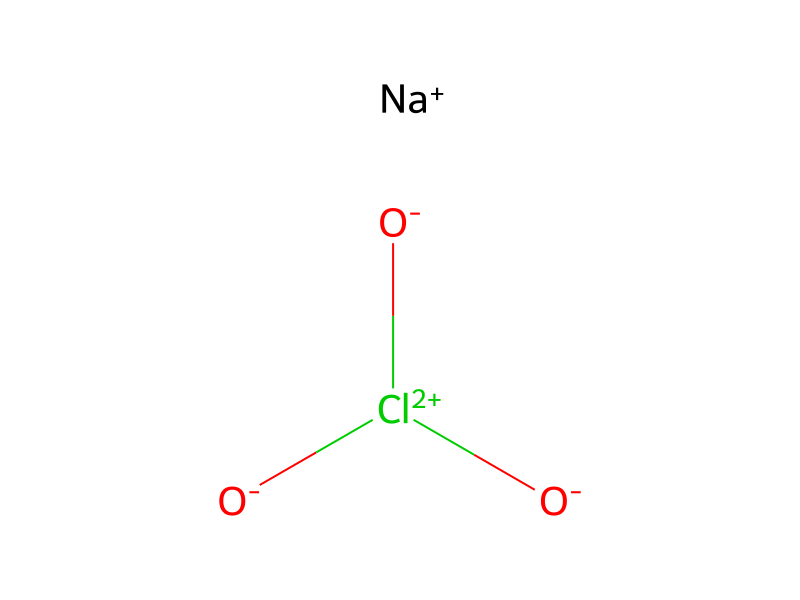
[C:1]([C:5]1[NH:9][N:8]=[C:7]([NH:10][C:11](=[O:16])[C:12]([CH3:15])([CH3:14])[CH3:13])[CH:6]=1)([CH3:4])([CH3:3])[CH3:2].[Cl:17]([O-])(=O)=O.[Na+].[OH-].[Na+]>Cl.O>[C:1]([C:5]1[NH:9][N:8]=[C:7]([NH:10][C:11](=[O:16])[C:12]([CH3:15])([CH3:14])[CH3:13])[C:6]=1[Cl:17])([CH3:4])([CH3:3])[CH3:2]Participants
6





Procedure
9 g (0.04 mole) of 5-t-butyl-3-pivaloylaminopyrazole prepared in Example 4 was dissolved in 50 ml of concentrated hydrochloric acid, and 1.8 g of sodium chlorate dissolved in 40 ml of water was gradually added dropwise thereto. After completion of the reaction, the reaction product was neutralized with sodium hydroxide, and the solid thus formed was collected by filtration and dissolved in methanol. To the resulting solution was added water, whereby crystals were precipitated. The crystals were washed with water and dried to obtain 7.2 g of 5-t-butyl-4-chloro-3-pivaloylaminopyrazole. This product was recrystallized from hydrous methanol and found to have a melting point of 156° to 158° C.
Workup
- additionwas gradually added dropwise
- customAfter completion of the reaction
- customthe solid thus formed
- filtrationwas collected by filtration
- dissolutiondissolved in methanol
- additionTo the resulting solution was added water, whereby crystals
- customwere precipitated
- washThe crystals were washed with water
- customdried
Sources & evidence
- ORD record
- ord-3b026c4c154c4dc2a77cf52ab06fa854
- Source dataset
- uspto-grants-1985_03
- Patent number
- US04505739
Reaction notes
Loading…